

Already the end of July, where is the time going to this year? Following on from the very dry spring we now have had plenty of rain and sunshine and the plants and weeds are growing well. Two months ago I was in despair, the garden was so dried up and plants were wilting in the heat. It’s amazing how relatively quickly things change though, a few cooler days (and nights), some rain and the plants have perked up. The soil is still fairly dry – we are on sand after all – but the borders have looked good this year. Regular mulching with homemade compost is obviously helping long term, although the downside is all the weed seedlings.
As ever we’re enjoying watching all the wildlife that comes to visit us. I had a bit of a surprise a few weeks ago when putting a few weeds on the compost heap to see the tail end of a grass snake disappearing into the heap. She’d obviously decided that it was a safe and cosy spot to lay her eggs. I’m not quite sure how I feel about the thought of several grass snakes slithering around, but having previously found empty egg shells in another compost heap, I assume they are around more than we realise. We do feel lucky however that creatures such as this regard our garden as a safe haven. We do also see slow worms occasionally, apparently they are quite common in the countryside around the village.
I’ve spent an enjoyable fifteen minutes during a sunny afternoon taking part in the Big Butterfly Count, organised by http://www.butterfly-conservation.org. I downloaded an app onto my phone which also incorporated an ID guide for the most common species. I counted dozens during the fifteen minutes, although it is hard, if not impossible, to work out if the same insect has been counted multiple times! It seemed that it was the number of species spotted that was recorded and I was happy to see six different species in one part of the garden, although earlier that day I had seen another three species in the orchard and since then another three have been spotted. I don’t know how that compares to an ‘average garden’. The Big Butterfly Count runs through until 9th August and you can send more than one record – I’m keen to do the count again. It’ll be interesting to see if there is a change in species seen. I love to watch butterflies, some years ago when walking the dogs through the fields adjoining us I walked through clouds of Marbled Whites. What a treat and yes they do come into the garden too.
Still on the wildlife theme, sadly the Mandarin ducks that were in the garden in April have failed to raise any young. After around five weeks sitting on the eggs the female finally gave up. Let’s hope they return again next year. The Mallard duckling that adopted us back in April is still with us. It now has the run of the garden and although it goes for a fly around most days, so far it has always returned. I’m now getting quite accustomed to it flying around the garden with me at shoulder height! It’s slightly more help than the dogs when I am weeding, staying close ready to peck up any tasty looking bugs. Shoe laces appear to resemble worms, so care is needed when standing up!
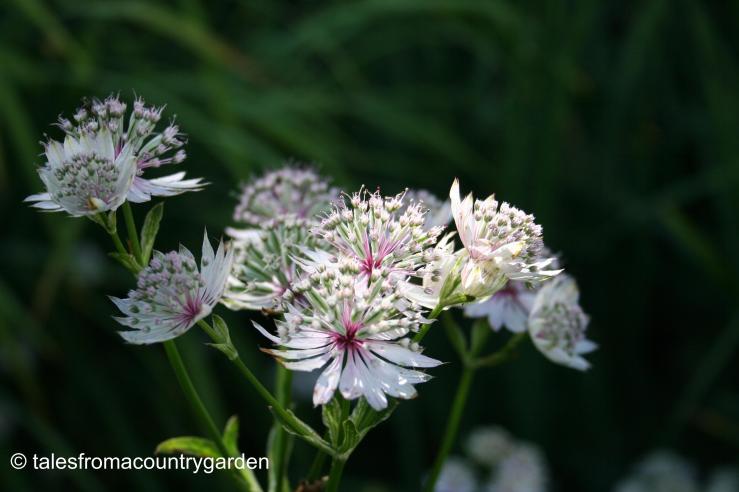


Echinaceas planted last year are starting to flower. I’m particularly pleased with “White Swan” as I grew it from seed a couple of years ago and it didn’t look as if it was thriving until about a week ago. I particularly like Echinacea Magnus and have recently purchased another couple from Pershore Horticultural College Nursery Sale. Before they can be planted (along with some other purchases from the College) a new flower bed has to be dug to house several plants that are taking over in the back garden. We plan to move a large clump of Solidago and another of Eupatorium into the orchard, making another “Autumn Bed” to mirror one we dug a couple of years ago. Then the bed in the back garden will be re-designed with slightly less invasive plants. This will be a job for much later on in the Autumn when the weather is cooler and hopefully we will have had a decent amount of rain to make the digging a bit easier.
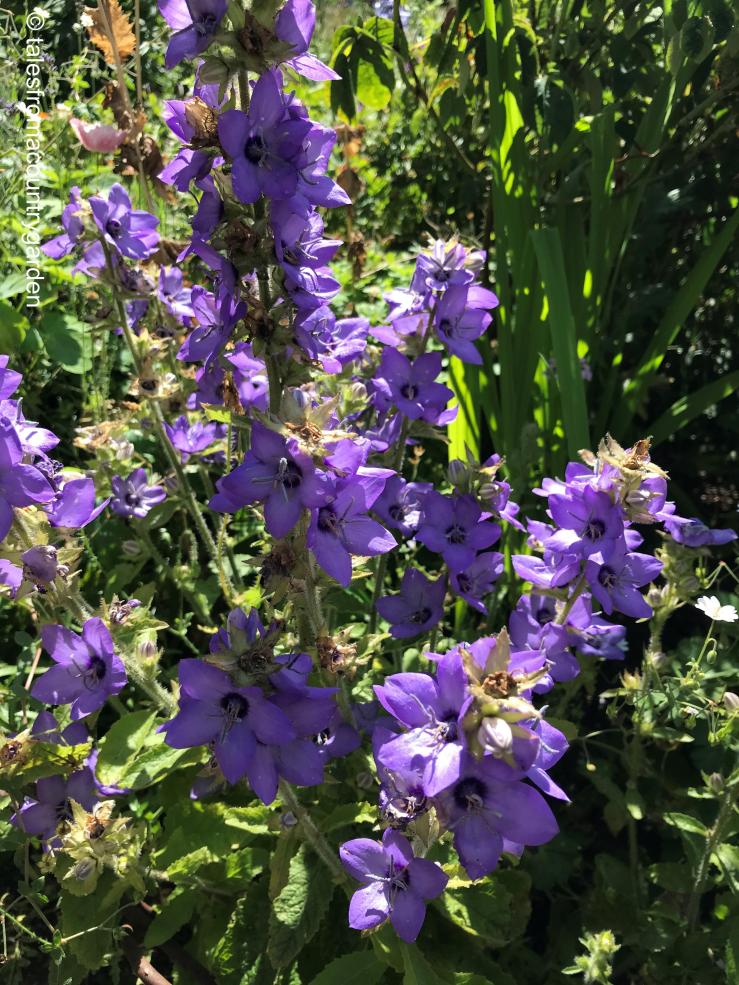
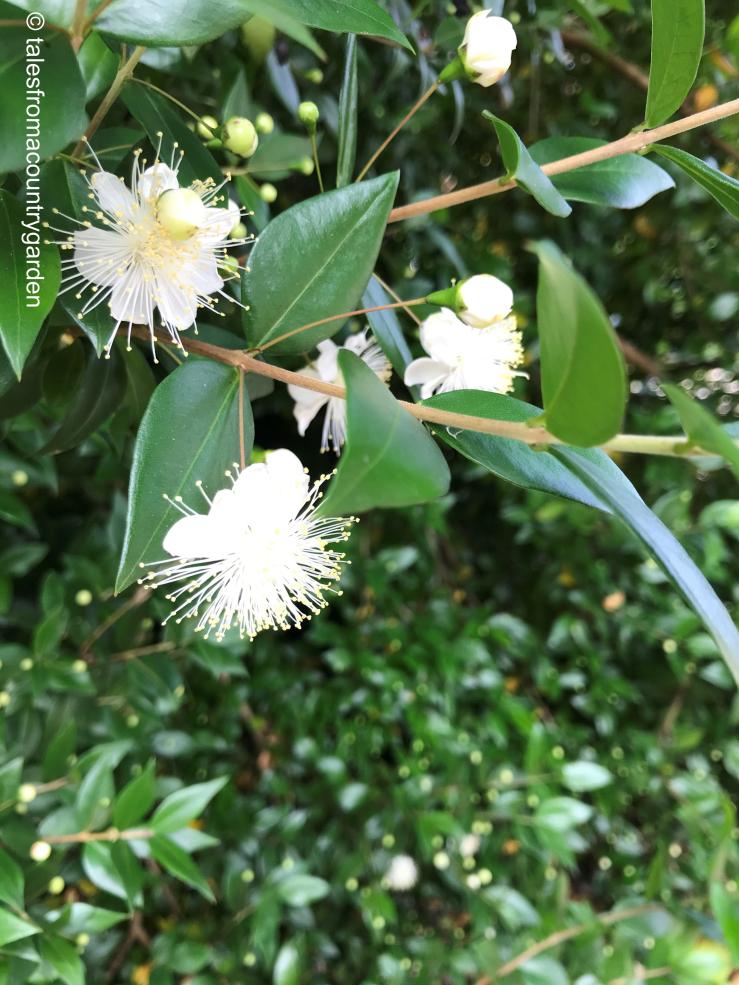
Over the years I’ve planted several Agapanthus, unfortunately in my usual fashion losing the name labels along the way. One that really stands out at the moment can only be described as navy blue in colour, quite beautiful. I’ve grown a lovely Campanula from seed acquired from the Hardy Plant Society seed exchange, Campanula primulifolia. It flowered for the first time last year and I thought it was rather pretty, this year the plants have really put on some growth and the flowers are absolutely stunning. I’ll have to save and sow the seed in the autumn. It would be good to have some plants to sell at our NGS open day next year. One of the favourite shrubs in the garden is Myrtle. It was here when we moved in and occupies a spot underneath the big old apple tree on the drive. It must be around 4 feet tall and as much across with lovely glossy green leaves, the white pom pom flowers are just opening.

I planted quite a few new dahlia tubers this year, and I’m enjoying their flowers. I was a little bit cross though when Dahlia Bishop of Leicester, pink flowers, turned into something else with orange flowers. A nice dahlia once I’d moved it into a better spot with other ‘hot colours’.

 Tales from a Country Garden
Looking forward to your open garden. I hope you have some of those lovely campanulas for sale.
LikeLike
A tame duck must be useful for slug control. We have a Myrtle, the Welsh shrub of love, in the front garden, Irene had some in her wedding bouquet as apparently the Royal Family have done so since Queen Victoria.
LikeLike
It is annoying when a plant is purchased to fit a certain color scheme, and then it turns out to be another color altogether. Some celosia seed that was to be soft orange produced flowers that were blood red in my orange/apricot border. I left them for a while, but pulled them before they could drop seed! Lovely photos, thank you.
LikeLike