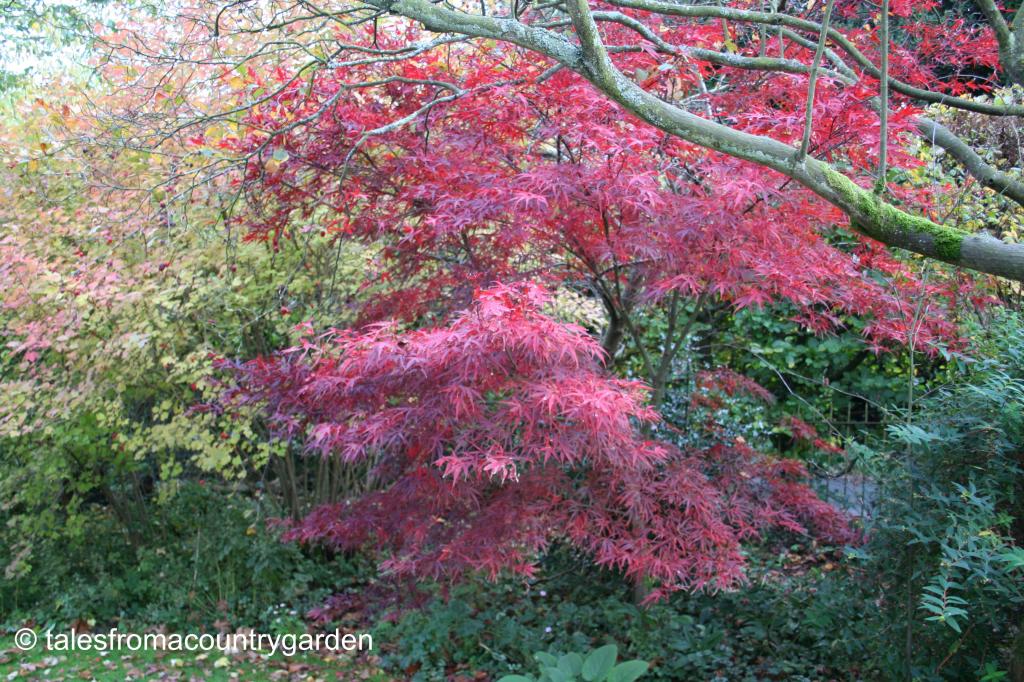
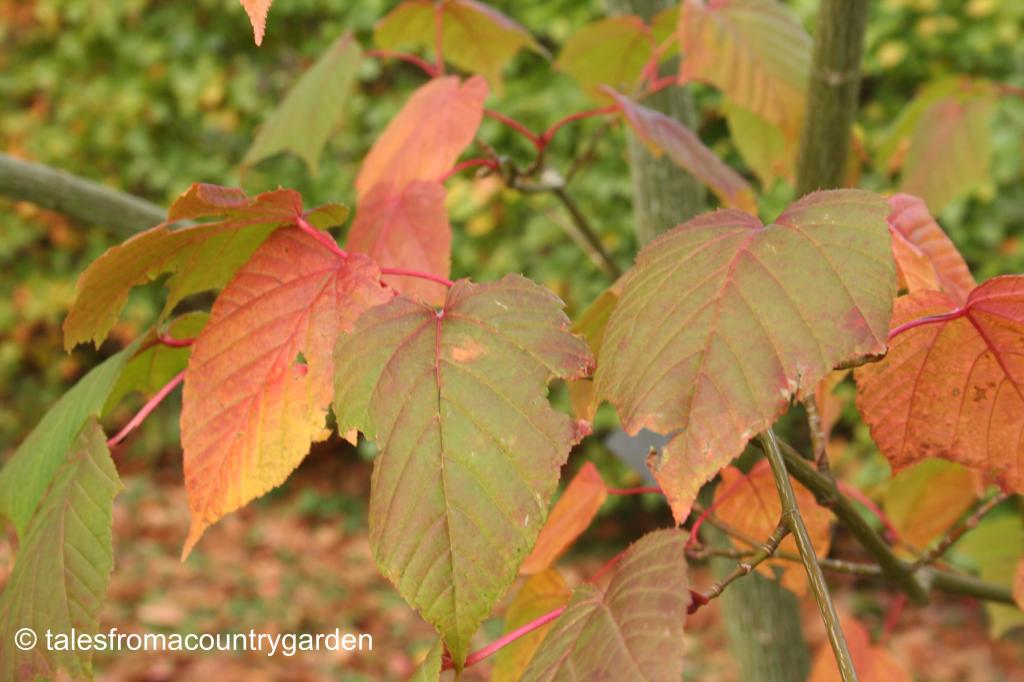
….. the clocks were put back a couple of weeks ago and now outside chores have to be finished early, with darkness falling around 5pm. It always feels a rush in the afternoons at this time of year to do the absolute essentials such as shutting up the chickens and ensuring there is enough wood in the house to light the woodburner. The leaf colour in the garden this autumn seems to have been better than ever, or maybe I am just looking harder to extract as much pleasure from it as I can before the leaves all tumble down.
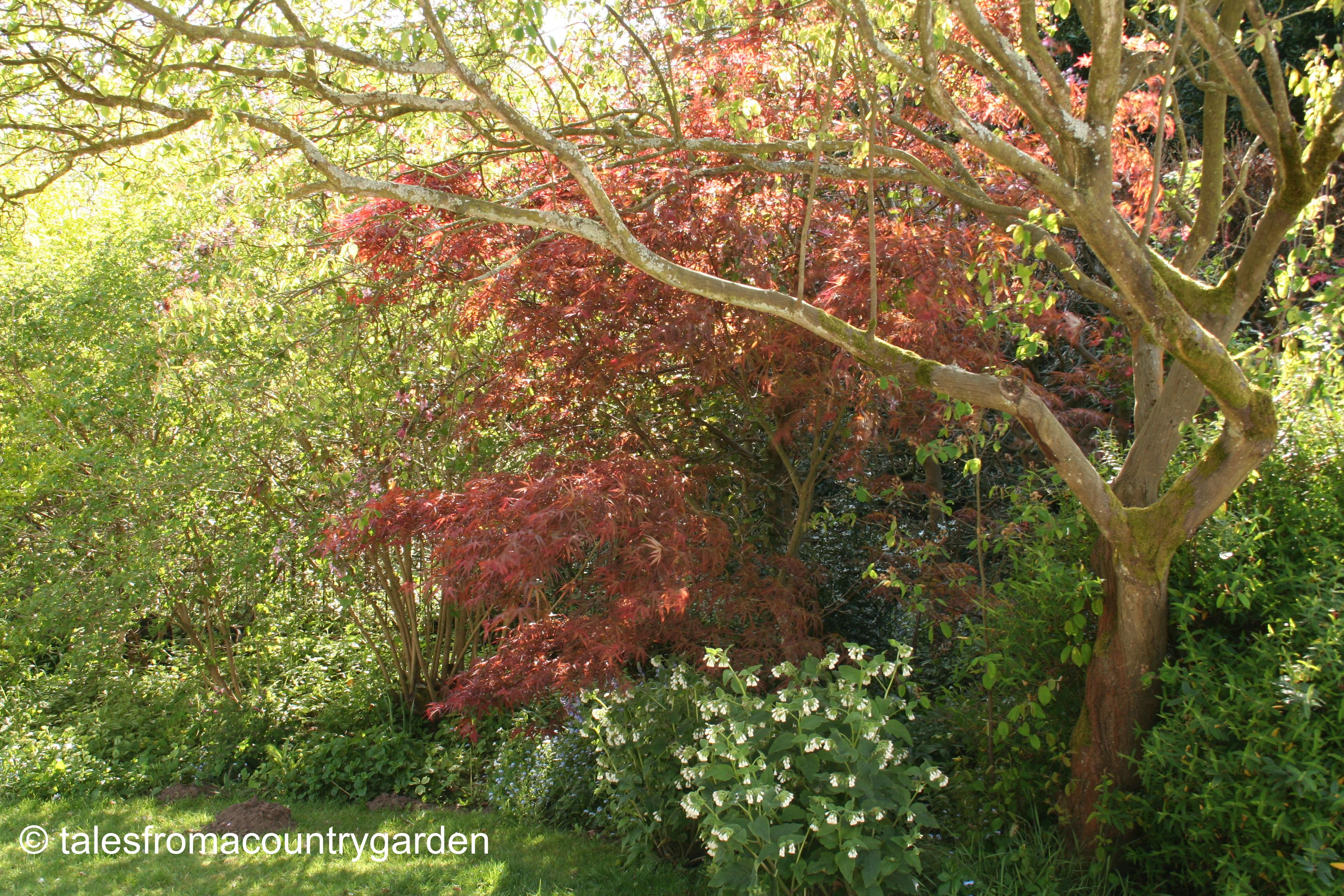
Many have already fallen but it seems that although there have been windy days the trees and shrubs are hanging on tight to their foliage. Looking out of the window I can currently see plentiful large oak leaves right across the garden – carpeting the lawn and caught up in other shrubs and climbers. They are not from the English Oak but from three American Red Oaks, whose leaves are much larger. Corylus purpurea, the purple hazel now has leaves coloured yellow and green, Syringa (lilac) has turned yellowy green and the copper beech hedge is going all shades of brown. The Fig tree growing against the house wall turned a lovely buttery yellow and seemed to shake itself and all the leaves dropped off at once! This has exposed many small figs that need picking off as they won’t ripen now. We have started collecting up the leaves to make into leaf mould, a precious resource that in a year or so will be ready to spread over the flower beds. All three leaf bins have now been emptied, the leaves collected last year having turned into lovely crumbly leaf mould. This has been spread over the asparagus bed and a couple of flower beds. A new leaf bin has been constructed to take this year’s leaves and the collecting has started – it may take a while!
Just a few photos from around the garden.
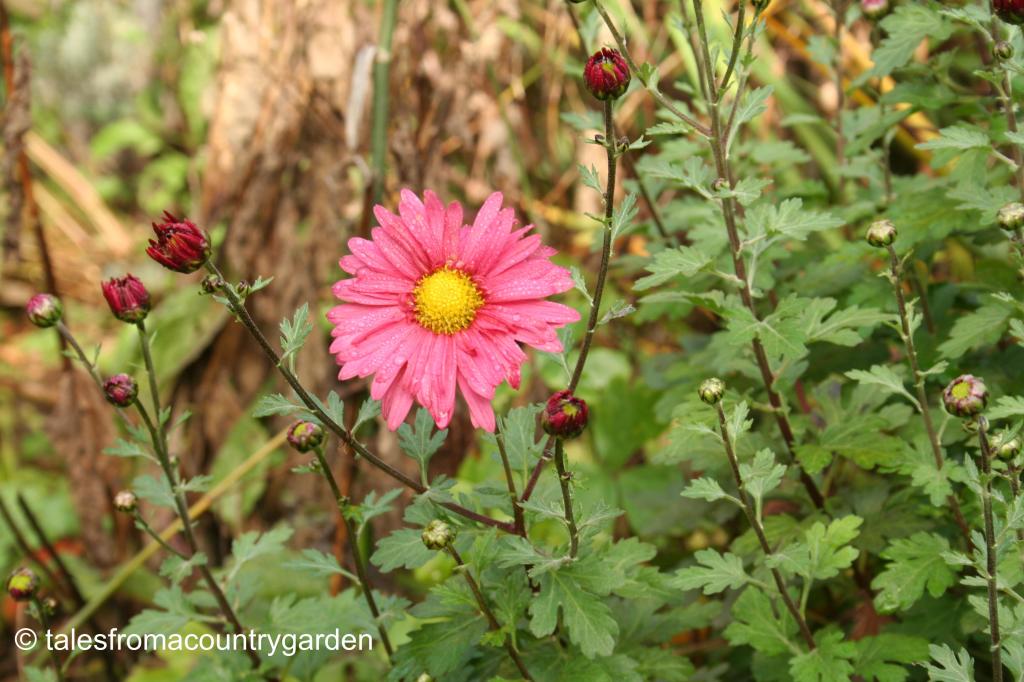
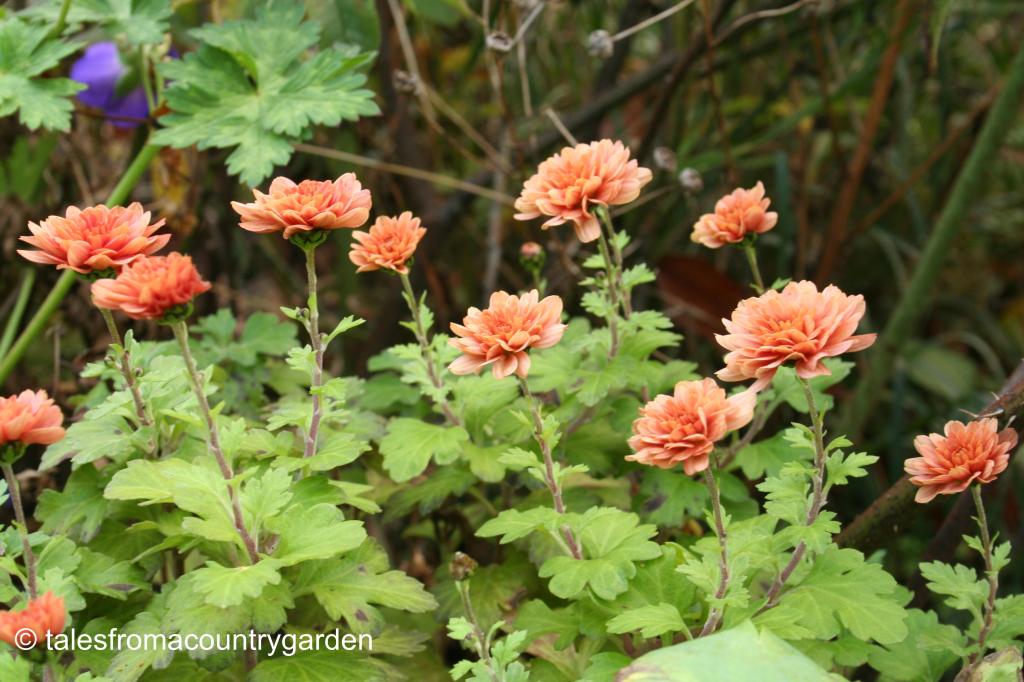
Small leaved lime – Tilia cordataAcer with leaves of brilliant redAcer capillipes – snake bark maple – hanging on to its beautiful leaves which change colour daily.Chrysanthemum Dulwich PinkChrysanthemum Emperor of ChinaChrysanthemum Picasso
What a beautiful start to the first day of Autumn. River mist engulfing the garden and the adjoining fields, but by 8am the sun could be spotted trying to burn through. An hour later after the dogs were walked, and not lost in the mist as they ran through the fields, it was a perfect temperature to be outside working in the garden. Tidying up a bit is what needs to be accomplished now and today I set myself the task of working round the front of the house trimming back the Virginia Creeper that not only grows upwards but also along the paving. One long stem was given a sharp tug and came away with roots – now been potted up. With a bit of luck I’ll have a new plant by Spring. My least favourite job is pulling weeds out of the paving but with a bit of perseverance I’ve managed to clear a huge amount out, swept up leaves and weeded the edge of an adjoining flower bed for good measure. A good morning’s work completed and as I always view autumn as the start of the new gardening year I am enthusiastic to tidy and clear other areas of the garden that are starting to look a little shabby.
I’ve spent the last few weeks taking cuttings from all sorts of plants. Many have rooted easily and are now potted up into small pots and in their winter quarters in the unheated greenhouse to protect them over the coming months. Some are proving more troublesome, Lavender cuttings are looking as though they are really sulking. I’ve pulled some out of the pot that had in fact rotted but maybe one or two are looking as if they have roots. I am trying to resist the temptation to tip them out and see! Lemon Verbena on the other hand have rooted very quickly and I have just potted up four very strong little plants. A small triumph!
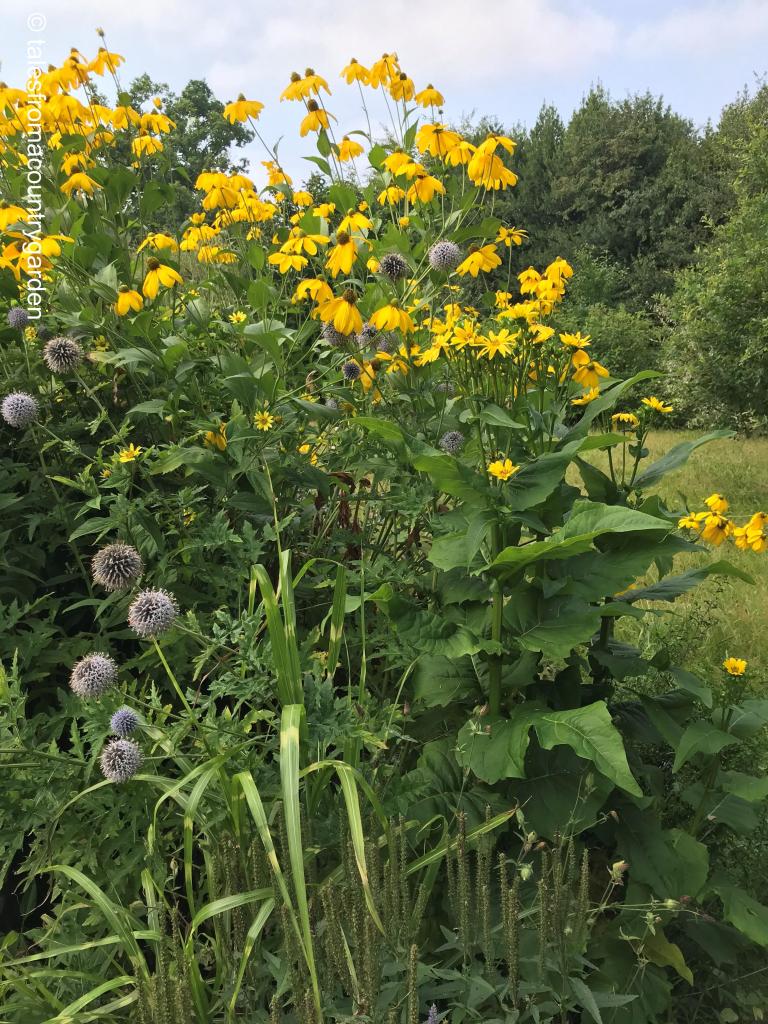
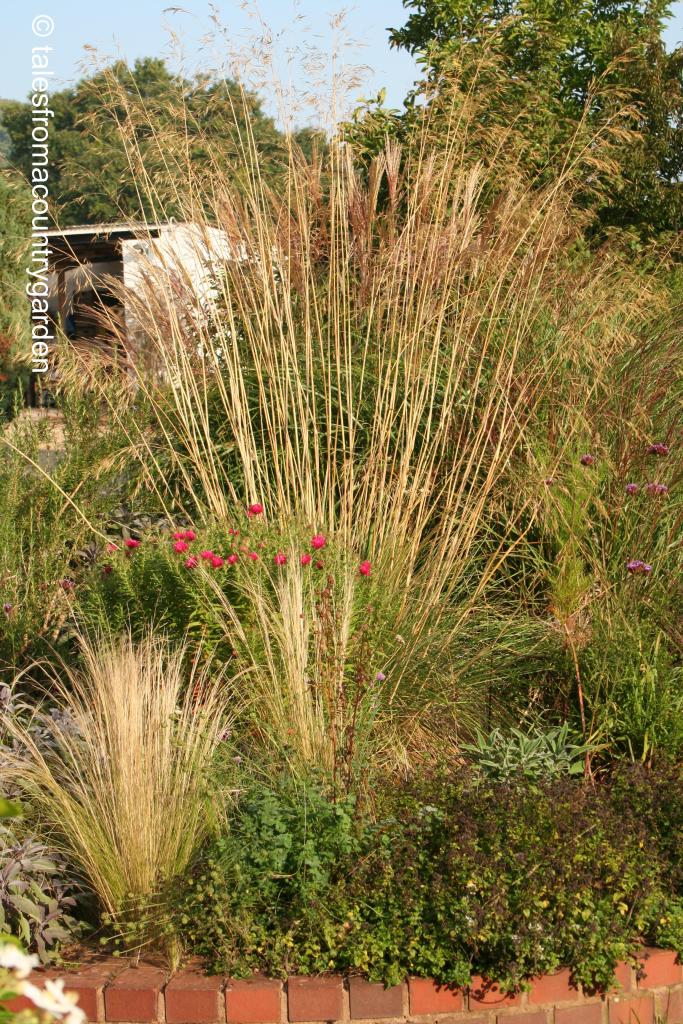
The Autumn bed in the Orchard has been looking colourful with all manner of yellow “Daisies”. Rudbeckia herbstonne towers over everything else, it must be between 6 and 7 feet tall. Helianthus Lemon Queen grows to around 5 feet and can just be seen in the photo and the plant on the edge of the bed with huge leaves and yellow flowers is Silphium perfoliatum. This plant grows to around 4 feet and is so sturdy, it doesn’t need any staking.
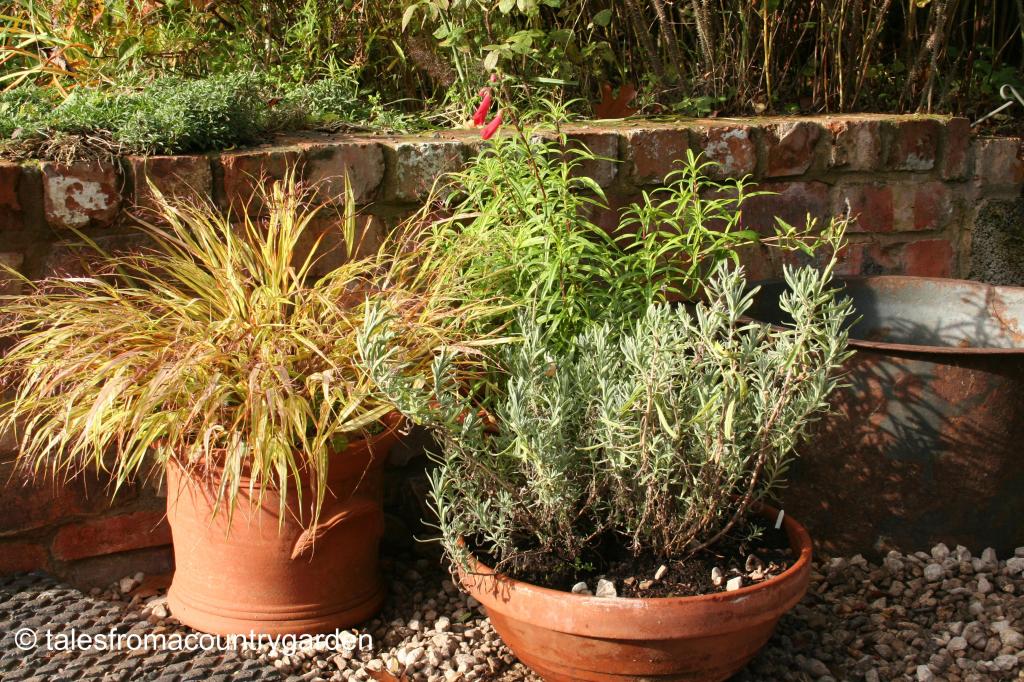
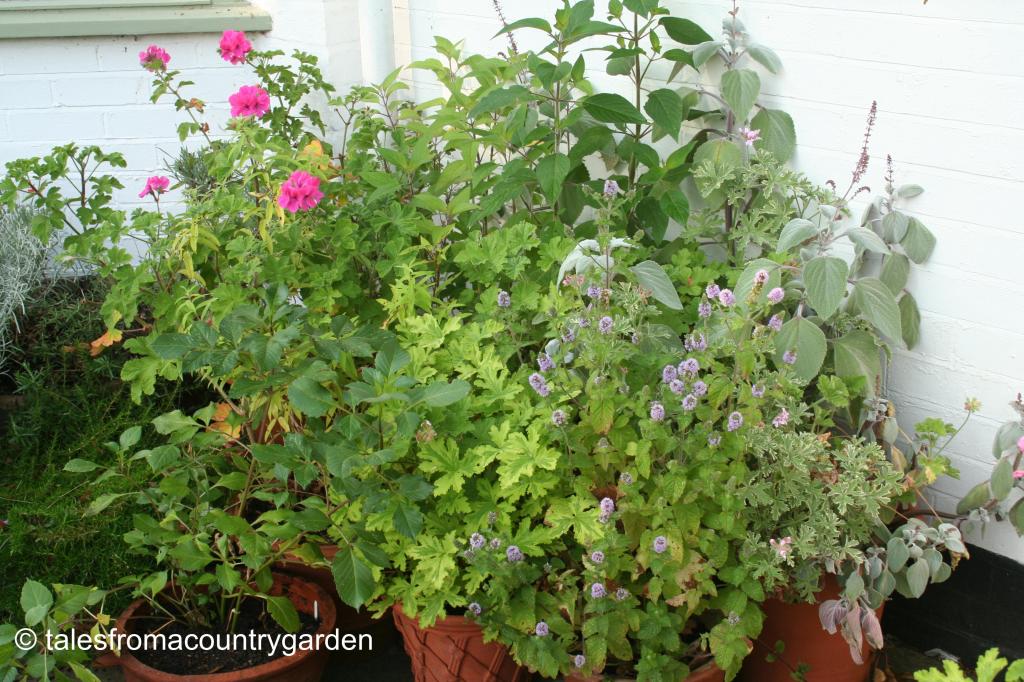
Terracotta pots that have been grouped by the house all summer are almost needing clearing out, but not for a week or so perhaps. This selection houses a dahlia that has just been rescued from a border where it refused to flower. Maybe a bit late for blooming this year. Scented leaf pelargoniums are a favourite and apart from displaying them in the greenhouse I also fill up containers with them. These have all had plentiful cuttings taken from them for next year. There is also a Grapefruit Mint with lovely lavender flowers – a gift from a neighbour – and the leaves really do have a sort of grapefruit scent. Again I’ve taken cuttings. The silvery leafed plant against the wall is Plectranthus Argentatus. I didn’t know I liked this plant until last year when I visited Whichford Pottery on a day when they were selling off plants from their greenhouse, as well as pots. Cuttings of Plectranthus were being sold in small terracotta pots so obviously I had to buy one. That one original plant just about made it through last winter and the greenhouse is now full to bursting with its offspring. I absolutely love the texture of the leaves, not so sure about the small flowers but I do trim some of them off.
I’ve been studying the bulb catalogue for weeks now and have finally taken the plunge and made a selection of tulips to plant in terracotta pots. I’ve chosen late flowering varieties in the hope that they will be at their best next May when the garden is due to be open for the National Garden Scheme. I’ve probably ordered too many and by the time you add in the Alliums, Reticulata Iris and Narcissus I think it’s going to be a busy autumn planting!
Already the end of July, where is the time going to this year? Following on from the very dry spring we now have had plenty of rain and sunshine and the plants and weeds are growing well. Two months ago I was in despair, the garden was so dried up and plants were wilting in the heat. It’s amazing how relatively quickly things change though, a few cooler days (and nights), some rain and the plants have perked up. The soil is still fairly dry – we are on sand after all – but the borders have looked good this year. Regular mulching with homemade compost is obviously helping long term, although the downside is all the weed seedlings.
As ever we’re enjoying watching all the wildlife that comes to visit us. I had a bit of a surprise a few weeks ago when putting a few weeds on the compost heap to see the tail end of a grass snake disappearing into the heap. She’d obviously decided that it was a safe and cosy spot to lay her eggs. I’m not quite sure how I feel about the thought of several grass snakes slithering around, but having previously found empty egg shells in another compost heap, I assume they are around more than we realise. We do feel lucky however that creatures such as this regard our garden as a safe haven. We do also see slow worms occasionally, apparently they are quite common in the countryside around the village.
I’ve spent an enjoyable fifteen minutes during a sunny afternoon taking part in the Big Butterfly Count, organised by http://www.butterfly-conservation.org. I downloaded an app onto my phone which also incorporated an ID guide for the most common species. I counted dozens during the fifteen minutes, although it is hard, if not impossible, to work out if the same insect has been counted multiple times! It seemed that it was the number of species spotted that was recorded and I was happy to see six different species in one part of the garden, although earlier that day I had seen another three species in the orchard and since then another three have been spotted. I don’t know how that compares to an ‘average garden’. The Big Butterfly Count runs through until 9th August and you can send more than one record – I’m keen to do the count again. It’ll be interesting to see if there is a change in species seen. I love to watch butterflies, some years ago when walking the dogs through the fields adjoining us I walked through clouds of Marbled Whites. What a treat and yes they do come into the garden too.
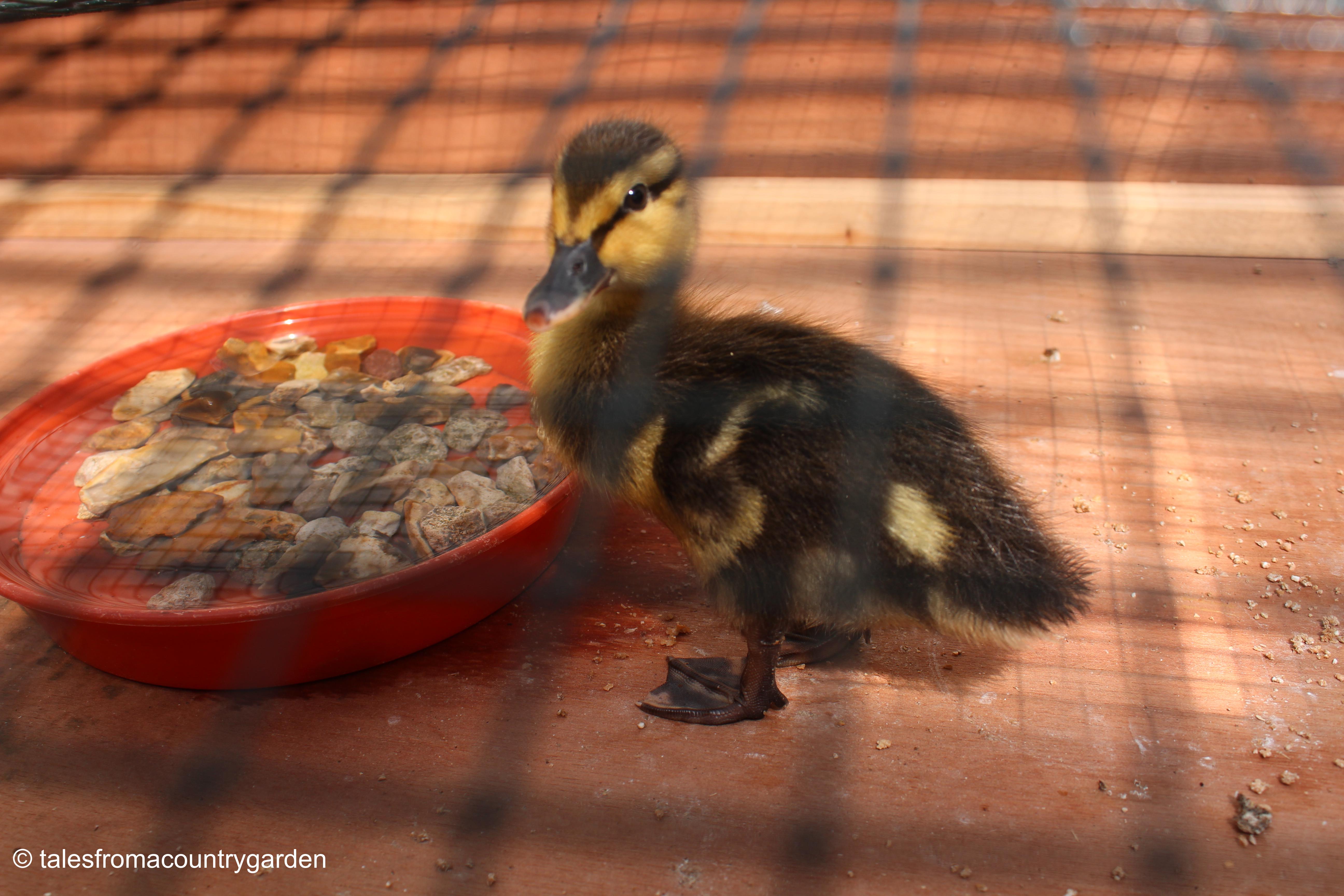
Still on the wildlife theme, sadly the Mandarin ducks that were in the garden in April have failed to raise any young. After around five weeks sitting on the eggs the female finally gave up. Let’s hope they return again next year. The Mallard duckling that adopted us back in April is still with us. It now has the run of the garden and although it goes for a fly around most days, so far it has always returned. I’m now getting quite accustomed to it flying around the garden with me at shoulder height! It’s slightly more help than the dogs when I am weeding, staying close ready to peck up any tasty looking bugs. Shoe laces appear to resemble worms, so care is needed when standing up!
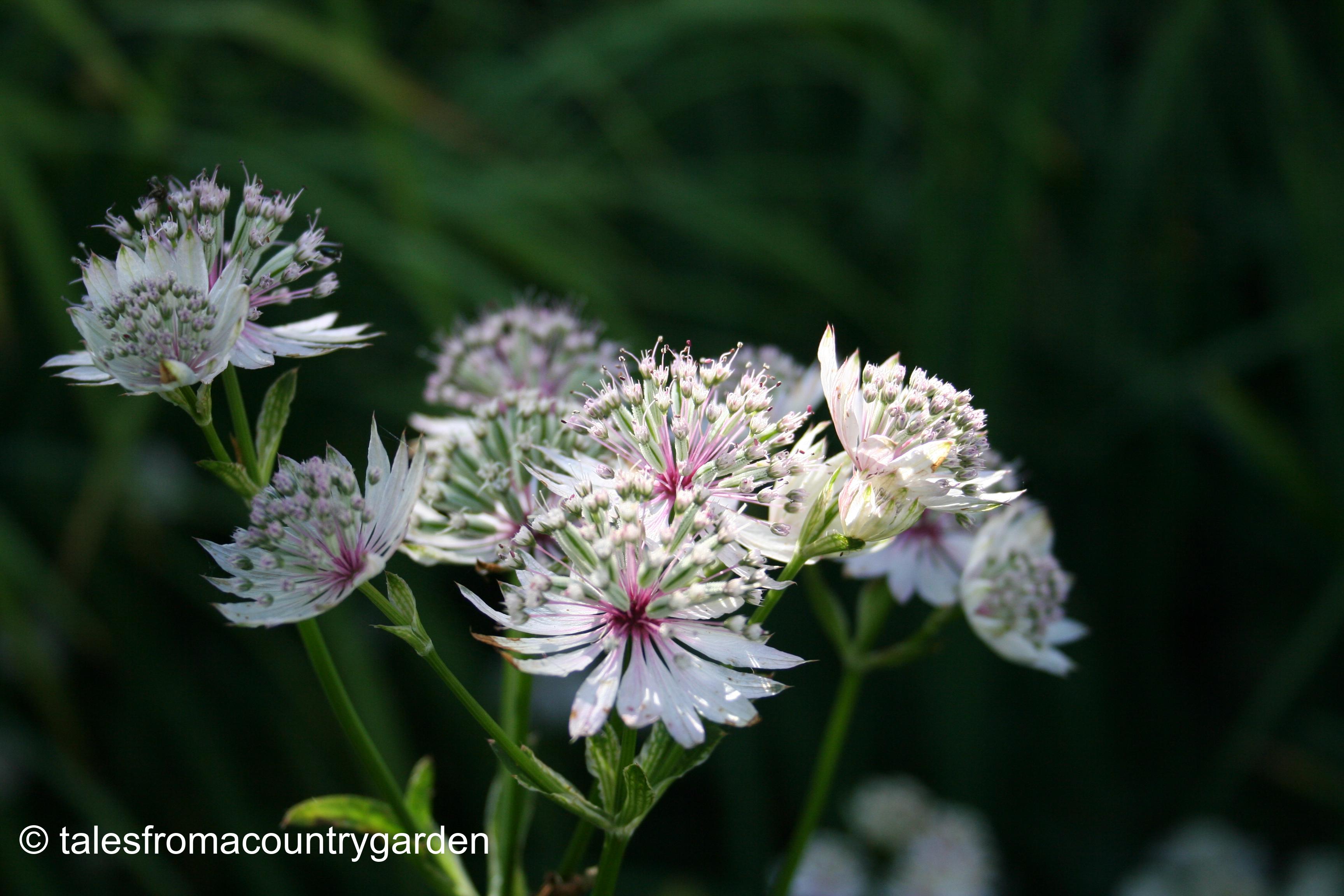
Astrantia
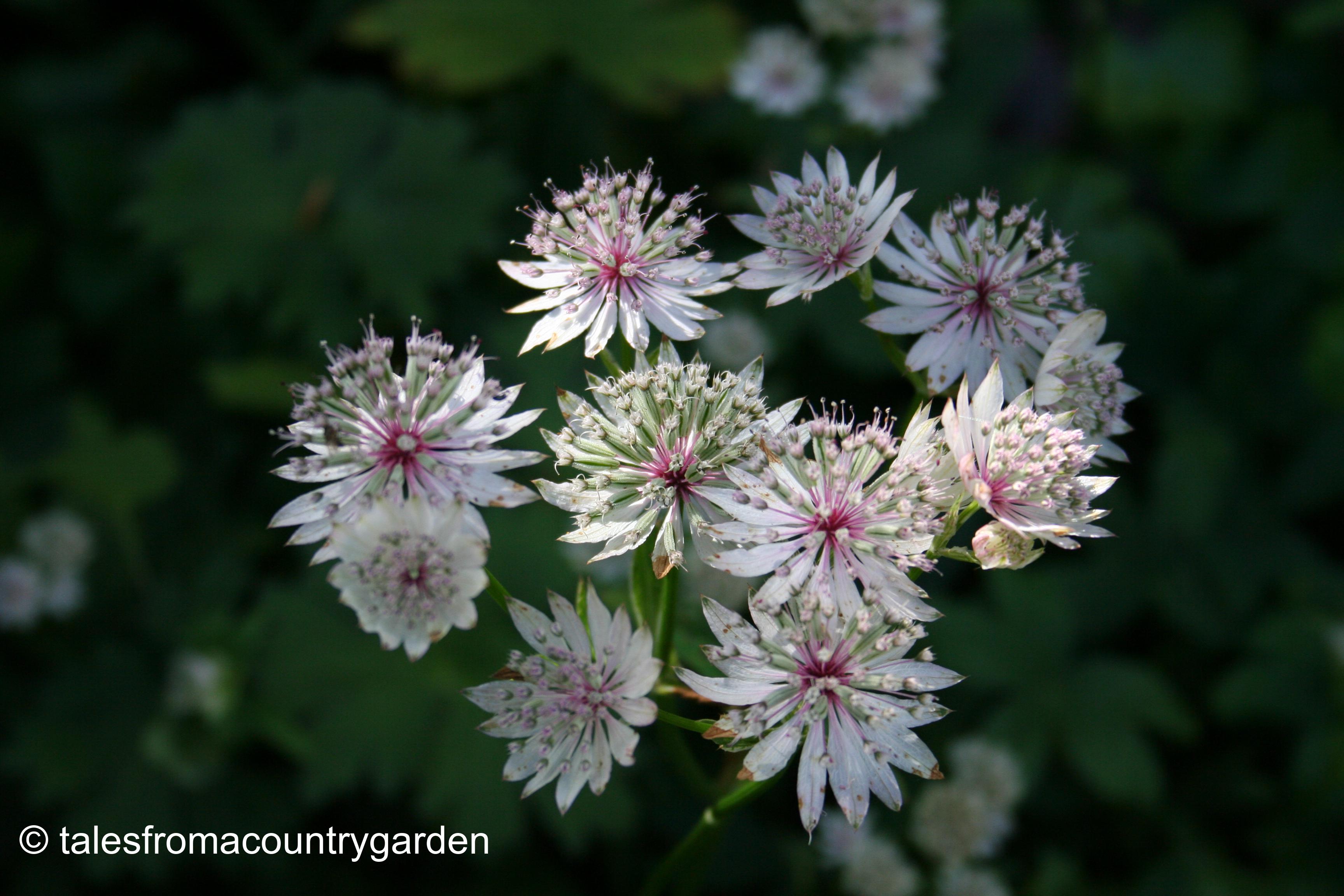
Astrantia
Echinacea purpurea Magnus
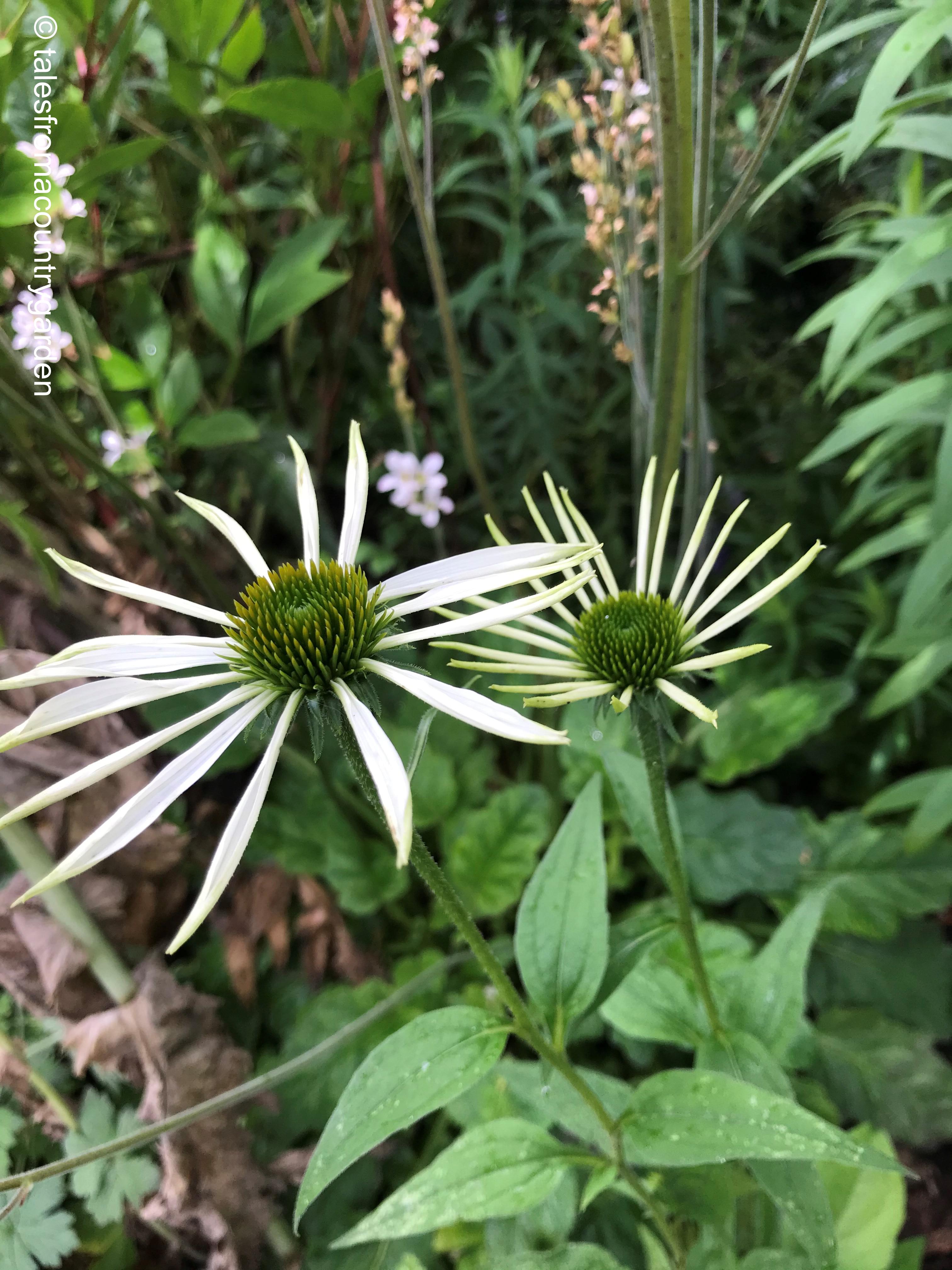
Echinacea White Swan
Duck helping
Echinaceas planted last year are starting to flower. I’m particularly pleased with “White Swan” as I grew it from seed a couple of years ago and it didn’t look as if it was thriving until about a week ago. I particularly like Echinacea Magnus and have recently purchased another couple from Pershore Horticultural College Nursery Sale. Before they can be planted (along with some other purchases from the College) a new flower bed has to be dug to house several plants that are taking over in the back garden. We plan to move a large clump of Solidago and another of Eupatorium into the orchard, making another “Autumn Bed” to mirror one we dug a couple of years ago. Then the bed in the back garden will be re-designed with slightly less invasive plants. This will be a job for much later on in the Autumn when the weather is cooler and hopefully we will have had a decent amount of rain to make the digging a bit easier.
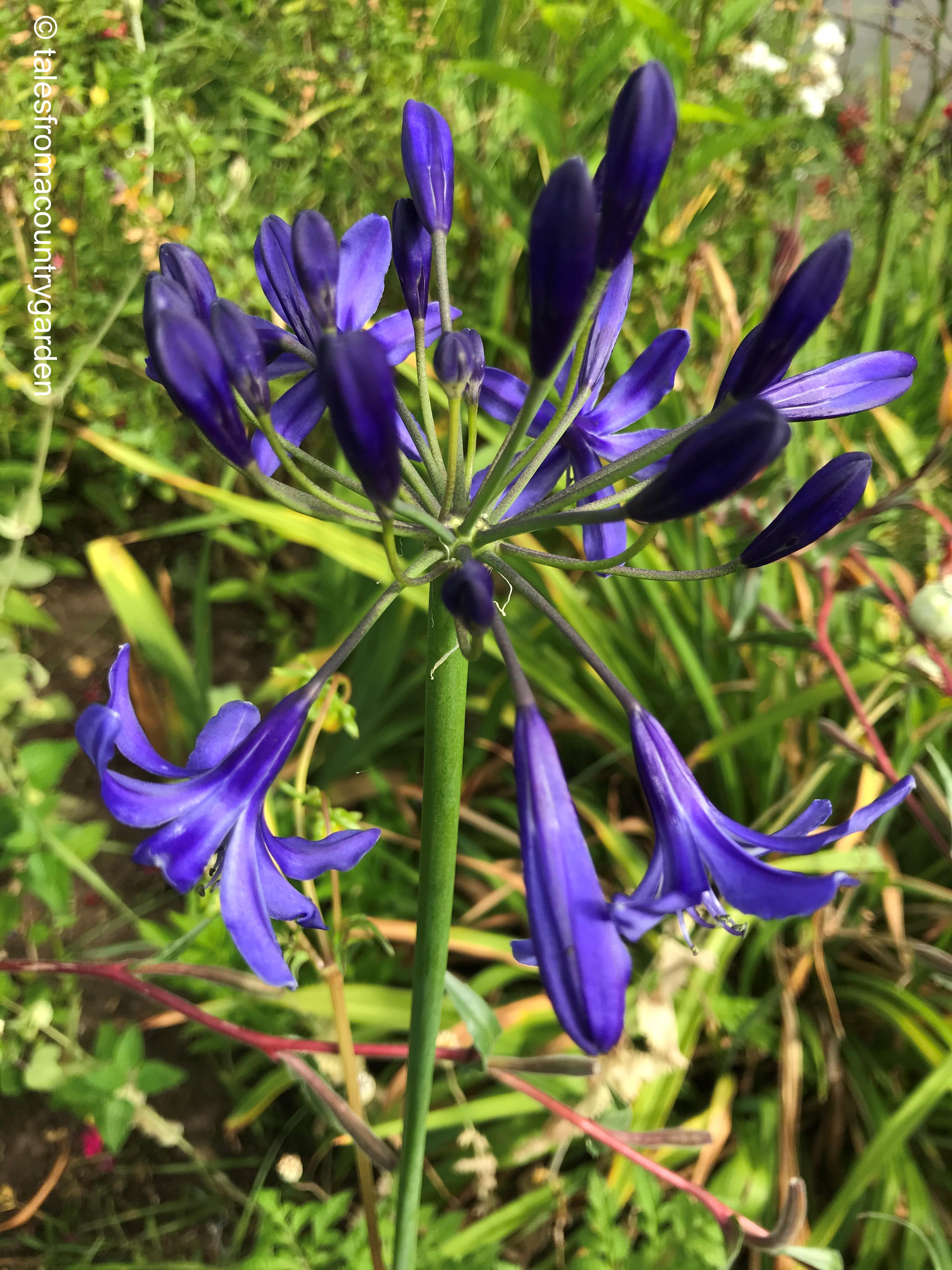
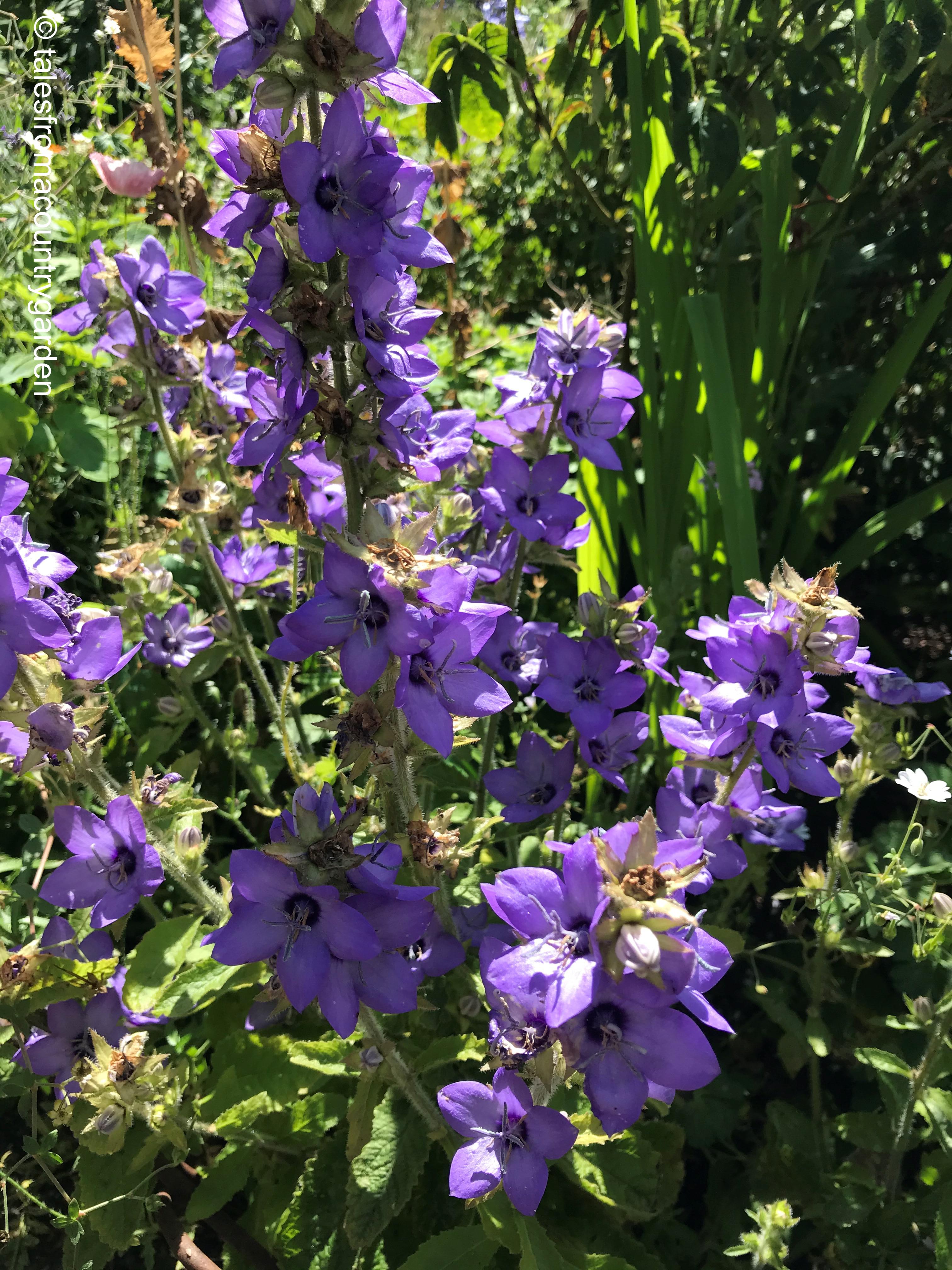
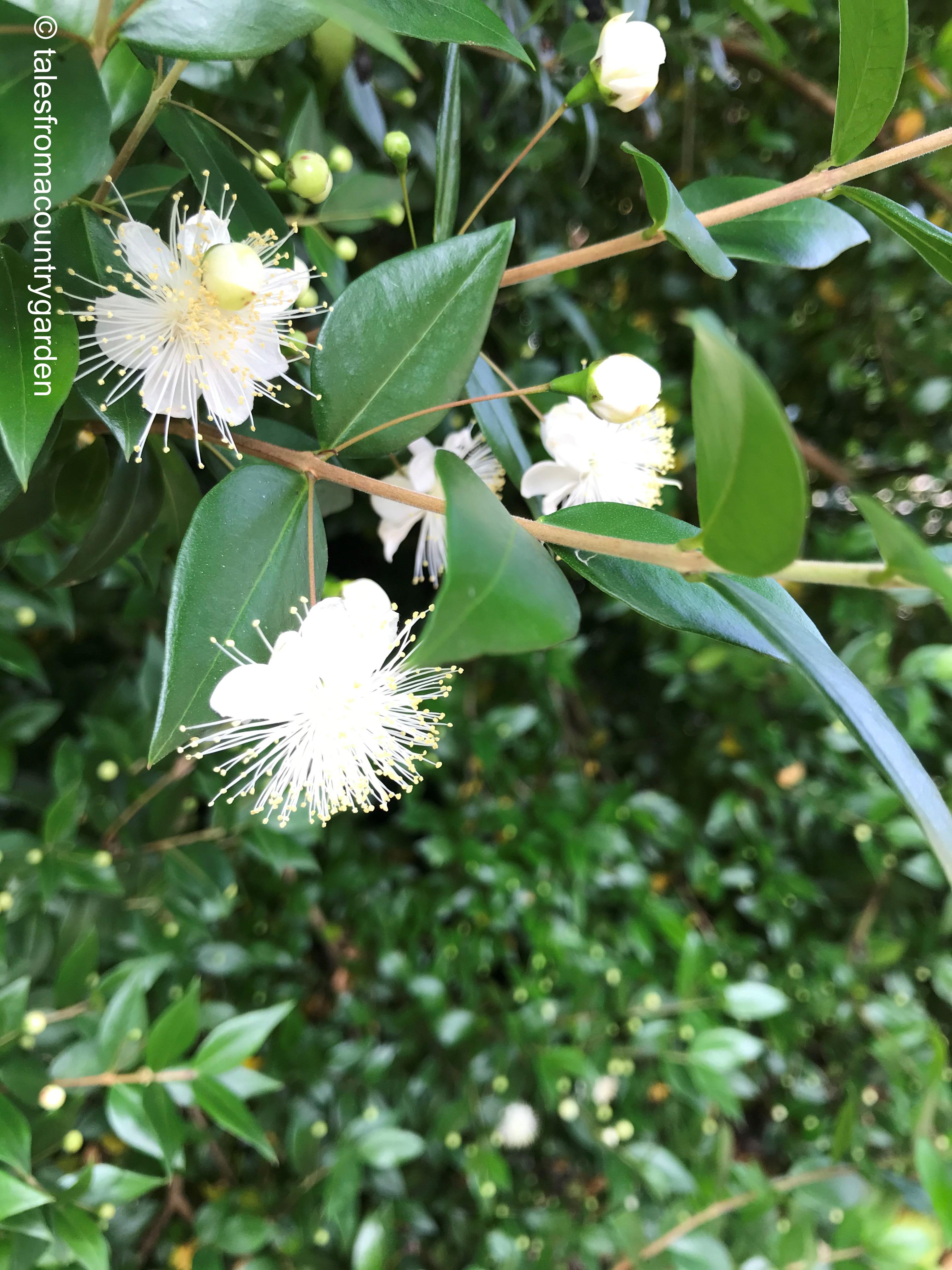
Over the years I’ve planted several Agapanthus, unfortunately in my usual fashion losing the name labels along the way. One that really stands out at the moment can only be described as navy blue in colour, quite beautiful. I’ve grown a lovely Campanula from seed acquired from the Hardy Plant Society seed exchange, Campanula primulifolia. It flowered for the first time last year and I thought it was rather pretty, this year the plants have really put on some growth and the flowers are absolutely stunning. I’ll have to save and sow the seed in the autumn. It would be good to have some plants to sell at our NGS open day next year. One of the favourite shrubs in the garden is Myrtle. It was here when we moved in and occupies a spot underneath the big old apple tree on the drive. It must be around 4 feet tall and as much across with lovely glossy green leaves, the white pom pom flowers are just opening.
Agapanthus
Campanula primulifolia
Myrtle
I planted quite a few new dahlia tubers this year, and I’m enjoying their flowers. I was a little bit cross though when Dahlia Bishop of Leicester, pink flowers, turned into something else with orange flowers. A nice dahlia once I’d moved it into a better spot with other ‘hot colours’.
The calendar says June but out in the garden it feels more like late August. I’ve never known the ground be so dry and dusty at the beginning of June as it is this year. Half a mile down the lane there is a field of barley which is turning golden, but it remains to be seen if it is a worthwhile crop, whilst a little further along the farmer has taken a cut of hay, I’m not sure of the acreage of the field but our one acre plot would fit in it several times. He has an astonishing total of 6 large round bales of hay for his trouble – I know, I counted them, twice. That won’t feed any of the local horses for very long this winter.
However as I look out of the window – oh joy! It’s raining. Second day in a row and I just hope it fills the water butts and soaks into the soil a little. It nothing else it is freshening everything up and settling the dust.
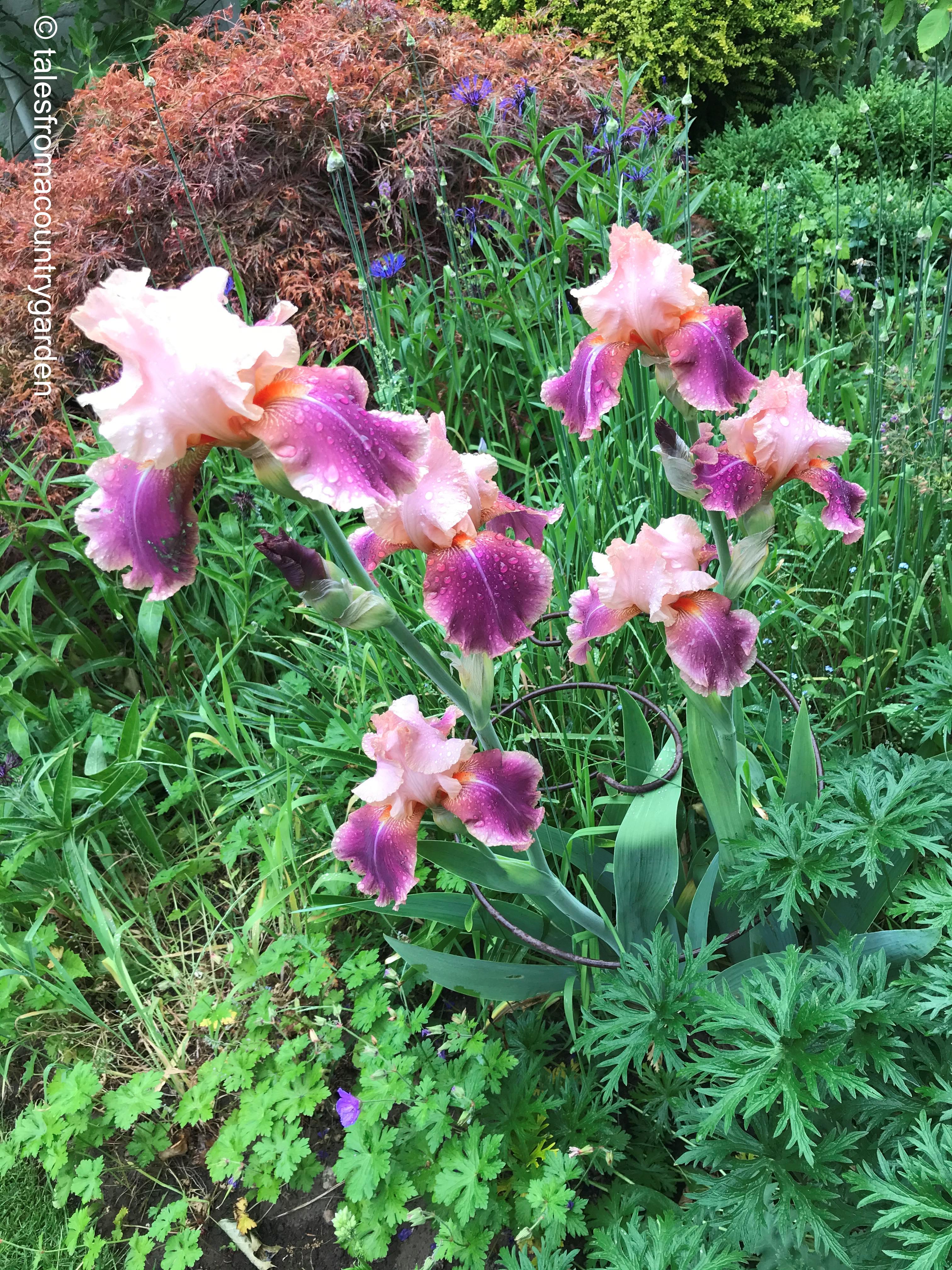
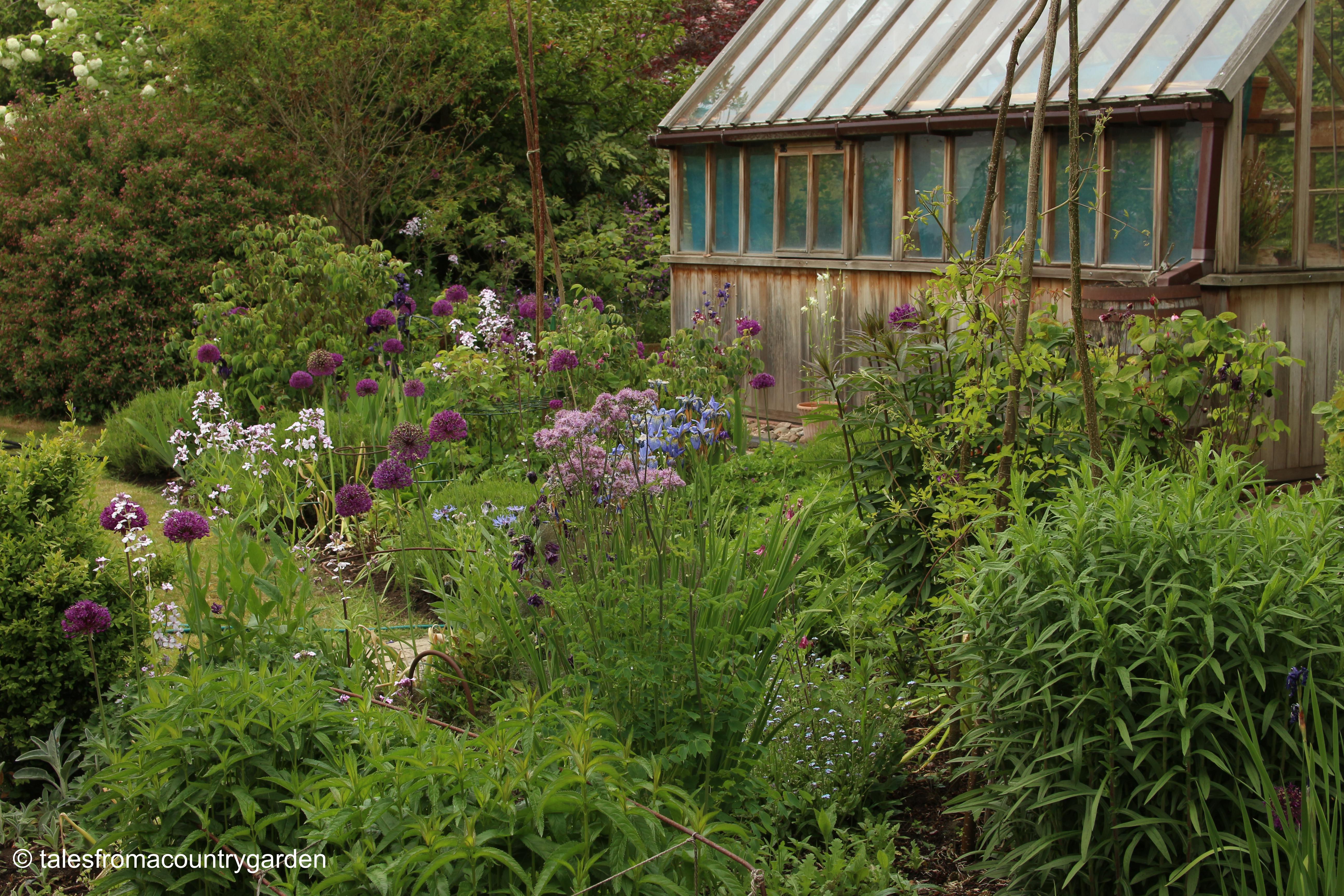
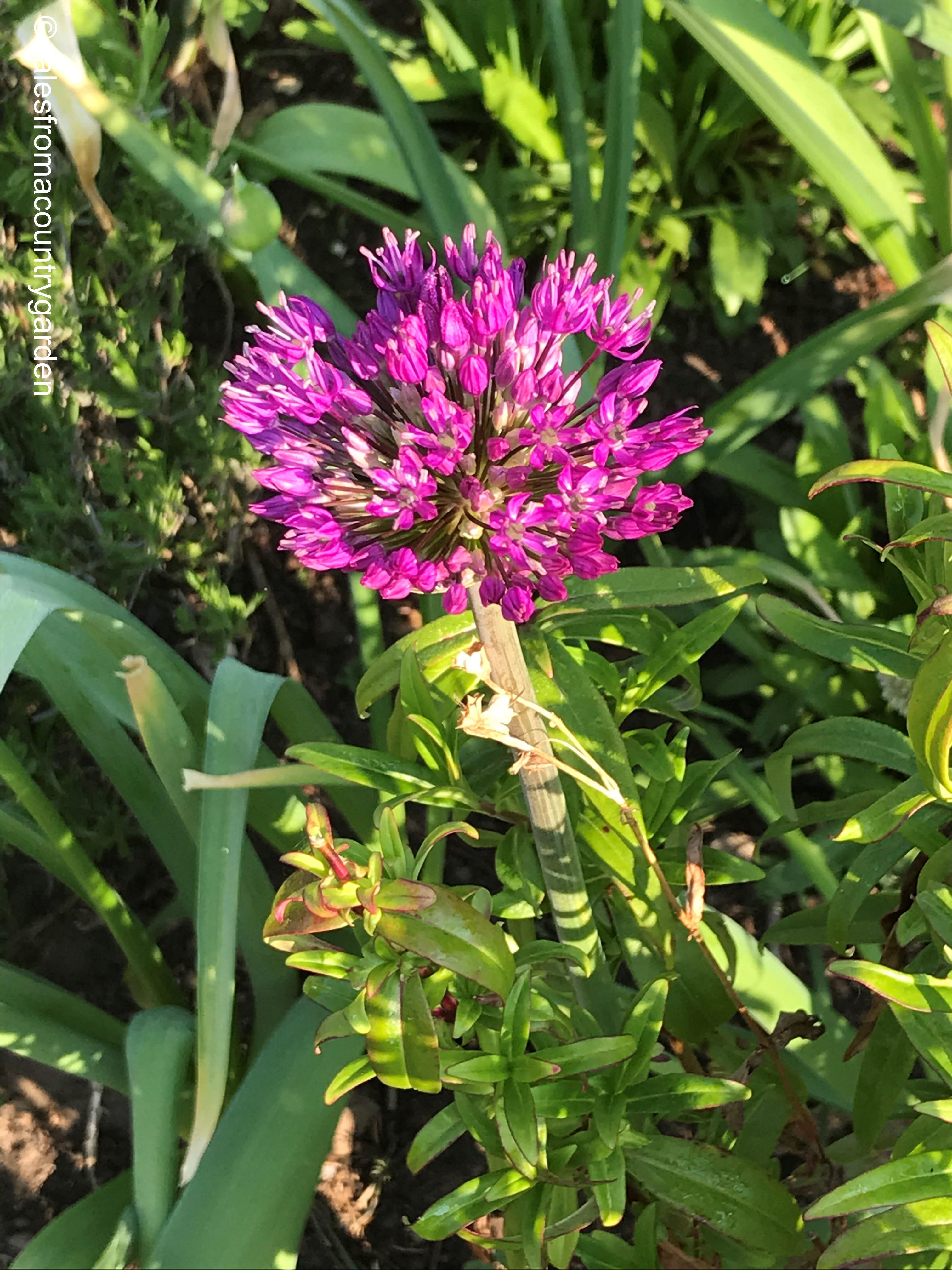
I planted more Allium bulbs last autumn to boost those that were already in the garden, this was a success and the Alliums have been stunning this year. I must remember to order some more in the autumn to keep the display going. They are all over the garden but look particularly good growing in a bed mixed in with Roses and Bearded Iris. I do like Bearded Iris and have a lovely dark coloured one called Sable, the only slight disappointment being its lack of scent. Its deep coloured flowers looked lovely in amongst the Alliums. A new Iris for the garden last year was Iris germanica Carnaby, it spent last year settling in to its new home and this year has flowered magnificently. It is a new favourite, with a slight scent too.
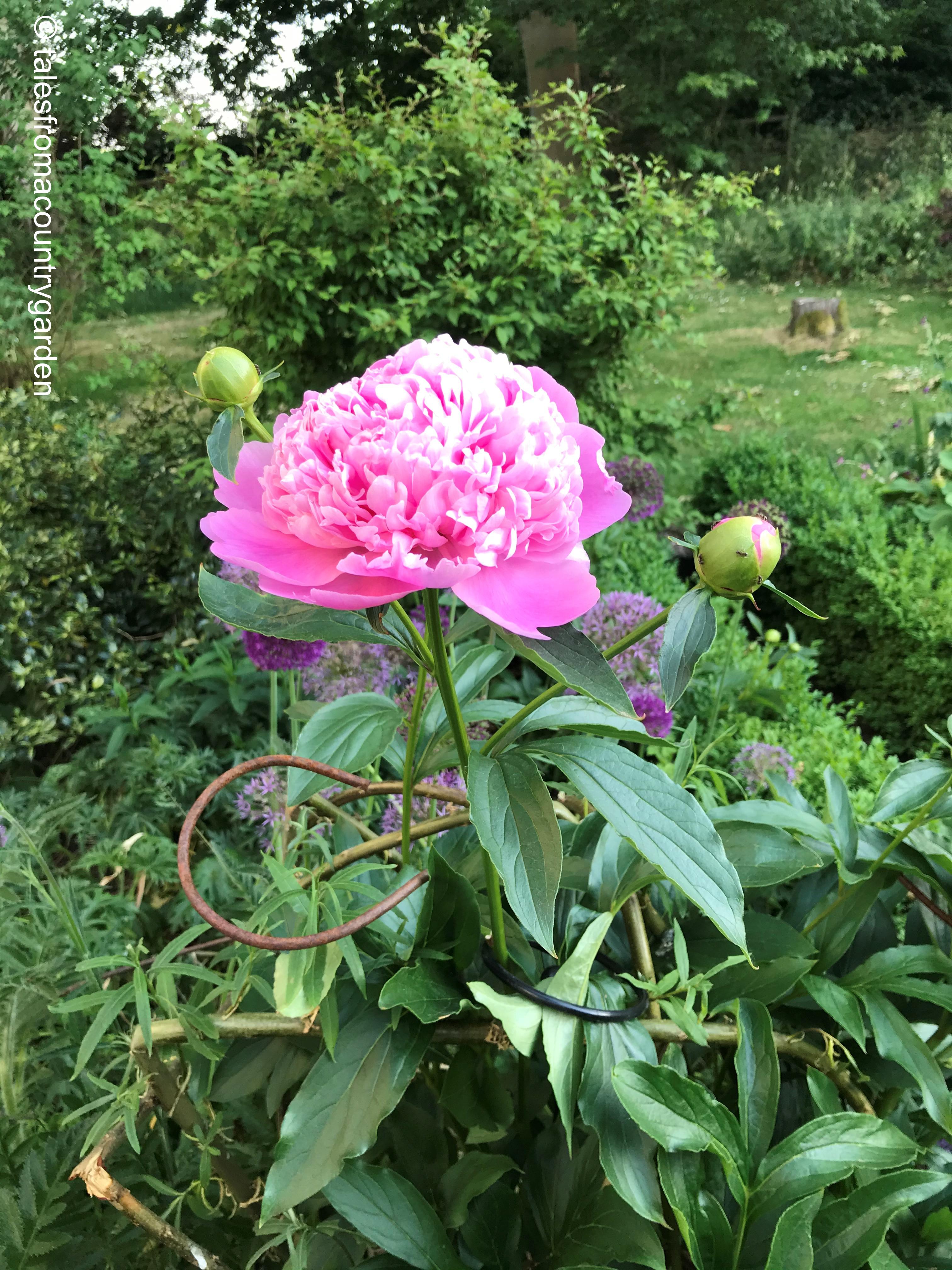
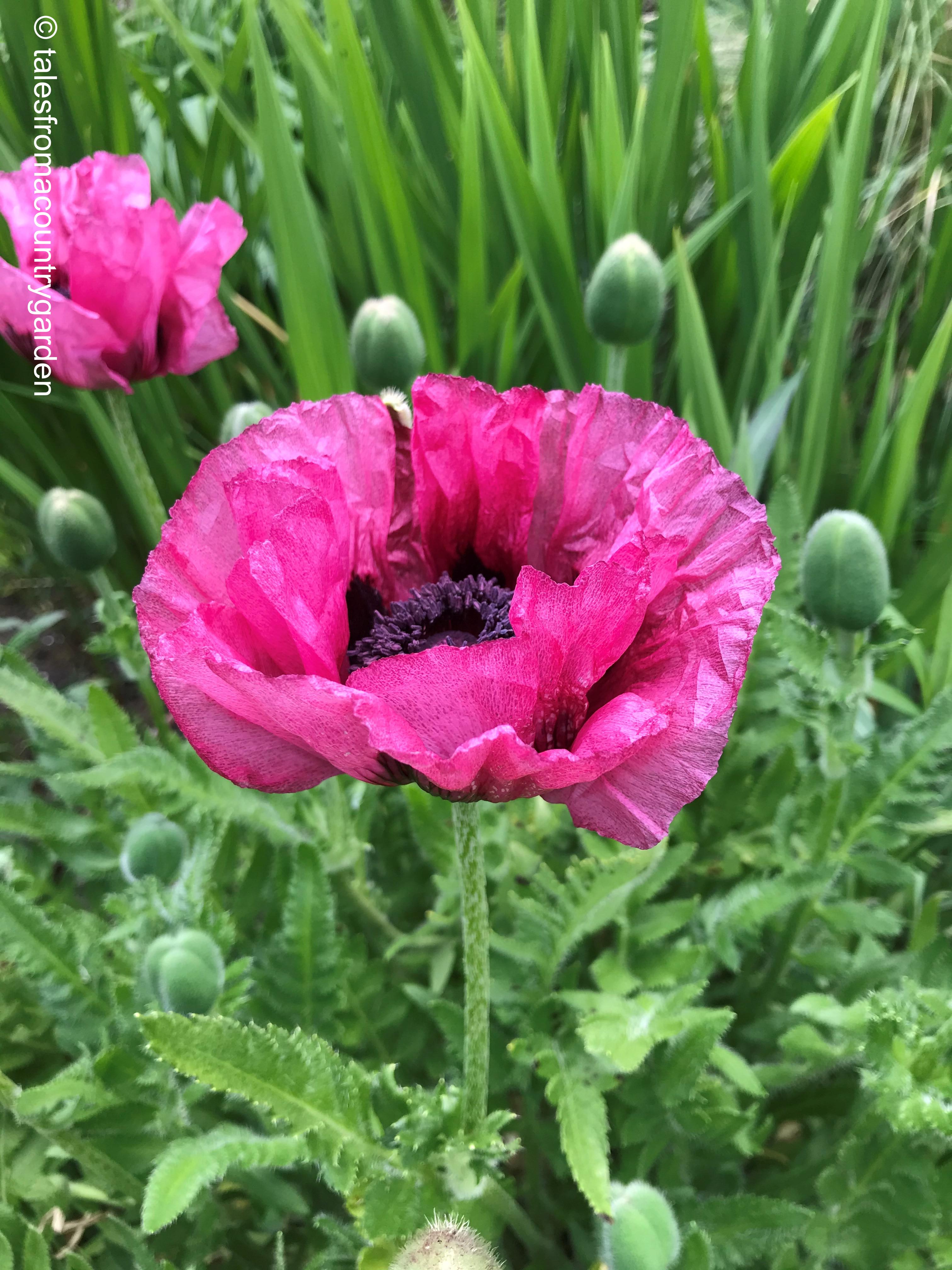
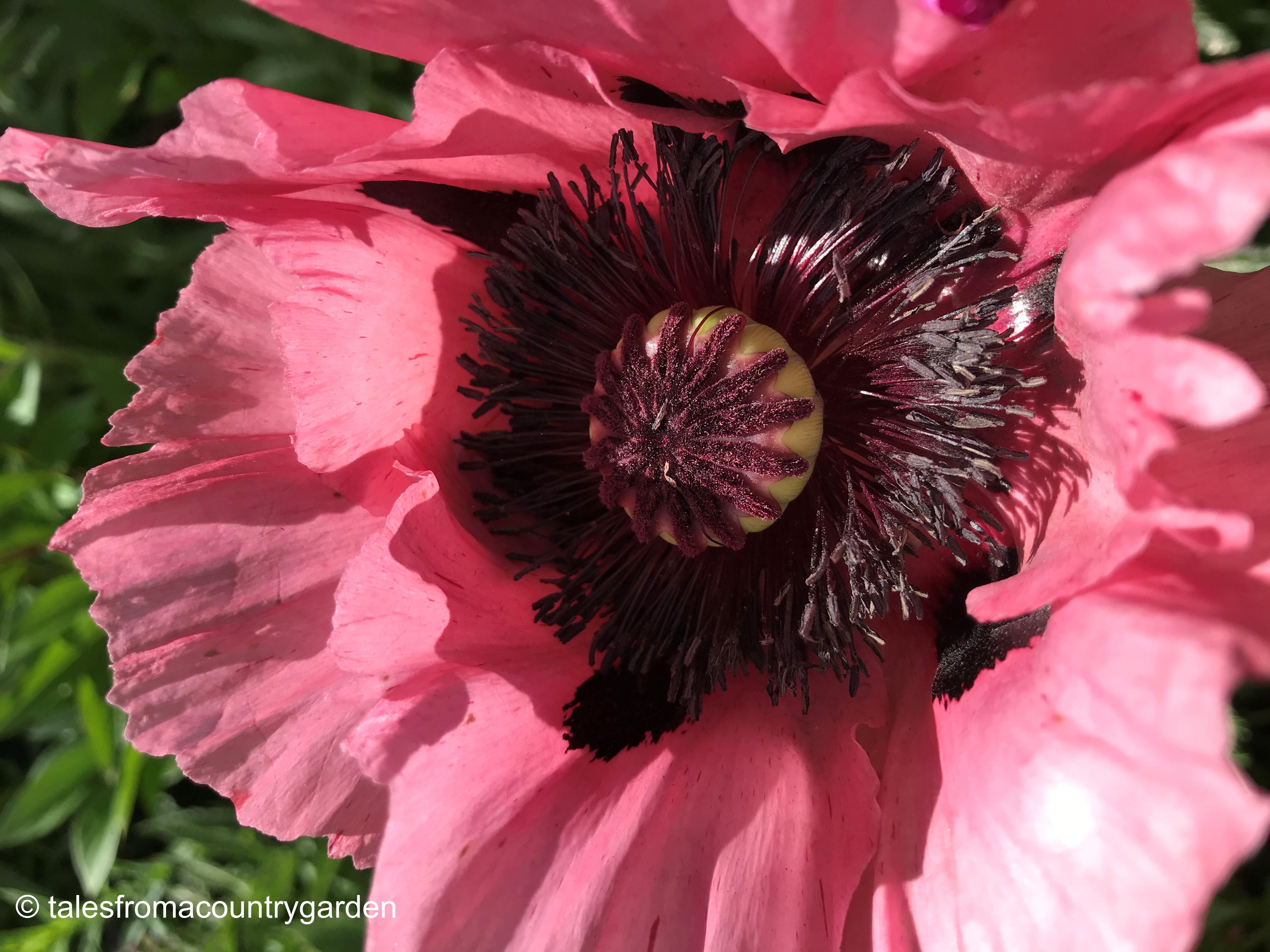
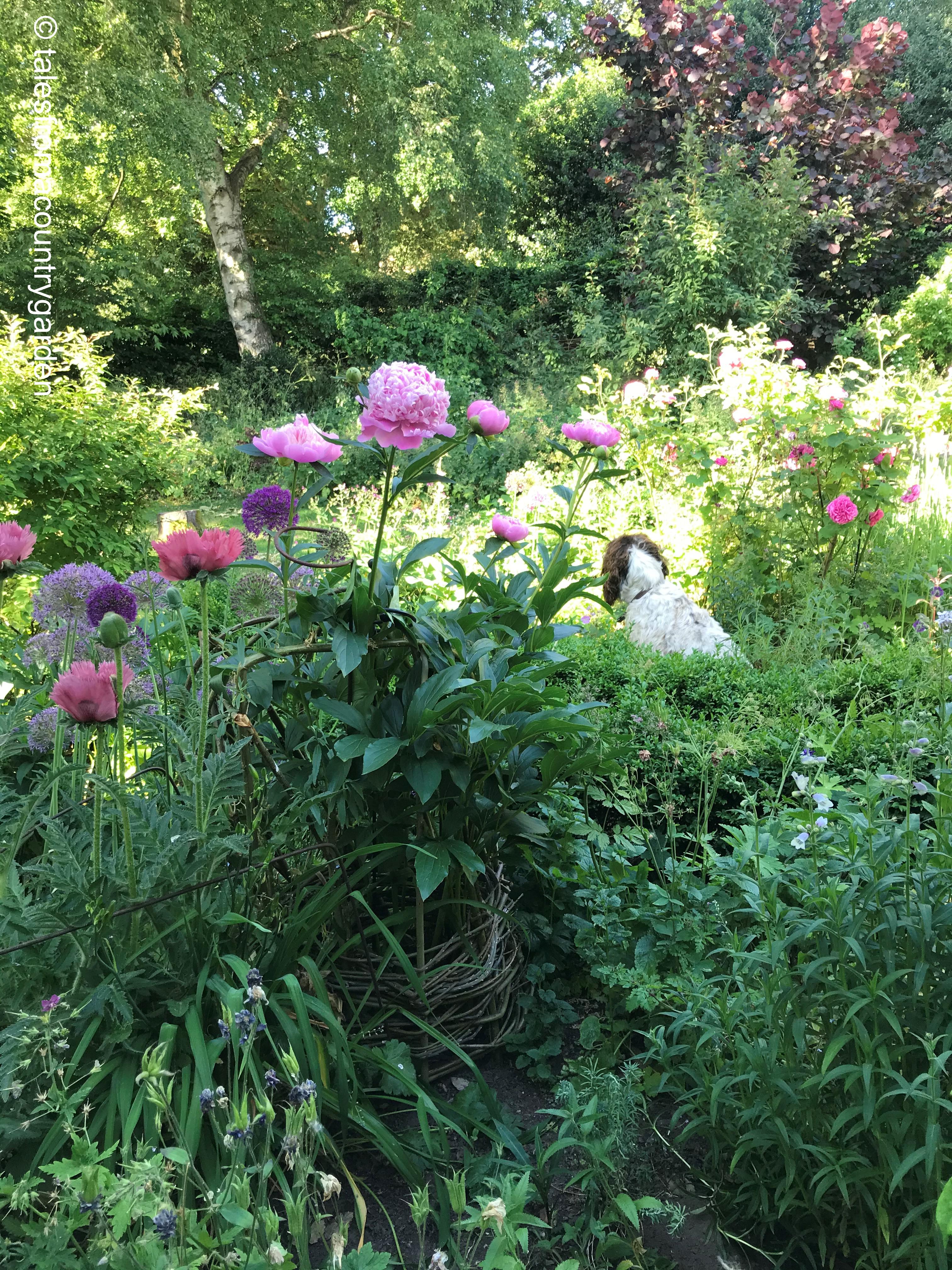
Peonies are coming into flower, dark red ‘Karl Rosenfield’ is in the back garden with Oriental Poppy ‘Patty’s Plum’ growing at close quarters. Both have enjoyed the hot weather and have never looked so good. In fact the Poppy is growing right through the middle of the Peony but both appear happy at the moment and I don’t dare try and separate them in case it spoils both. In the front garden we have pink Peony ‘Monsier Jules Elie’, surrounded by Alliums and another ‘Patty’s Plum, nearby is the white double Peony ‘Duchesse de nemours, which is tightly in bud at the moment, leaning across a small box hedge reminding me I need to find a stake to prop her up.
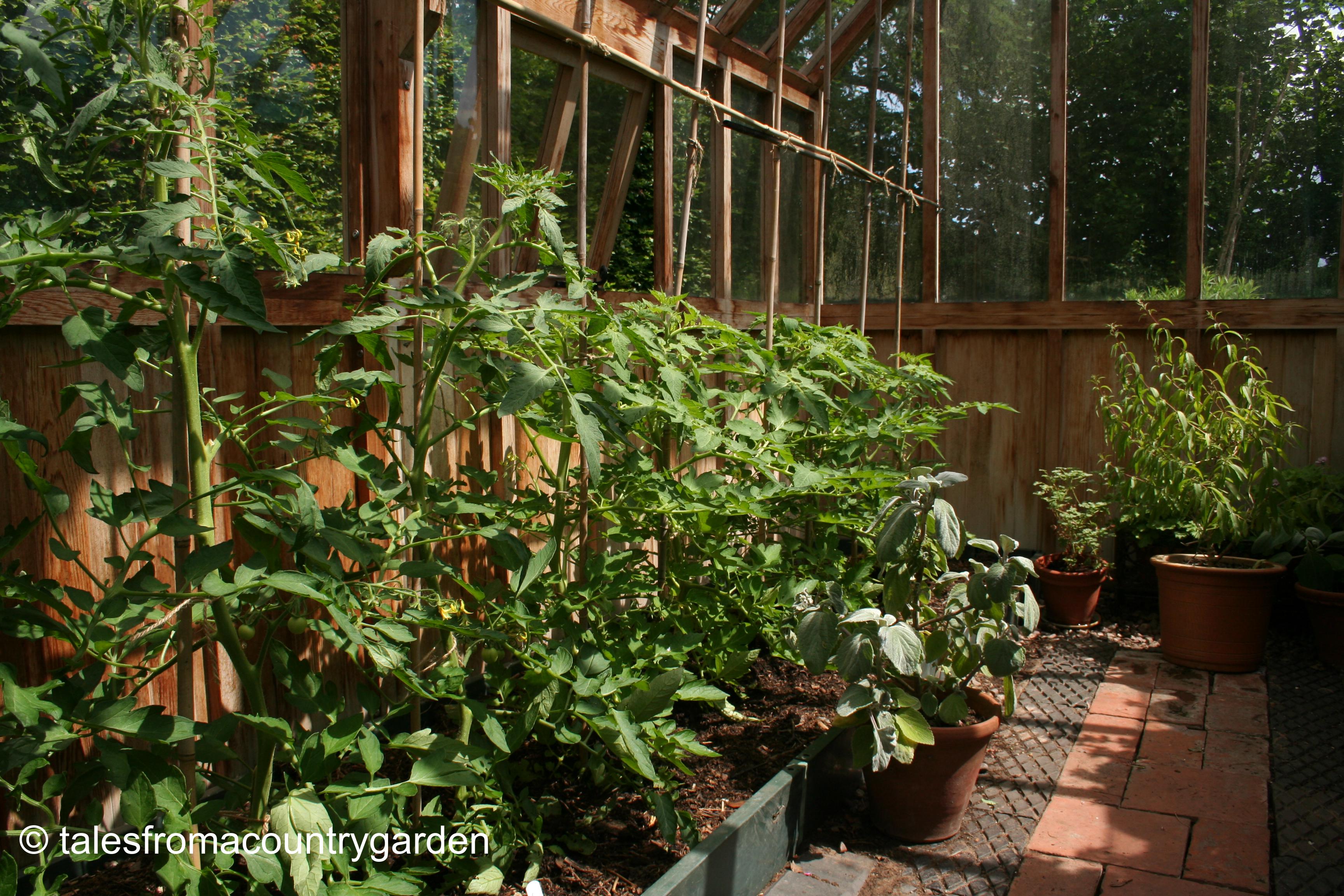
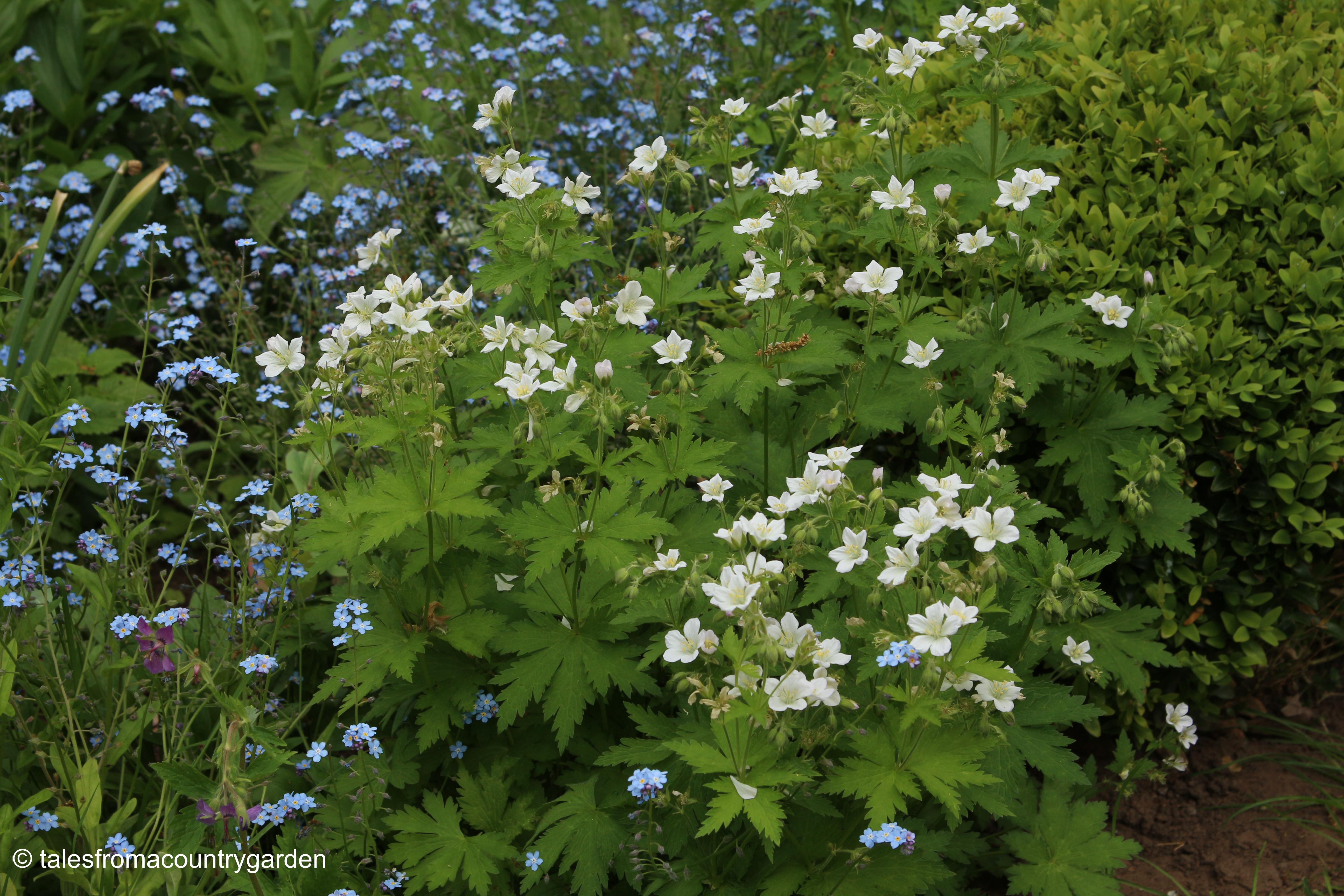
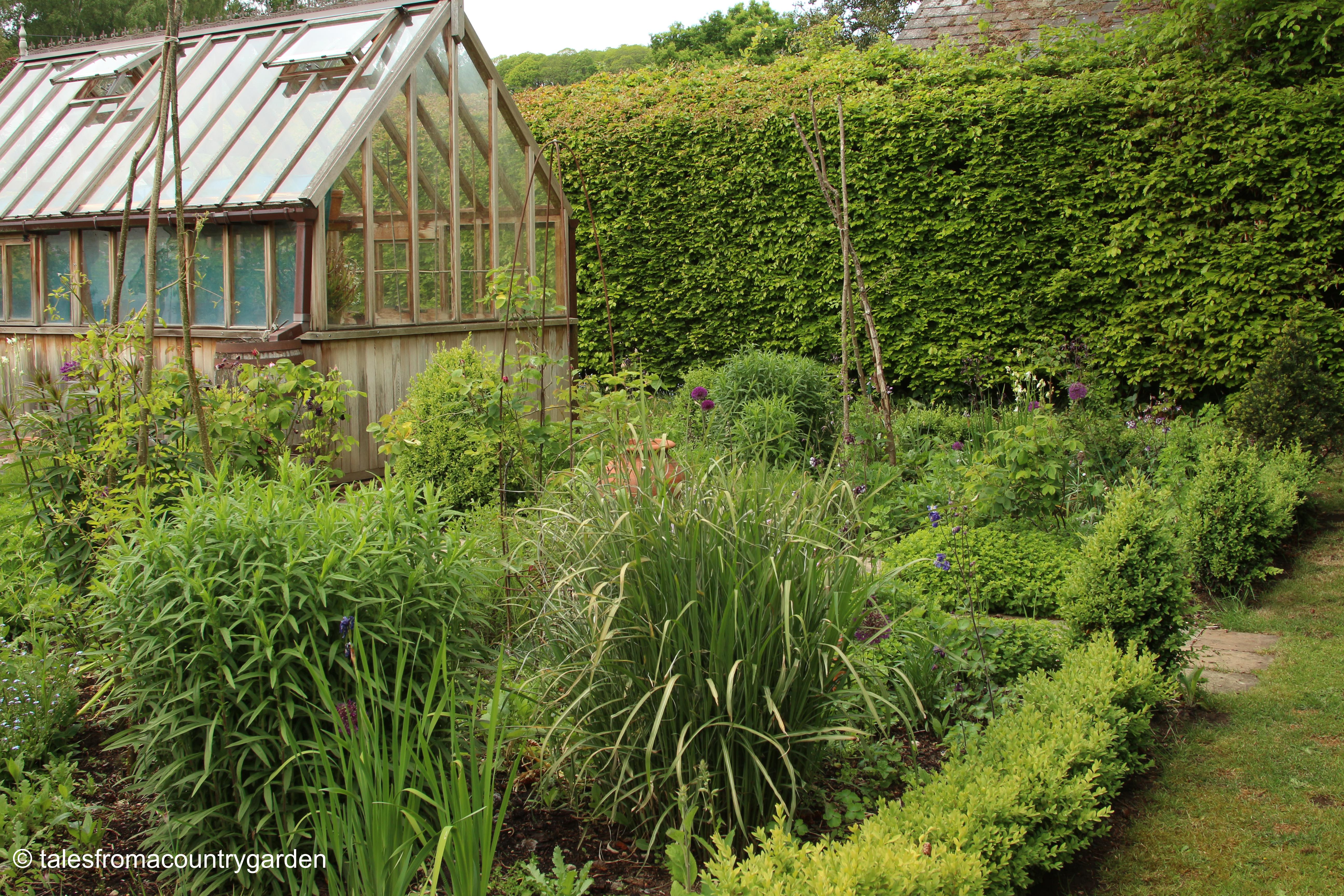
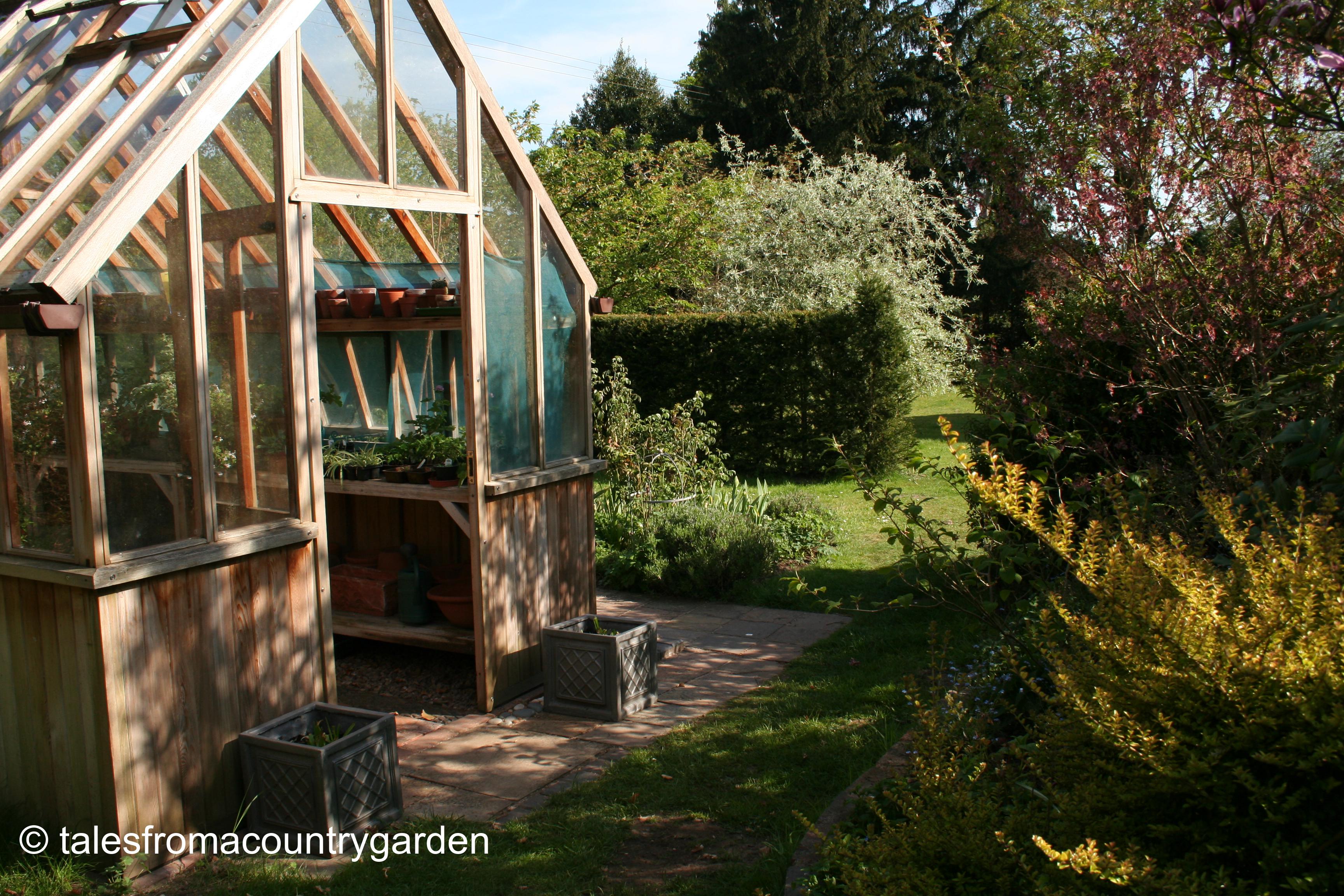
Rain showers are seeing me taking cover in the greenhouse – just the right temperature today – where I am busily tying in the tomato plants, and taking out the side shoots. On the opposite side of the greenhouse is my collection of scented leaf Pelargoniums some of which I have trimmed back and dead headed and finally everything has had a feed of tomato food. When the rain stops I will take the opportunity of pulling out the Queen Anne’s Lace and tidying up Geranium phaeum Samobor in the spring borders. Both are now looking well past their best, this is a job which should keep me happy for a few hours!
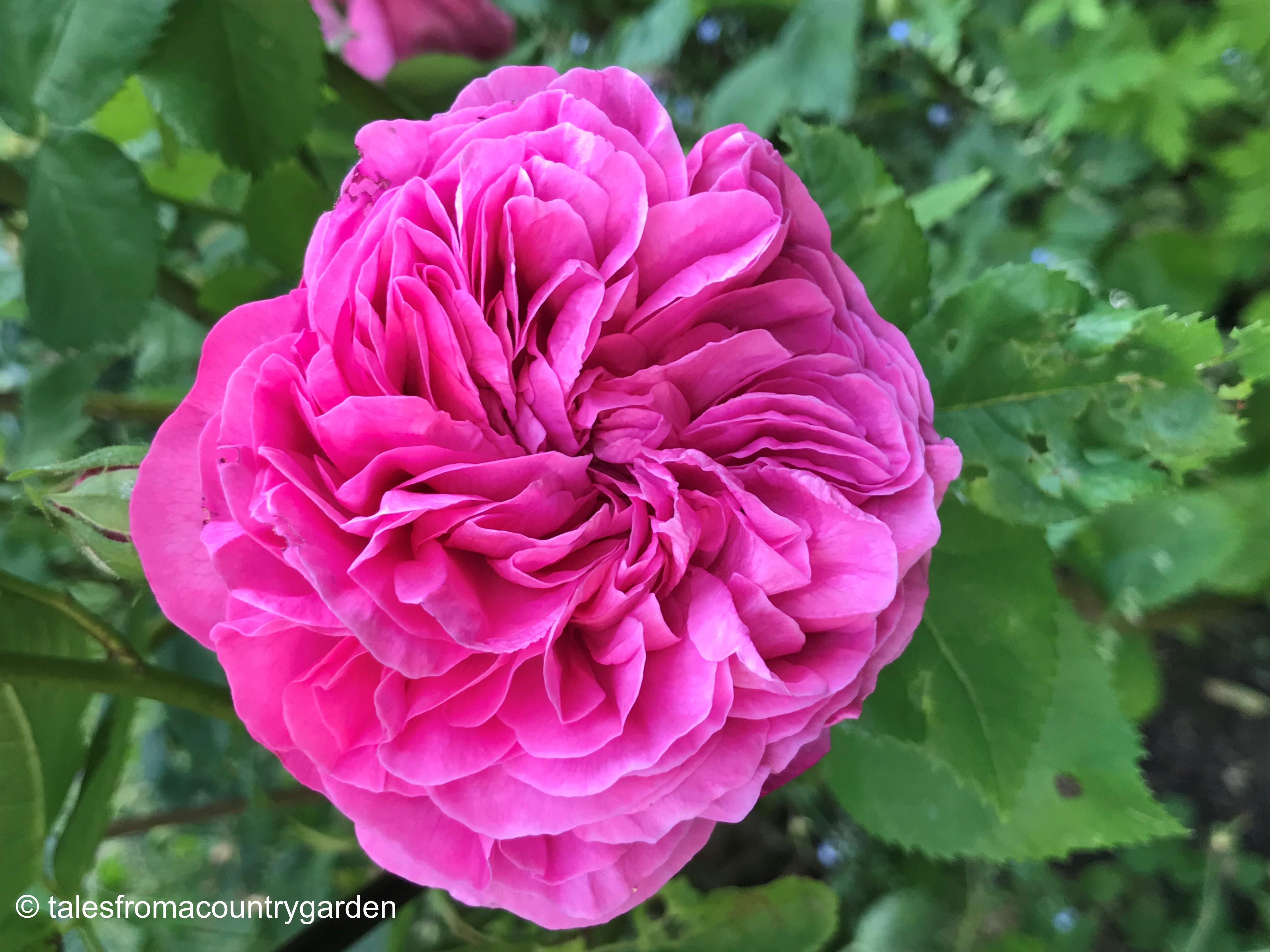
Rosa Louise Odier
Peony Karl Rosenfield and below surrounded by Papaver Patty’s Plum
Peony Monsier Jules Elie
Papaver Patty’s Plum
Iris germanica Carnaby
Alliums, Poppy, Peony and Springer Spaniel!
Iris Sable and alliums
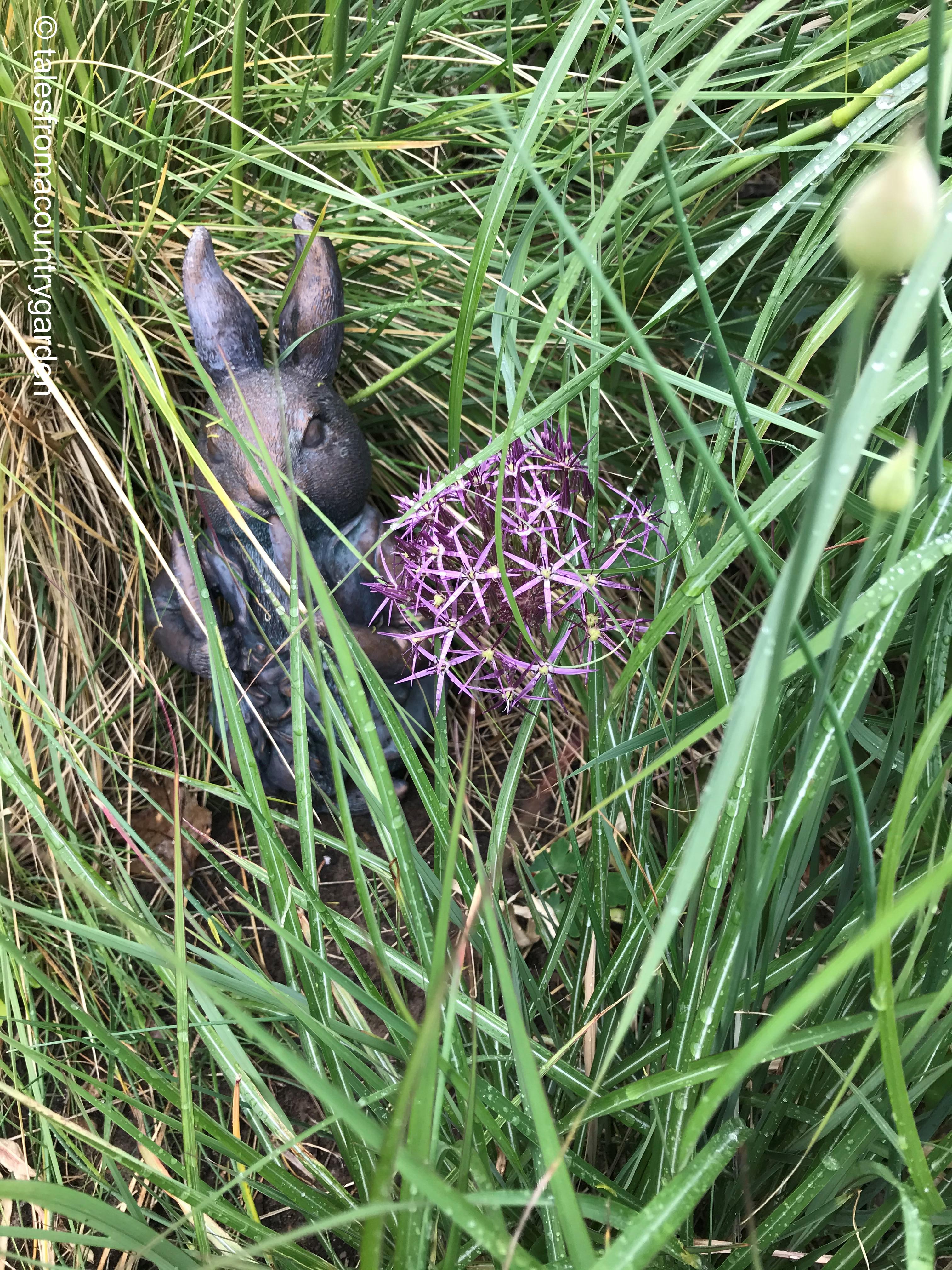
A welcome rabbit – this one won’t be nibbling plants!
Greenhouse and below a terracotta pot forming part of a display
Today we should have been flinging the garden gate wide open, boiling the kettle, slicing cake and putting plants out for sale – all to raise money for the National Garden Scheme. Sadly due to coronavirus the garden gate is firmly shut and locked and the only tea and cake served here will be for us and three of our adult ‘children’ who are in lockdown with us. There are worse places to be and the last few weeks have seen me gardening more than ever. There are still weeds that have evaded me, I see more each day waving to me from the borders but many have pretty flowers anyway, so some will be allowed to stay for a short while.
Some plants that I envisaged being at their best today have co-operated. Alliums are looking splendid and so far our two springer spaniels have managed not to destroy any of them as they charge round the garden. The spring borders are now full of Geranium phaeum Samobor, Queen Anne’s Lace (cow parsley), Comfrey and bumble bees! All looking just as I anticipated it would before it all slides into disarray next month. The first roses are just opening, Mme Alfred Carriere climbs up and through a partially hollow apple tree and the first couple of flowers are open right at the top. Rosa Gertrude Jekyll is always one of the first to flower and hasn’t disappointed this year. There are many buds on all the roses, promising a lovely display over the next few weeks.
The spring borders, taken over by Geranium phaeum Samobor
Geranium Mary Mottram
A barrel full of hostas – mainly miniatures
Rosa Gertrude Jekyll
Just some of the plants that would have been for sale
As I won’t be able to sell tea and plants this afternoon I’ll be in the garden anyway – weeding!
For more about the National Garden Scheme open gardens visit www.ngs.org.uk
Strangely enough April seems to have flown past, I can’t believe tomorrow it’ll be the first day of May. So many changes in the garden in a few short weeks. Tulips that were purchased specifically because they were late flowering, more specifically May flowering, to coincide with our NGS open day in mid-May have come and gone and the pots emptied and re-filled with scented leaf pelargoniums. The tulips were lovely but if we plan to open the garden for Charity next May I will have to be more careful in my choice of bulbs this autumn.
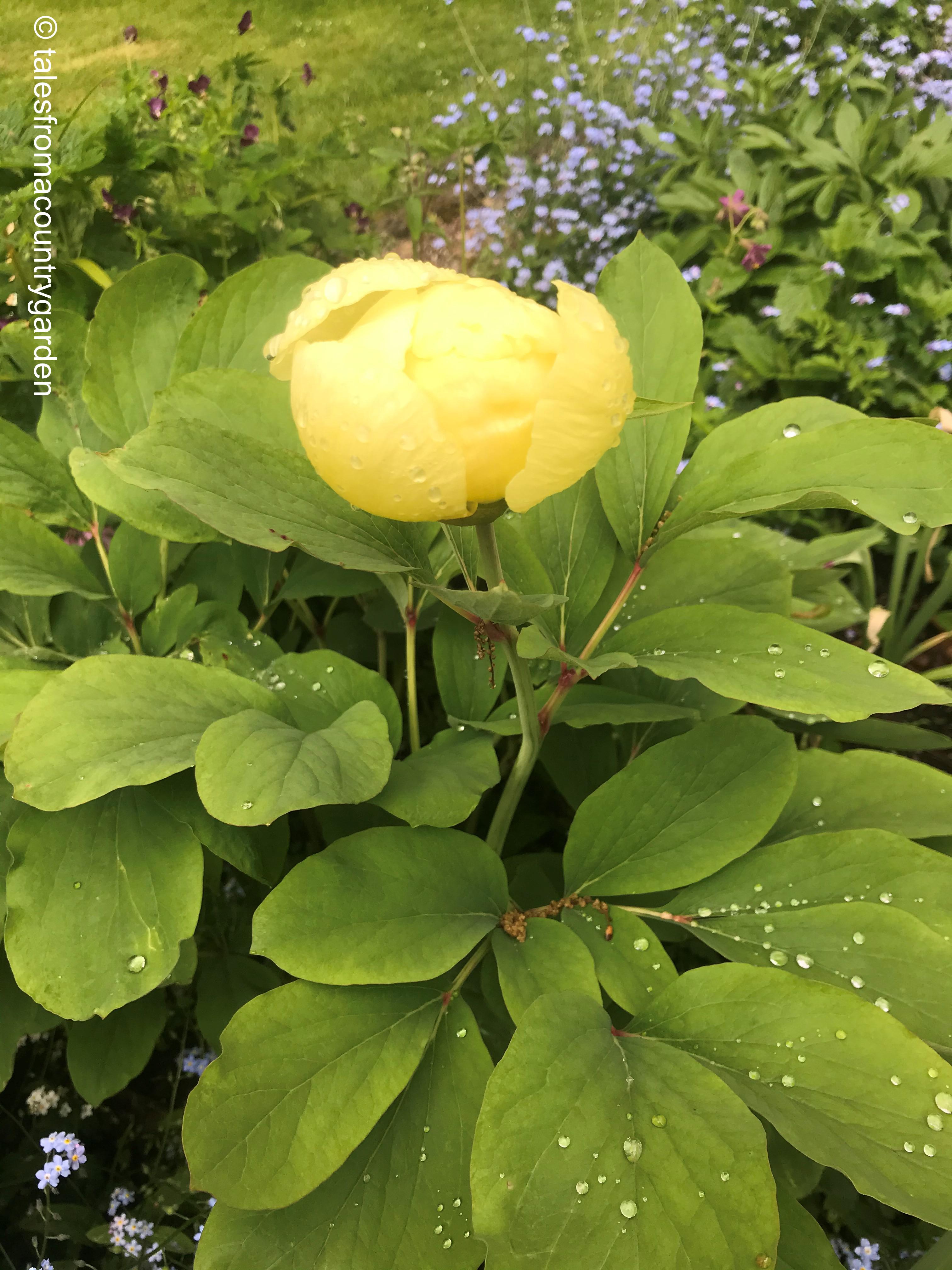
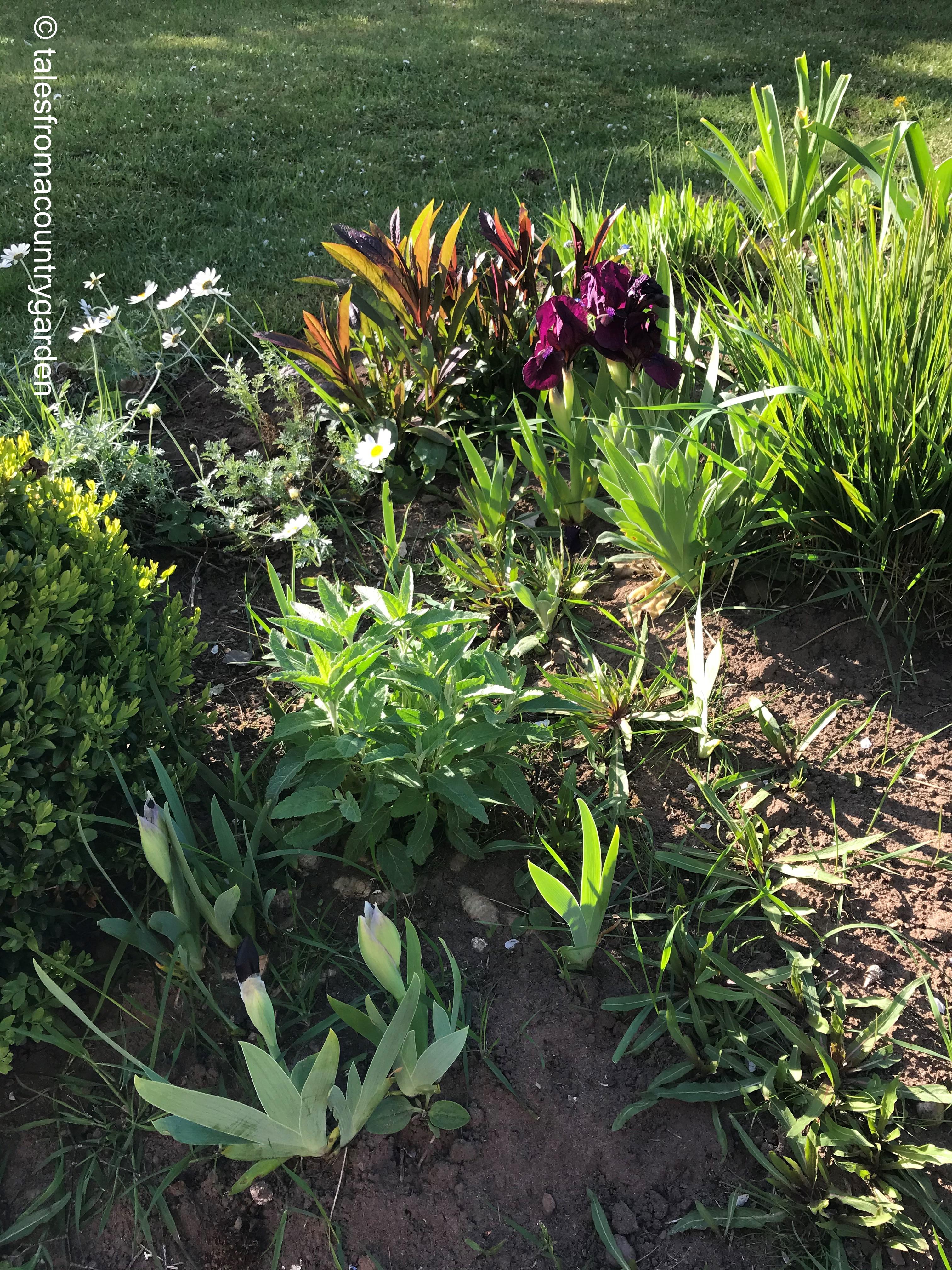
The early spring bulbs are now being replaced by Alliums, their numbers boosted by another 100 bulbs planted last autumn. The first of the Iris are in flower, Langport Wren is a beautiful deep maroon, soon to be joined by Iris English Cottage and Iris Sable which are currently in tight bud. The first peony to flower is always Peony Mlokosewitschii – or Molly the Witch as it is more easily referred to. It bears pale lemon flowers and this year has two! This poor plant was purchased maybe 20 years ago from what I always refer to as “the dead department” at a local garden centre. It was tiny, in a 3 inch pot and was expensive although it was a ‘reject’. It has moved house with us once and is now in its third and I hope, final position in this garden. If I can leave it be now maybe we will get more blooms in the future.
The Wisteria is in full flower and it has survived my attempt at pruning it in January while the expert wisteria pruner in the family was attending to hedge laying. The flowers smell wonderful and with windows open fill the house with their scent, and the odd bee that takes a wrong turning!
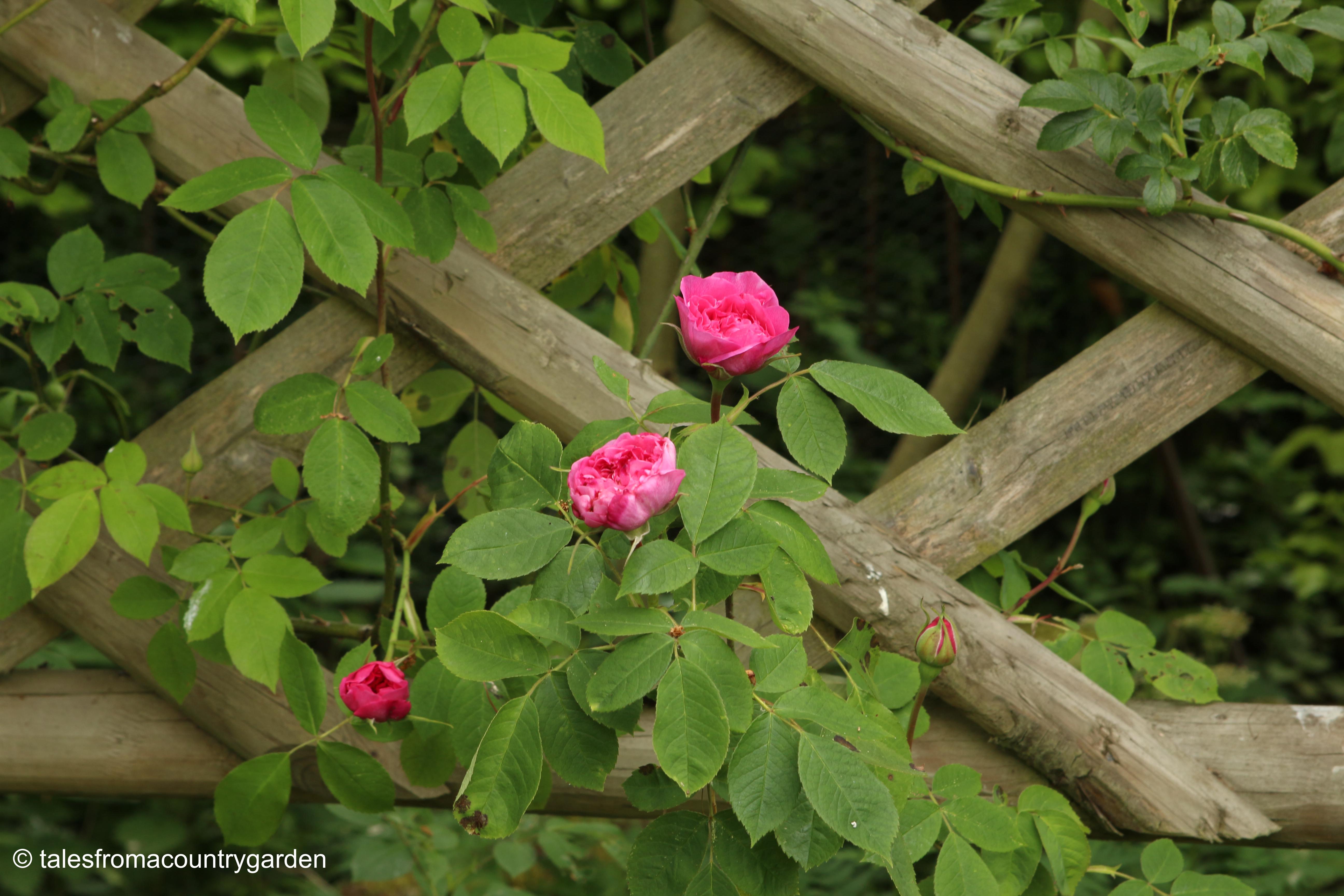
For the last couple of years I have taken charge of pruning Rosa Belvedere, a lovely rambler rose that is planted one end of a wooden trellis. The other end is occupied by Rosa Gertrude Jekyll and they are speeding towards each other to meet in the middle! I have pruned the rambler rose during the winter months (which is probably not technically correct), cutting off some of the long growths that were waving across the drive trying to ensnare us and tying the rest horizontally along the trellis. Now looking at the plant, it is covered in strong new shoots which I hope will bear hundreds of small pinky/white flowers in a month or so.
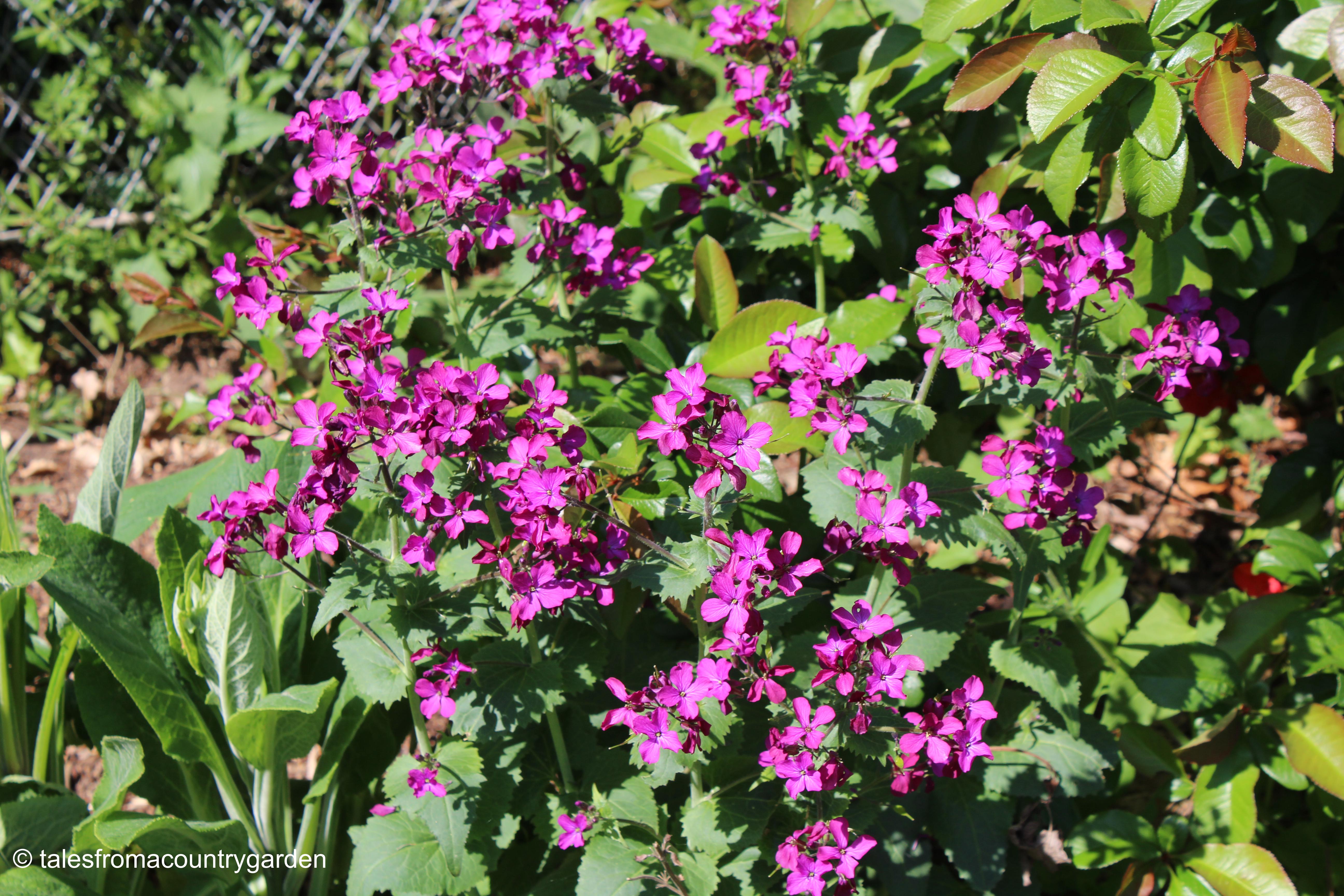
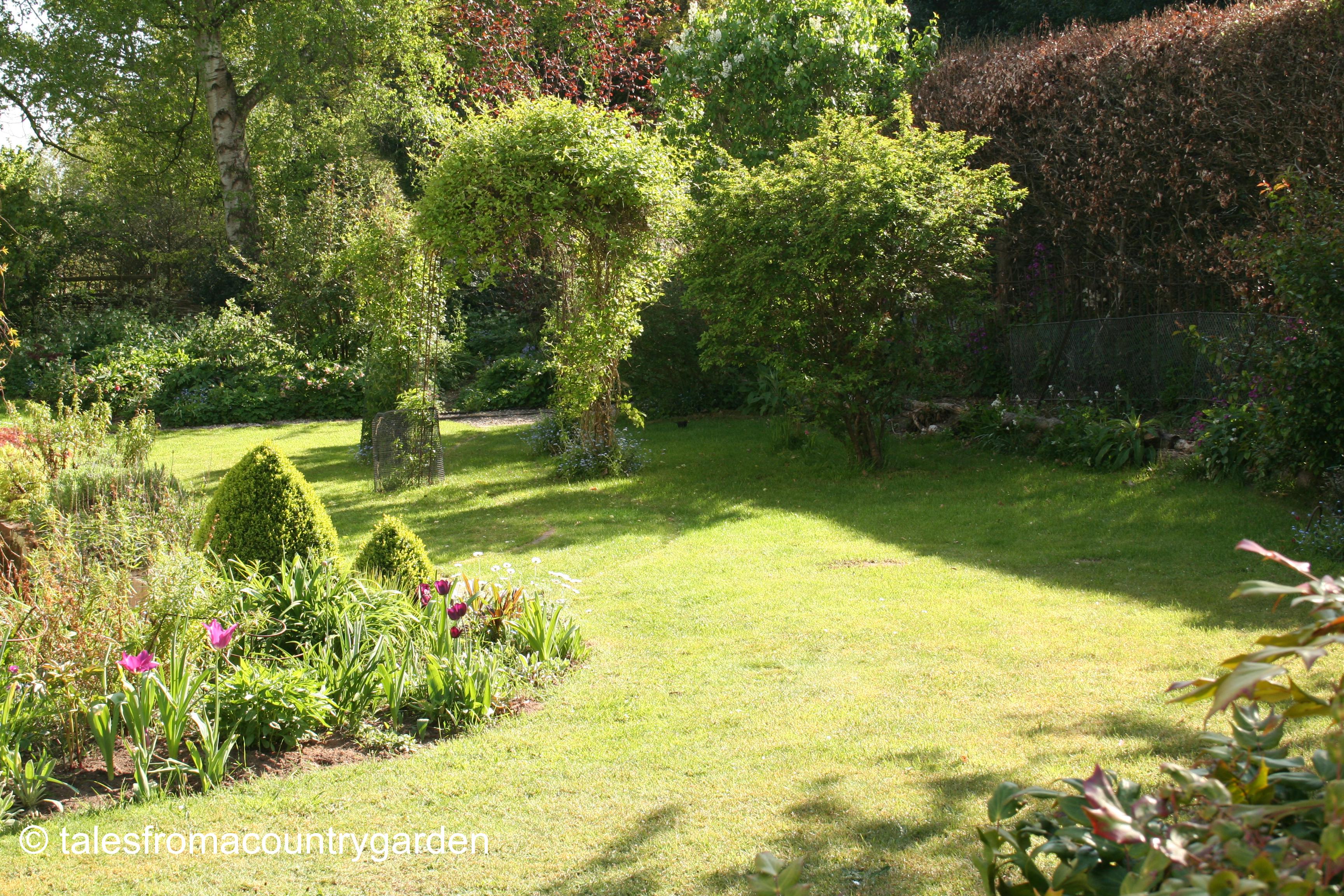
The area we refer to as the “Spring Area” in the garden is now filling with Geranium phaeum Samobor, white Comfrey, Lunaria and Queen Anne’s Lace (a much nicer name for Cow Parsley). Not everyone would welcome the Queen Anne’s Lace but it is at the edge of the garden bordering the Orchard and we like it. I would prefer more to grow in the Orchard and once the seed starts to set I will carefully pull the plants up and shake the seed around in the Orchard.
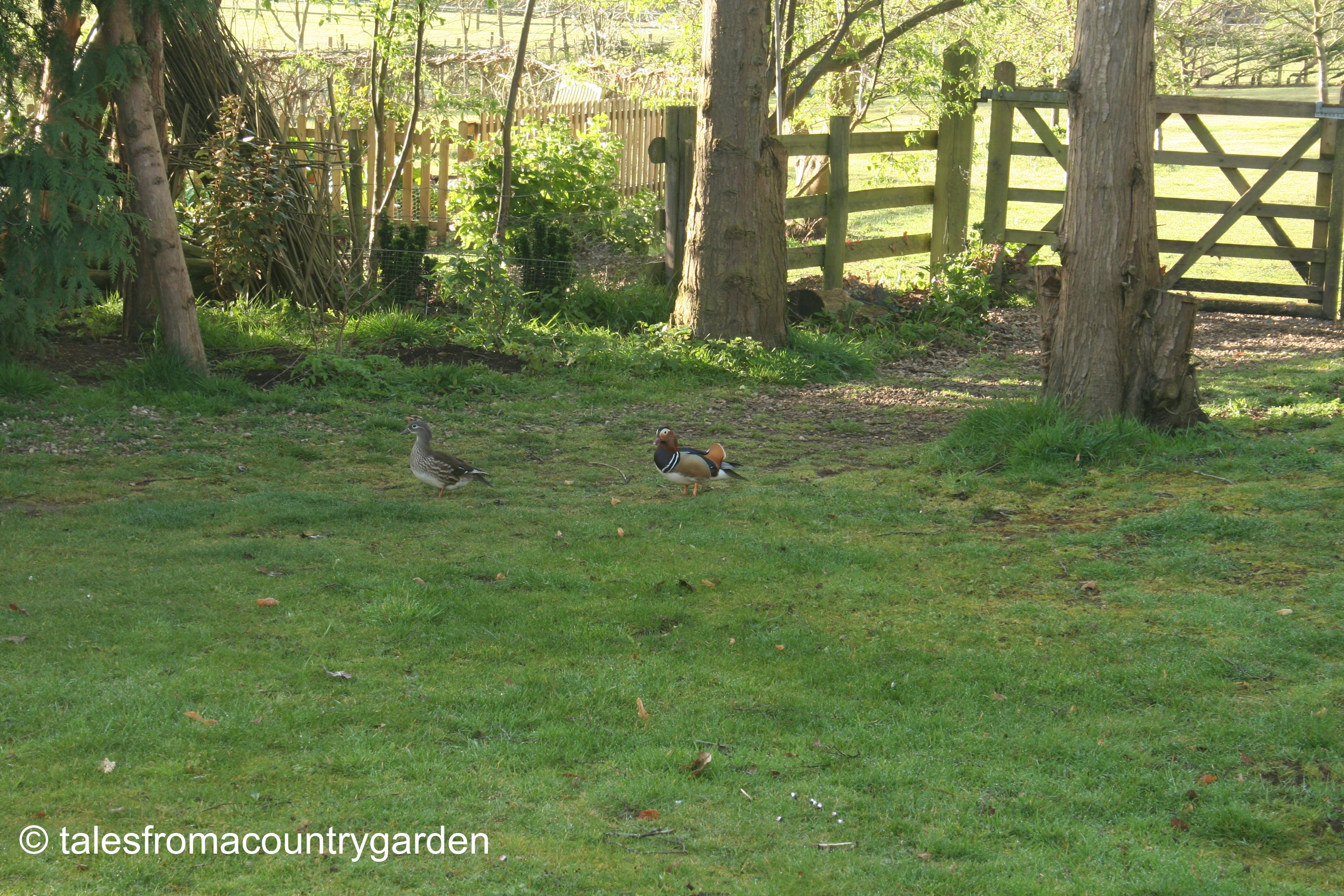
Wildlife abounds too, the cuckoo was heard for the first time this year on 21 April. Every morning I see a pair of blackbirds pulling worms out of the lawn, I assume they have a nest nearby and thrushes are also seen regularly. A robin has chosen a shelf on an old dresser in the shed to make its nest, it makes me jump most days as I go in to select tools. This year a pair of Mandarin ducks have returned to nest in a hollow apple tree near the back door, what a privilege to see them wandering around the garden and then seeing the female fly into her nest. Ducks are a bit of a theme as we have also been ‘adopted’ by a Mallard duckling. It appeared one afternoon a fortnight ago from underneath the yew hedge. No other ducks had been seen or heard in the vicinity although we had noticed a buzzard flying across the garden a little earlier. We assume the buzzard may have caught the duckling and then dropped it. It literally has landed on its feet as we have been looking after it carefully ever since. Luckily the local farm shop also has a Country Store selling animal feed and I was able to purchase what it needed whilst undertaking “an essential journey” for our food. In the space of two weeks it has more than doubled in size. We have no doubt that in time it will return to the wild but it is welcome here for as long as it needs shelter.
Mandarin ducks
Our new friend the Mallard duckling
After a month of more or less unbroken sunshine and very warm weather it is almost a relief that this week it has rained and re-filled the water butts and freshened the garden up. The weeds will be growing as I type, so I’ll be able to occupy myself with some more weeding later today.
The start of Spring and although there’s been a frost this morning, the sun is shining birds are singing and the garden is awakening. Plenty of cheerful bright flowers and new growth on trees and shrubs to help take our mind of what is happening in the wider world.
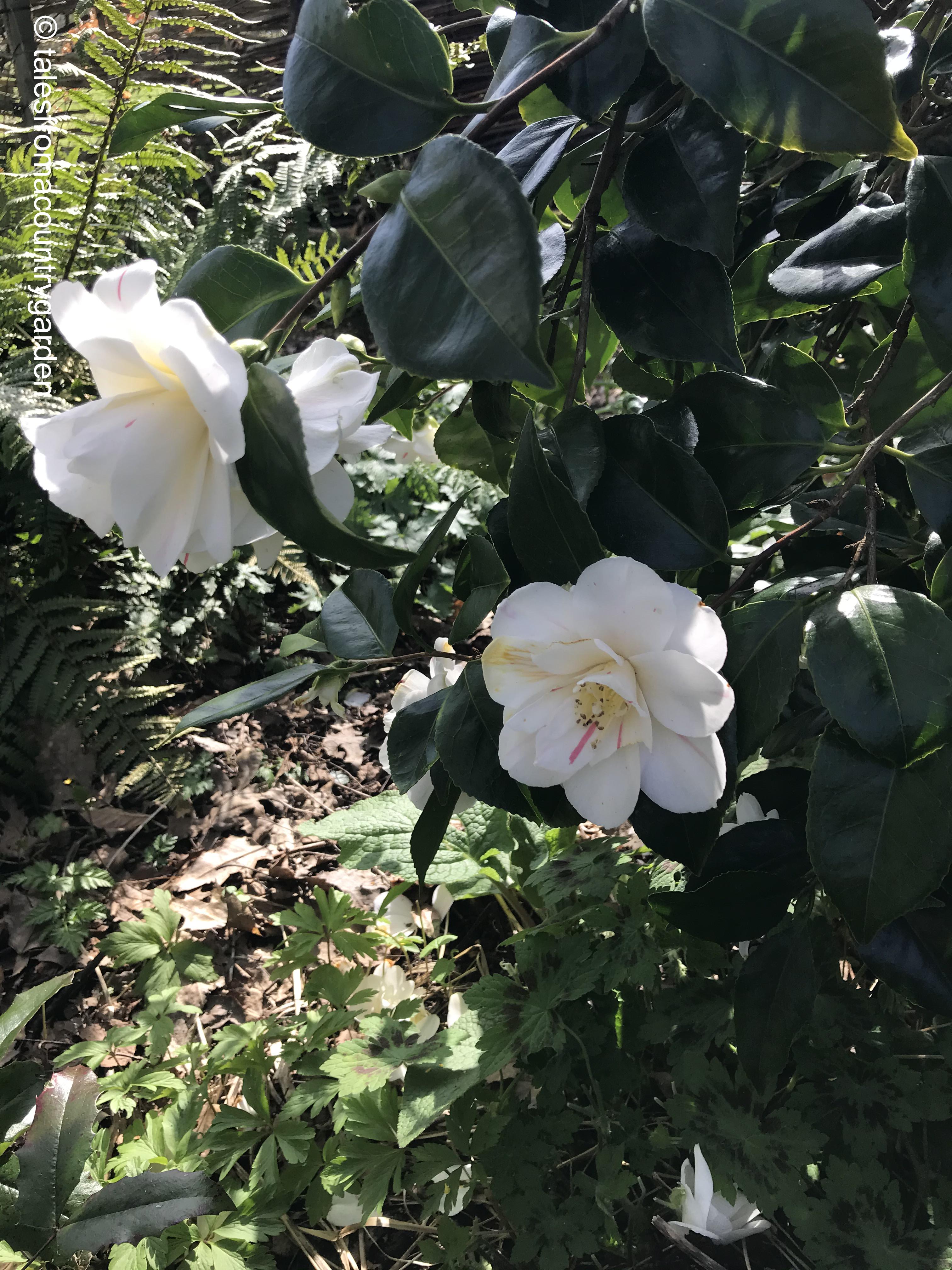
A beautiful single camellia normally humming with bees on a sunny day
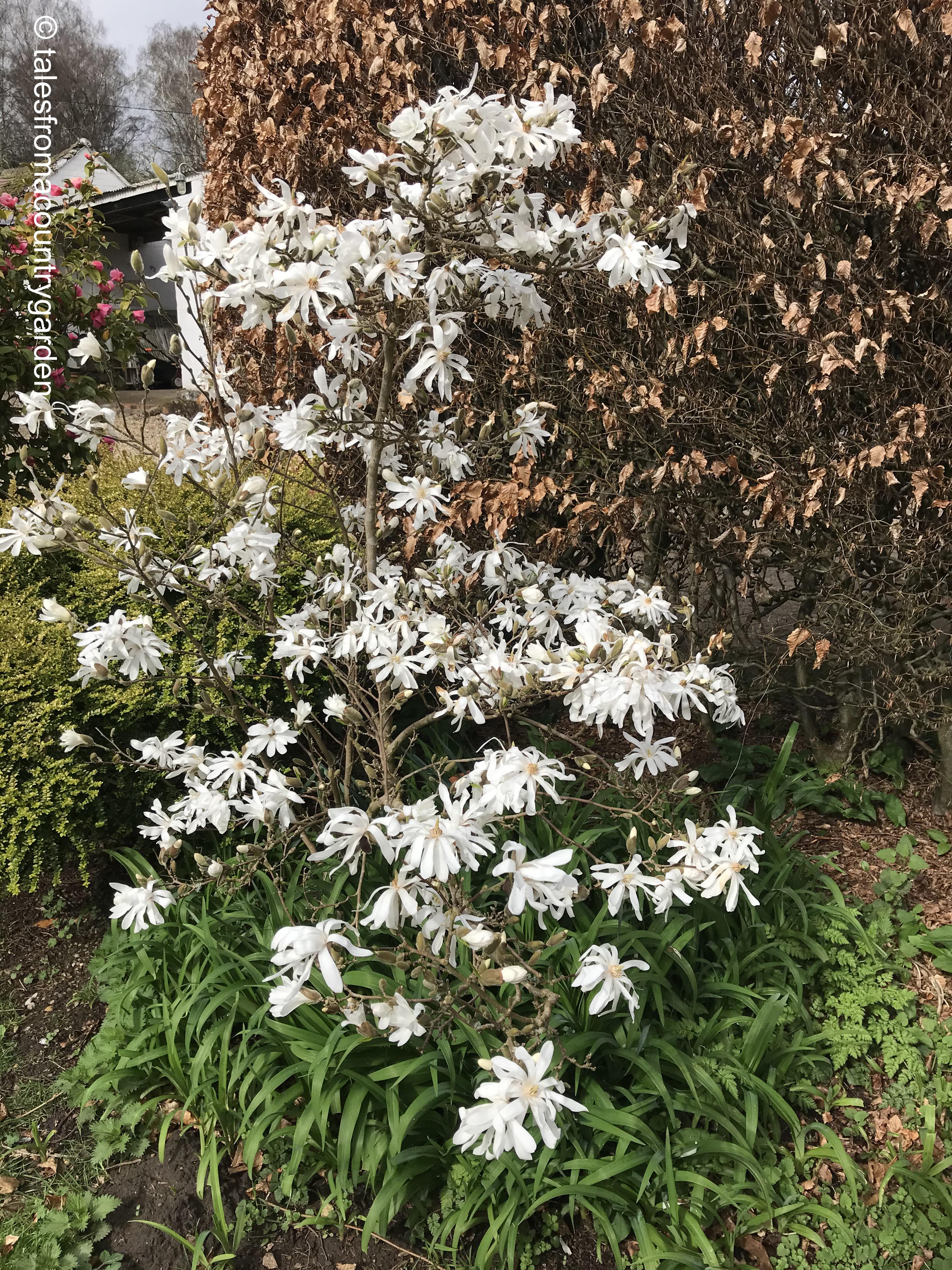
Magnolia stellata – beautifully scented
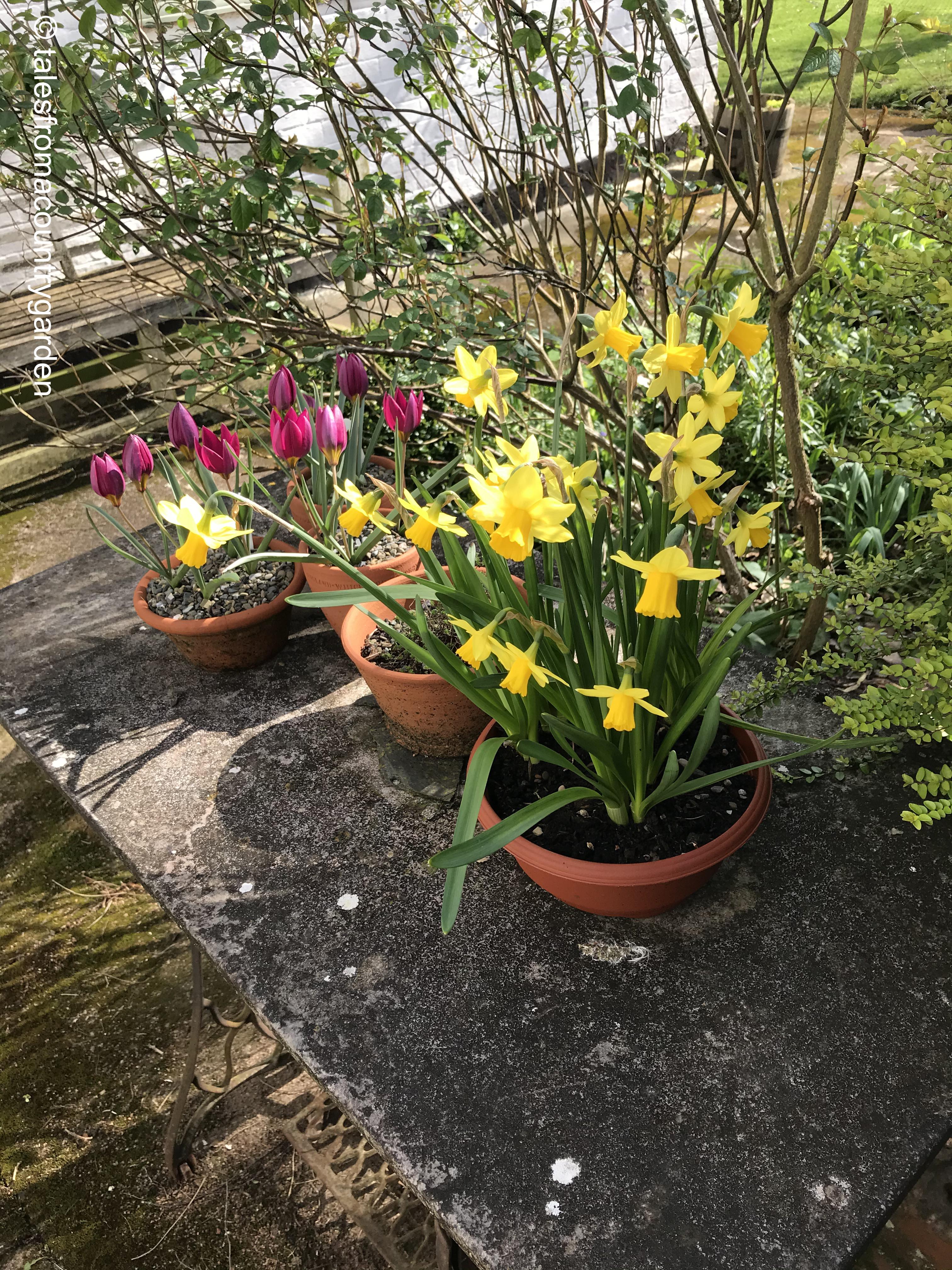
First of the tulips – these are meant to flower in May, the mild winter has brought them into flower a bit early
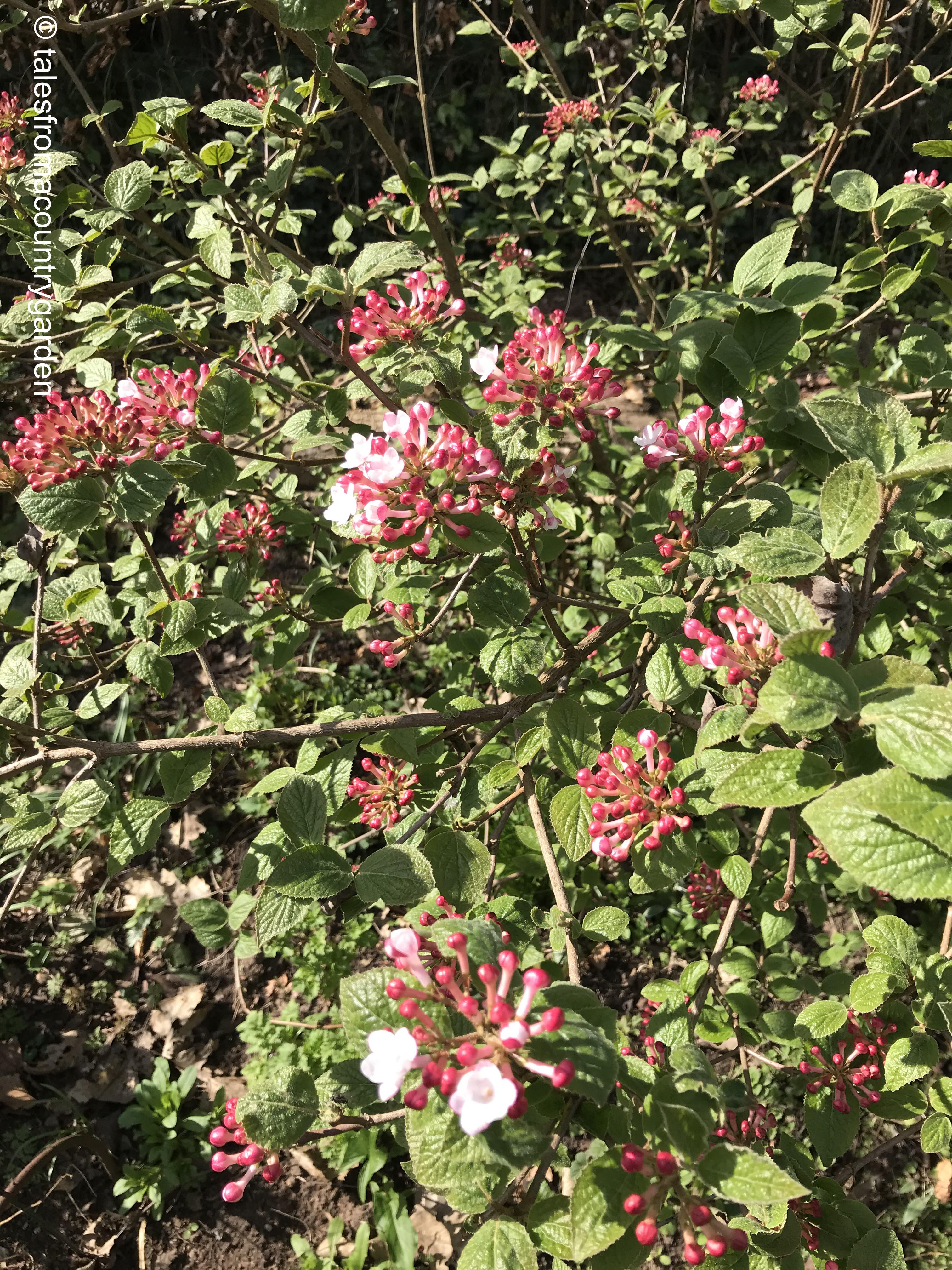
Viburnum carlesii
Tulipa humulis odalisque and Narcissus tete a tete
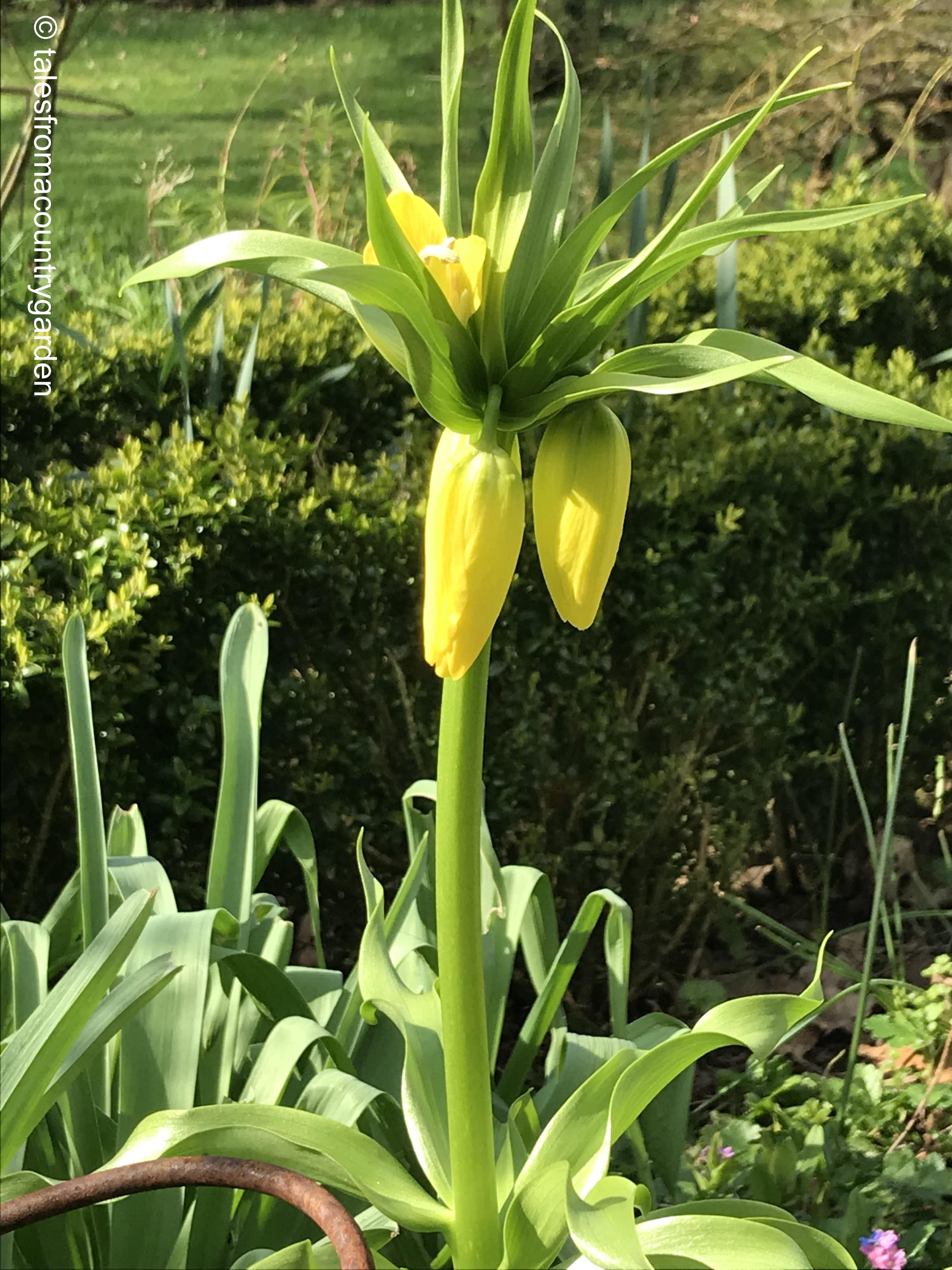
Fritillaria imperialis Lutea
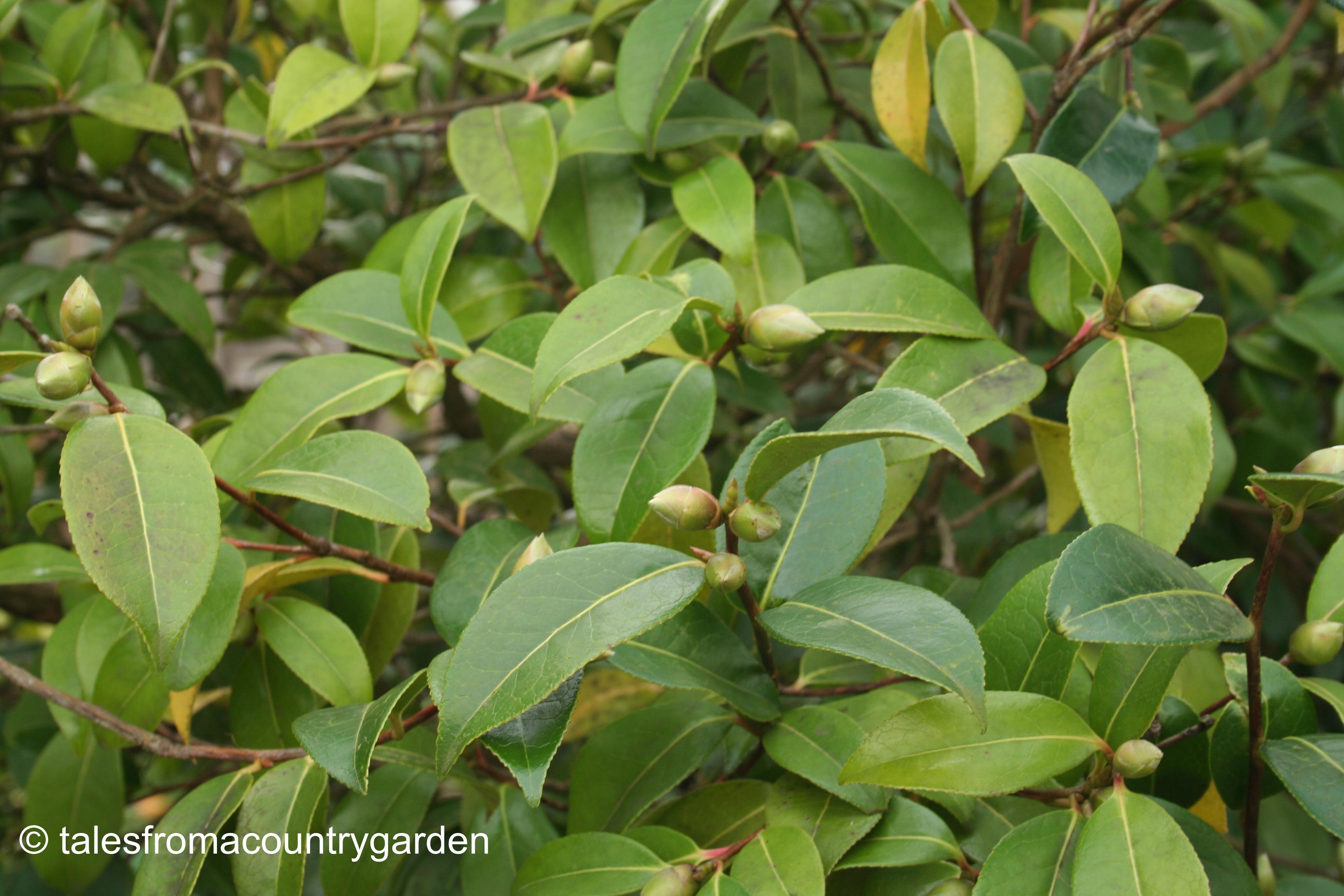
Another camellia, name long since forgotten!
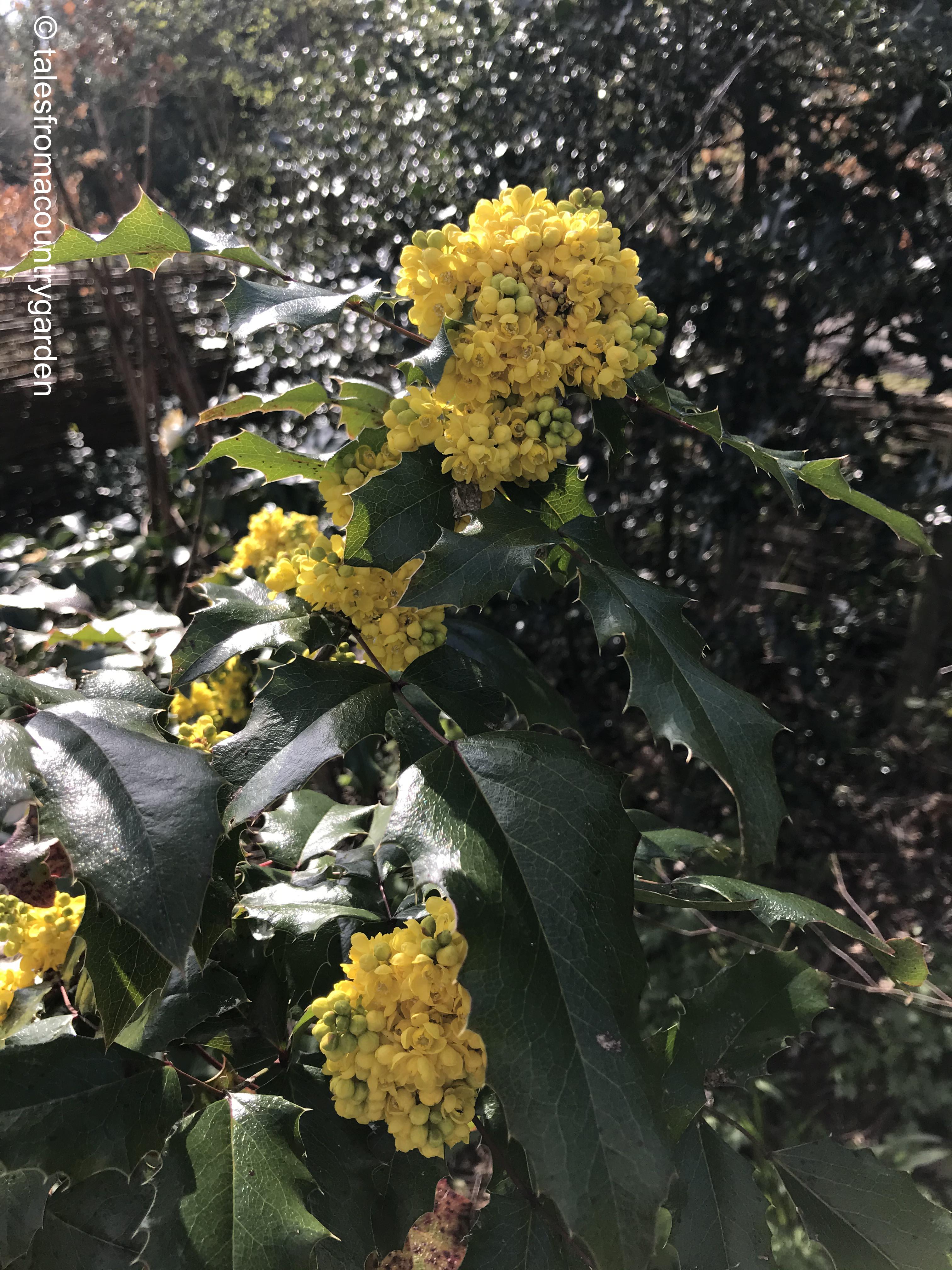
Mahonia aquifolium
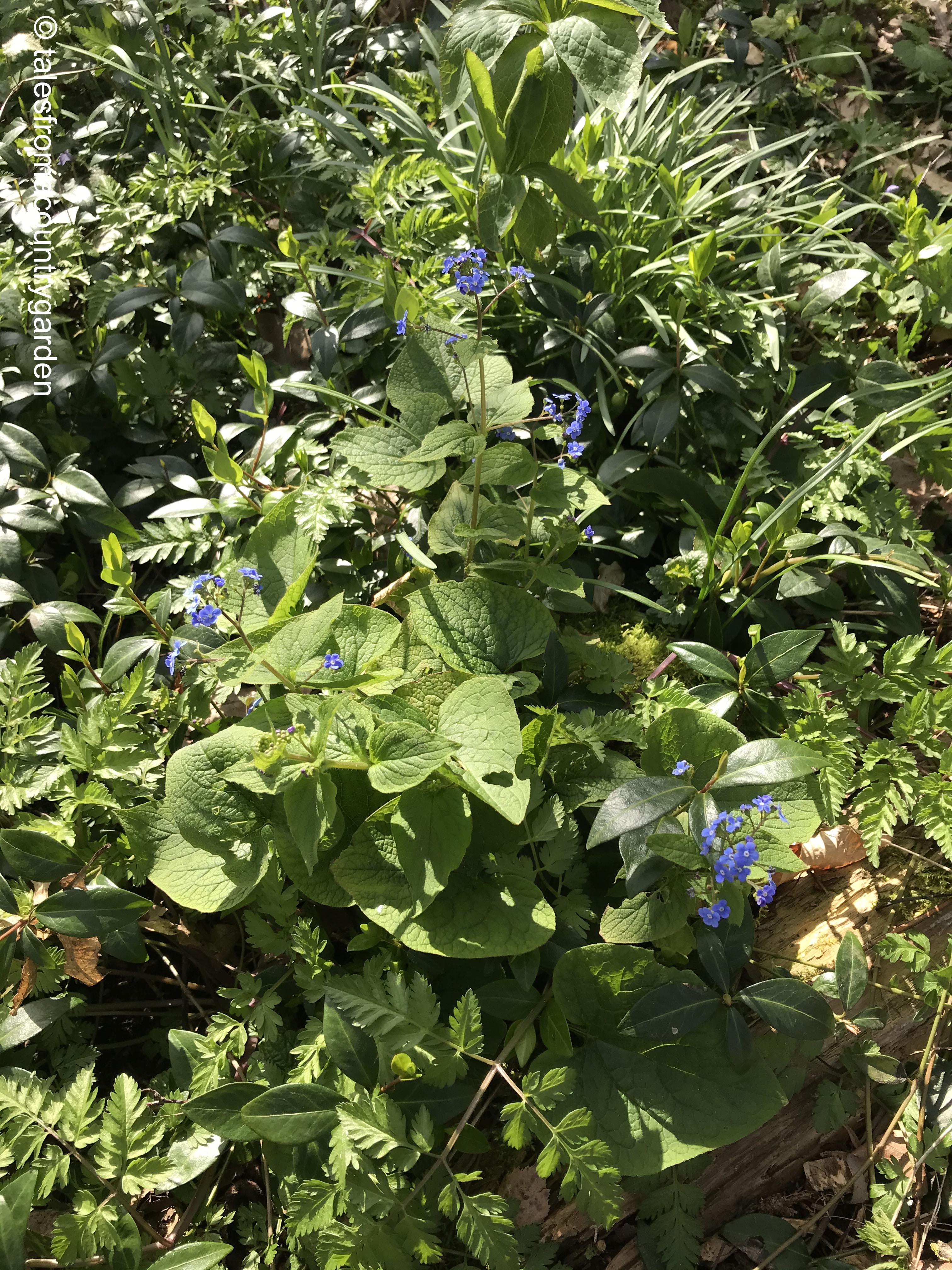
Brunnera
Plenty of rhubarb!
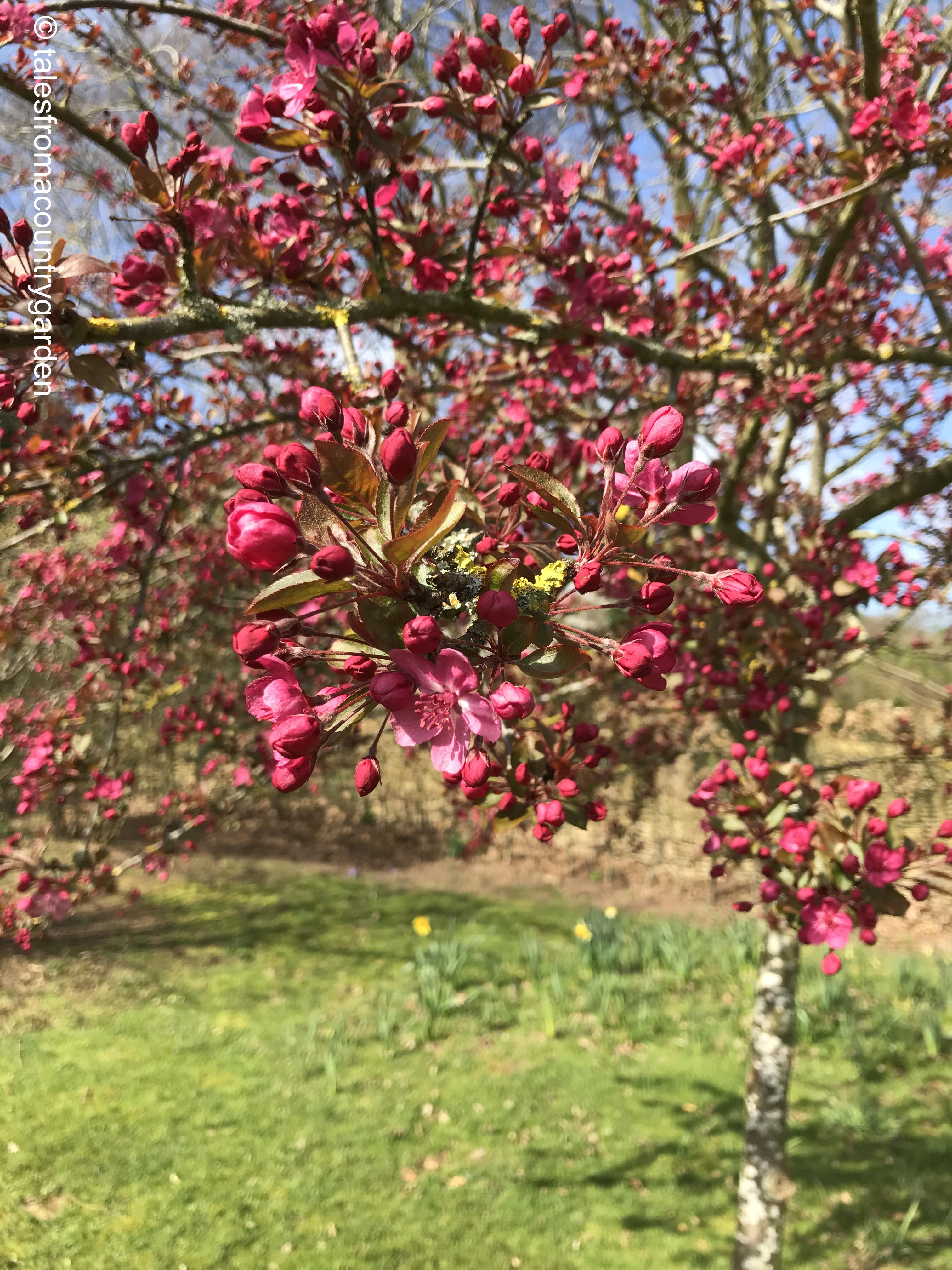
Crab apple – Princeton Cardinal
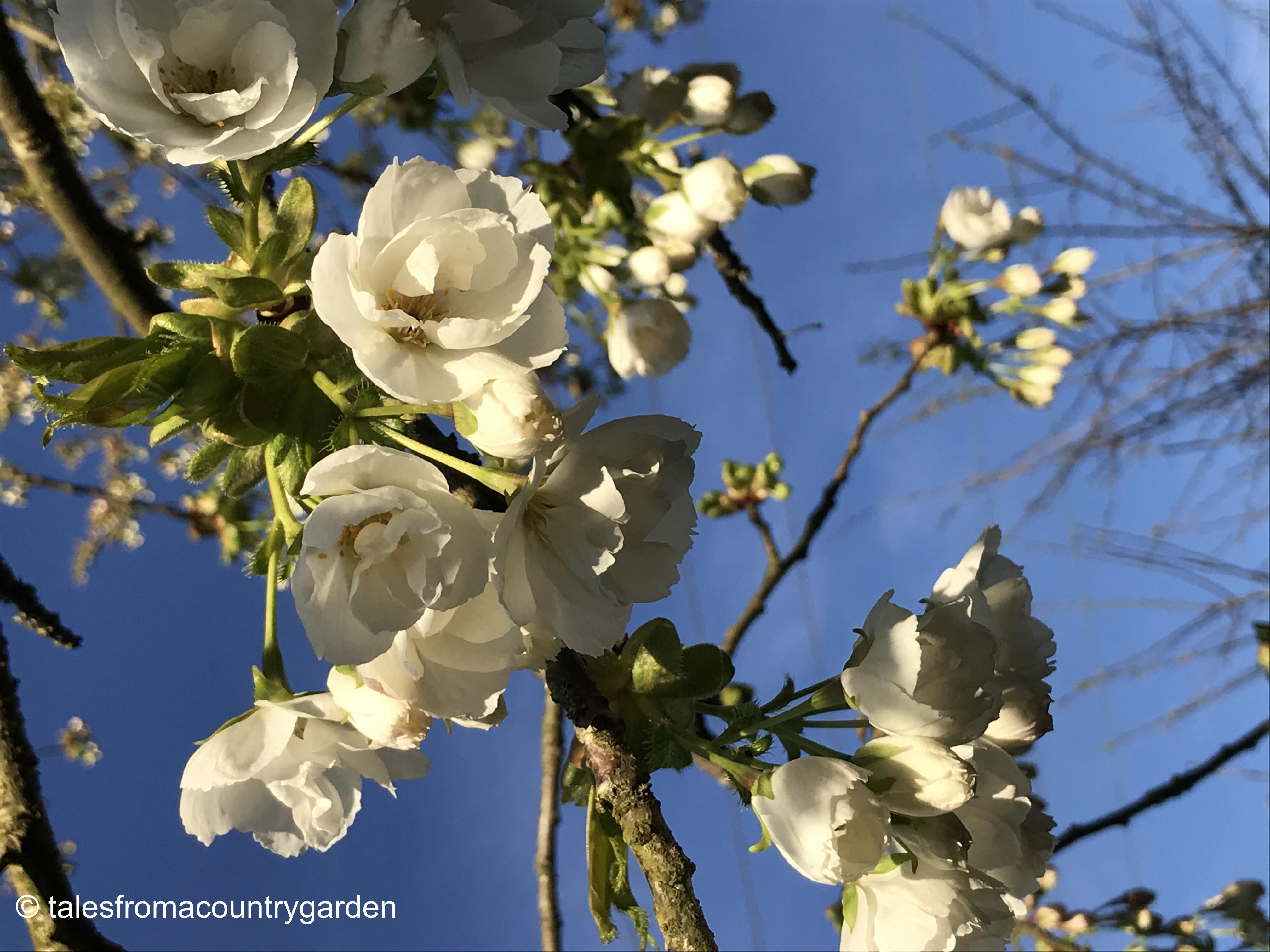
Prunus – beautiful semi double white blossom
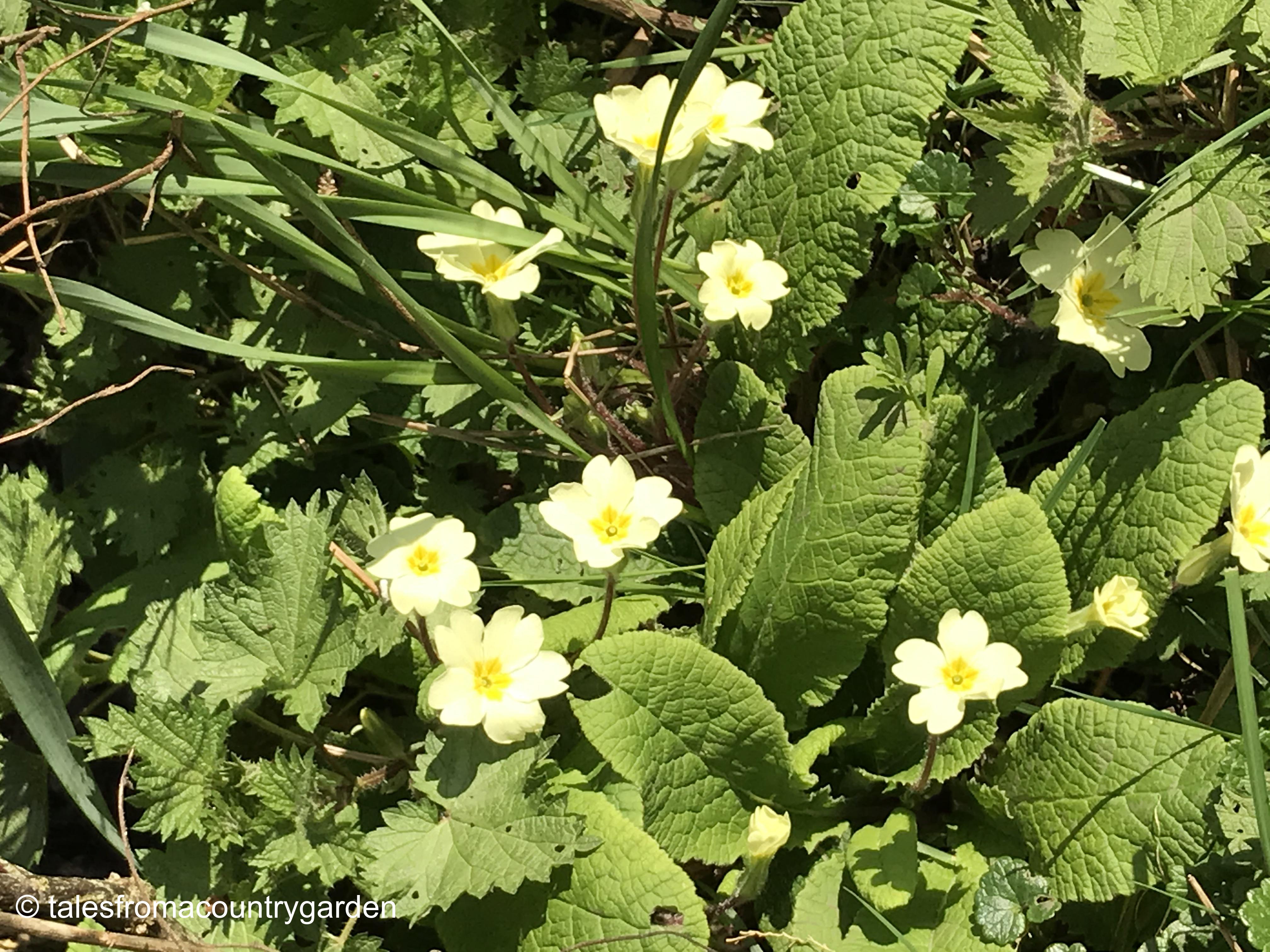
My favourite spring flower – Primula vulgaris, the wild primrose. Now seeding itself along the base of a hedge.
My priority this year will be the vegetable garden – a case of necessity I think! The raised beds have been covered in black weed suppressing fabric so are warming up nicely. I’ve already planted seed potatoes and garlic and direct sown parnsip, carrot, beetroot and spinach seeds. Broad beans and lettuce are germinating in the greenhouse. My aim this year is to get to grips with successional sowing, a reminder on the calendar every couple of weeks should help!
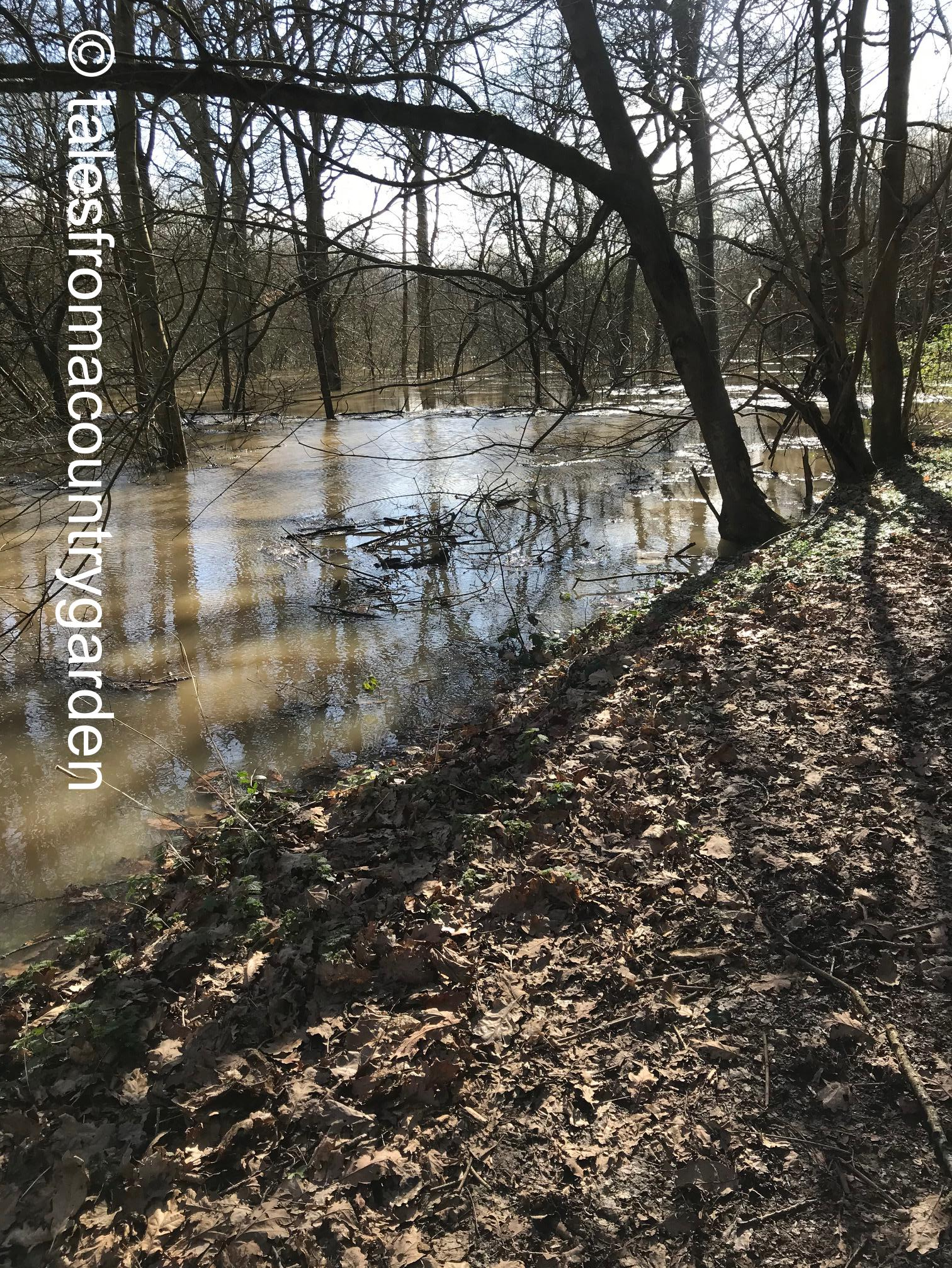
Give a storm a name and it tries to live up to it – and Storm Dennis has certainly been a “Menace”, in Worcestershire at least! Acres of land in the County have been submerged for well over 10 days now and when the main river bridge in Worcester is closed to traffic the knock on effects are encountered for miles around. An amazing statistic heard on the local radio station this morning tells us that 500 tonnes of water flows under the footbridge in the centre of Worcester per second! Difficult to comprehend the force that must be exerting on the lovely old stone bridge a few hundred yards downstream. No wonder it is closed to traffic. We hear of flood defences in towns upstream being breached and flooding in properties whose owners thought they were safe. We are told it is the “one in a hundred years” flood, except it is the fourth such one in the last twenty years. Our house and garden stand in an area zoned “one in a thousand years” flood, so fingers crossed….
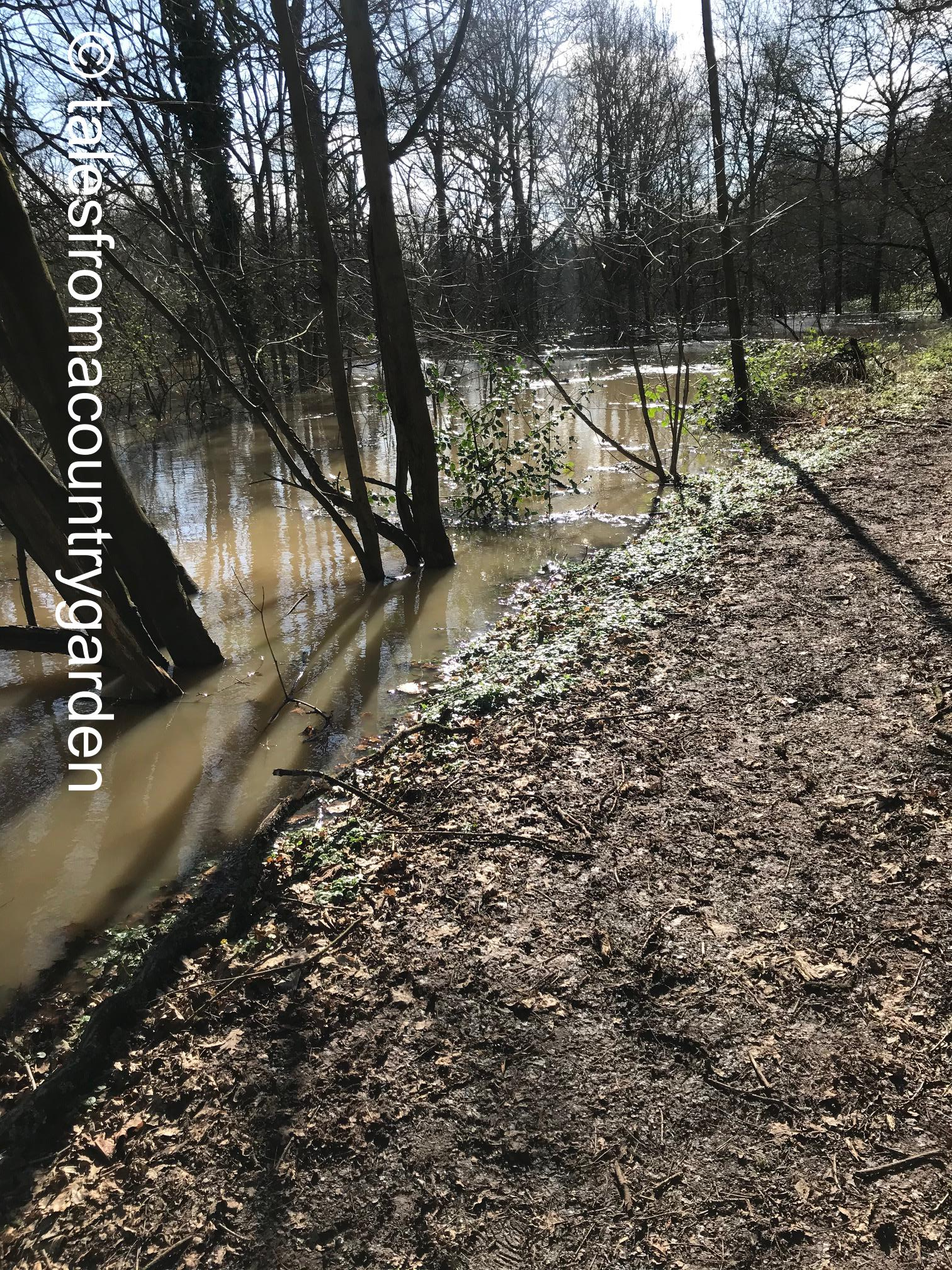
The Severn is two fields away from our boundary down a steep drop and we often forget it is there! We still can’t see it, even in full flow as it is now, but a short walk down the lane in either direction brings it home to us exactly what a force of nature it is. Nearby fishing lakes have been swallowed up by the river, water as far as the eye can see. A walk into the local bluebell woods is completely out of the question at the moment – the pictures show the meadow on the way to the woods is now a lake.
A lovely meadow – one of our regular walks, won’t be walking through anytime soon. The Severn is way in the distance.
Pathway down to the Meadow and then into local woods, the river is hundreds of yards to the left.
Some wildflowers are bravely trying to grow along edge of path. A few celandines, together with stitchwort and wild garlic. In a few weeks hopefully the path will be lined with bluebells and wild garlic
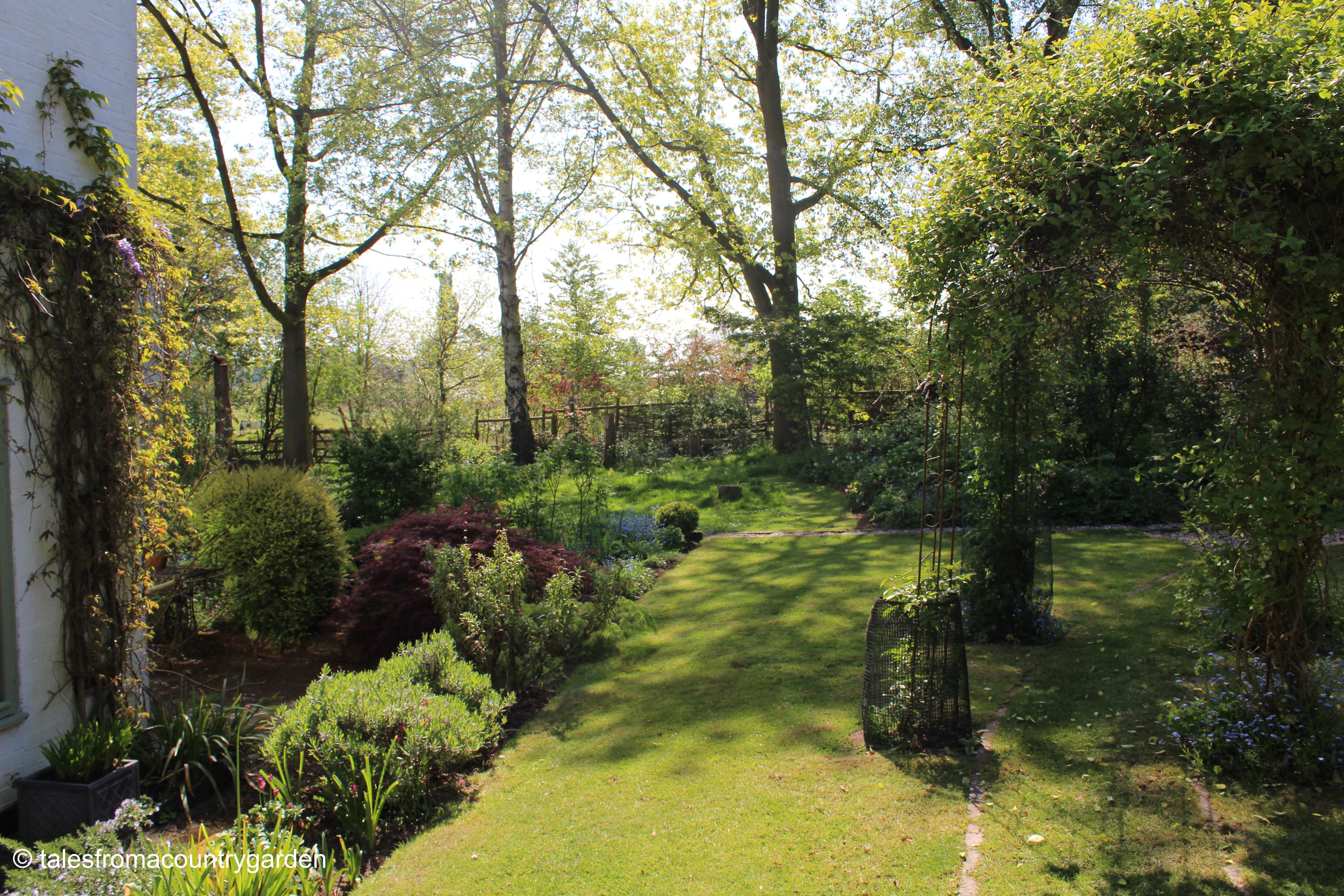
Back to the peace and tranquility of the garden and the sun is shining and new growth abounds, spring can’t be far away. Our very dry, free draining soil is currently extremely soggy, but even so we can get on with weeding in a sunny sheltered spot away from the chilly wind. Hedge laying around the orchard is nearly complete, just the final binding needed along the top of the hedge. Fence posts have been replaced as all the original ones have rotted and the final job is putting up wire to try and outwit the local rabbit population. One side of the fence has been completed and what back breaking work that was, removing bramble roots at the same time. Only another fifty yards or so to go and then hopefully the orchard will be rabbit proof.
Some days I feel a little like Mr Macgregor in Beatrix Potter’s The Tale of Peter Rabbit – horrified at the sight of a plump rabbit on the lawn. We have been round the perimeter of the garden on numerous occasions checking for rabbit size holes and still they come in! We have reinforced the wire netting and plugged a few possible entrance holes and, I hardly dare say this, – no rabbits for the last week! Hooray! I’m sure they would be much happier hopping around the pasture land outside our garden fence.
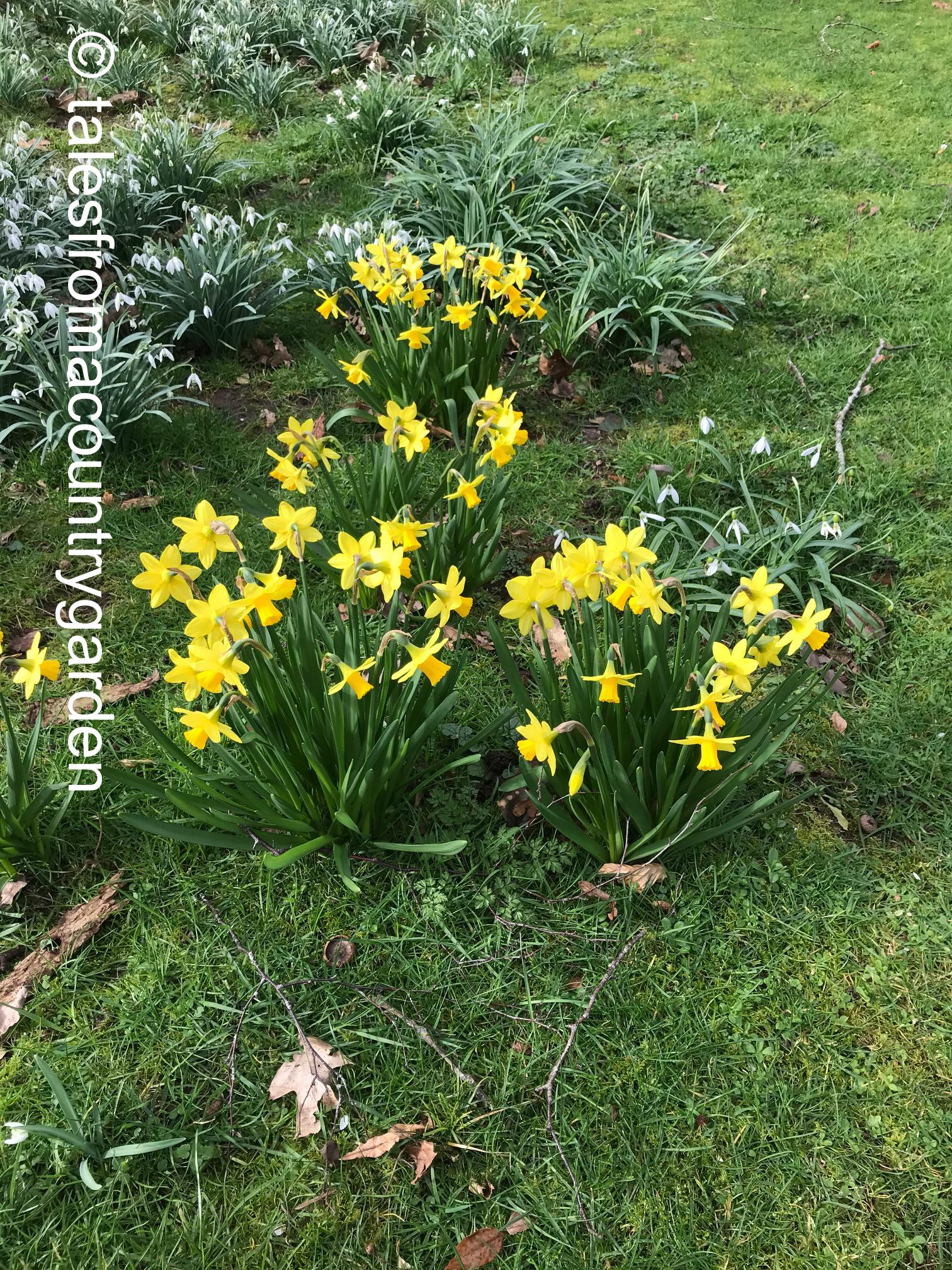
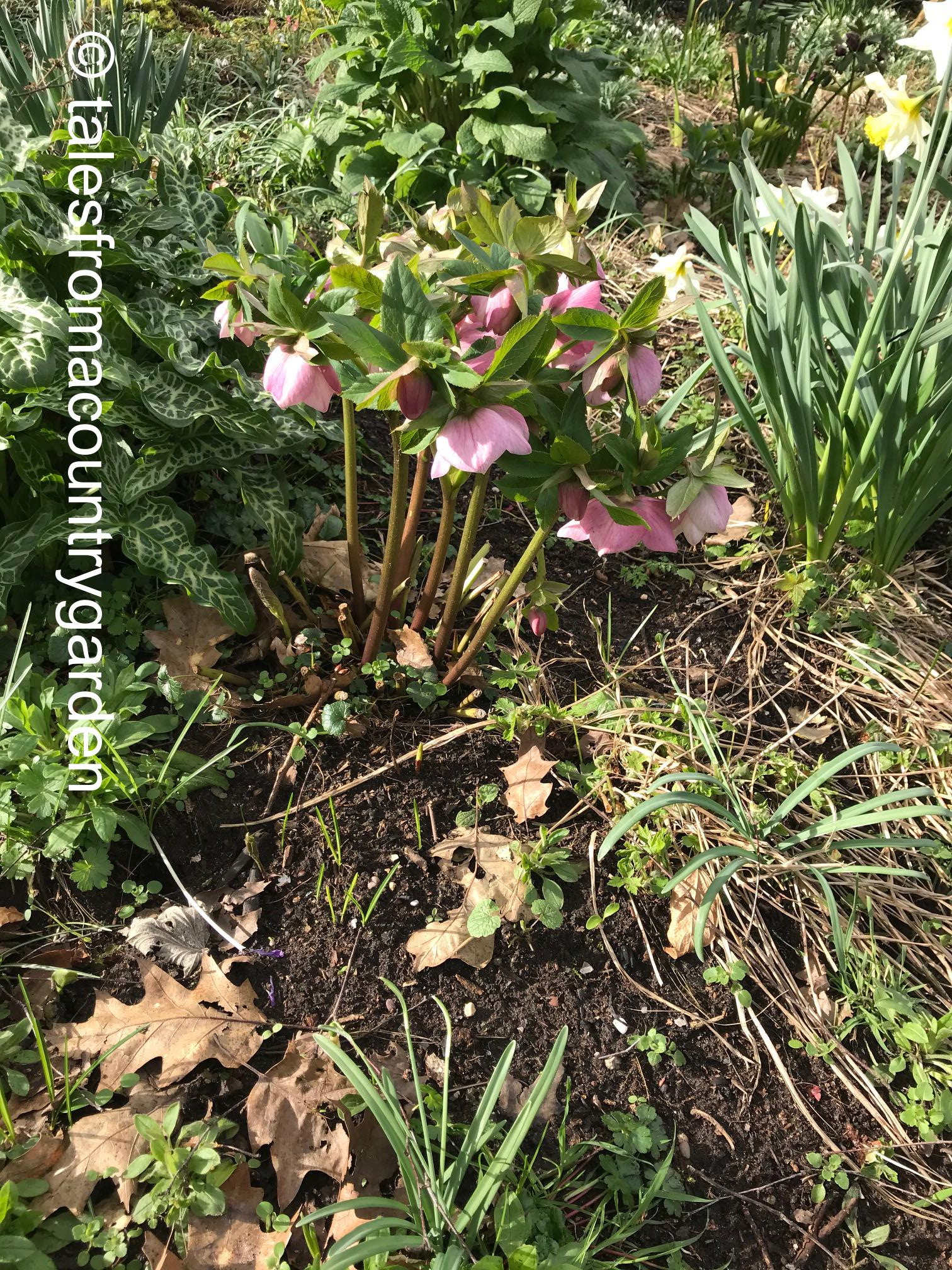
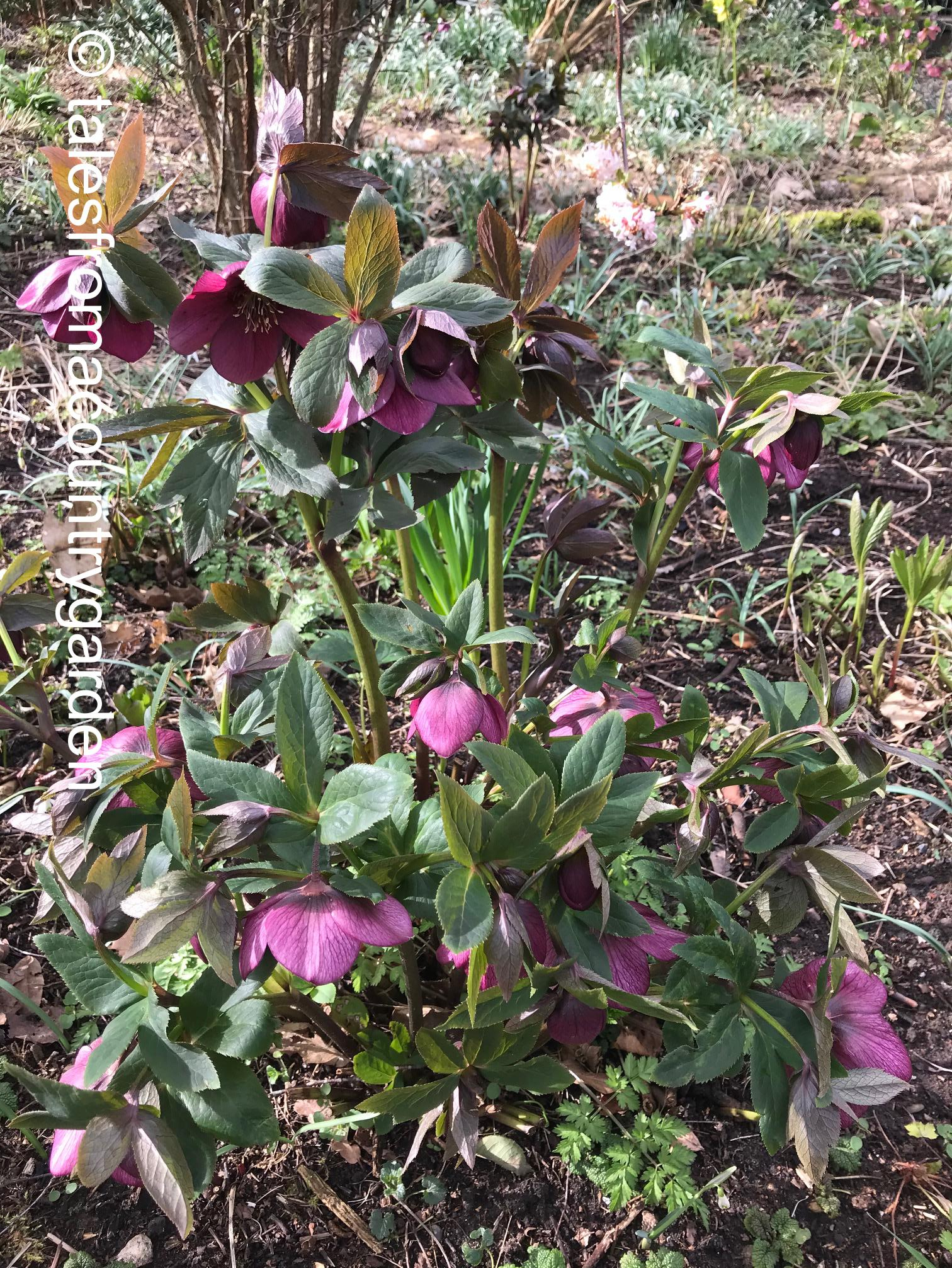
Spring flowers are now very much in evidence. Narcissus Tete a Tete is coming into flower along with other clumps of Narcissus around the garden and orchard. The hellebores can always be relied upon and look particularly lovely in the sunlight. There are a few flowers on the Vinca Gertrude Jekyll and two Camellia shrubs are laden with pink flowers. There are plenty of buds on a couple of cherry trees and I look forward to the flowers, if the pigeons would kindly stop pecking them off!
Narcissus Tete a Tete alongside the last of the snowdrops
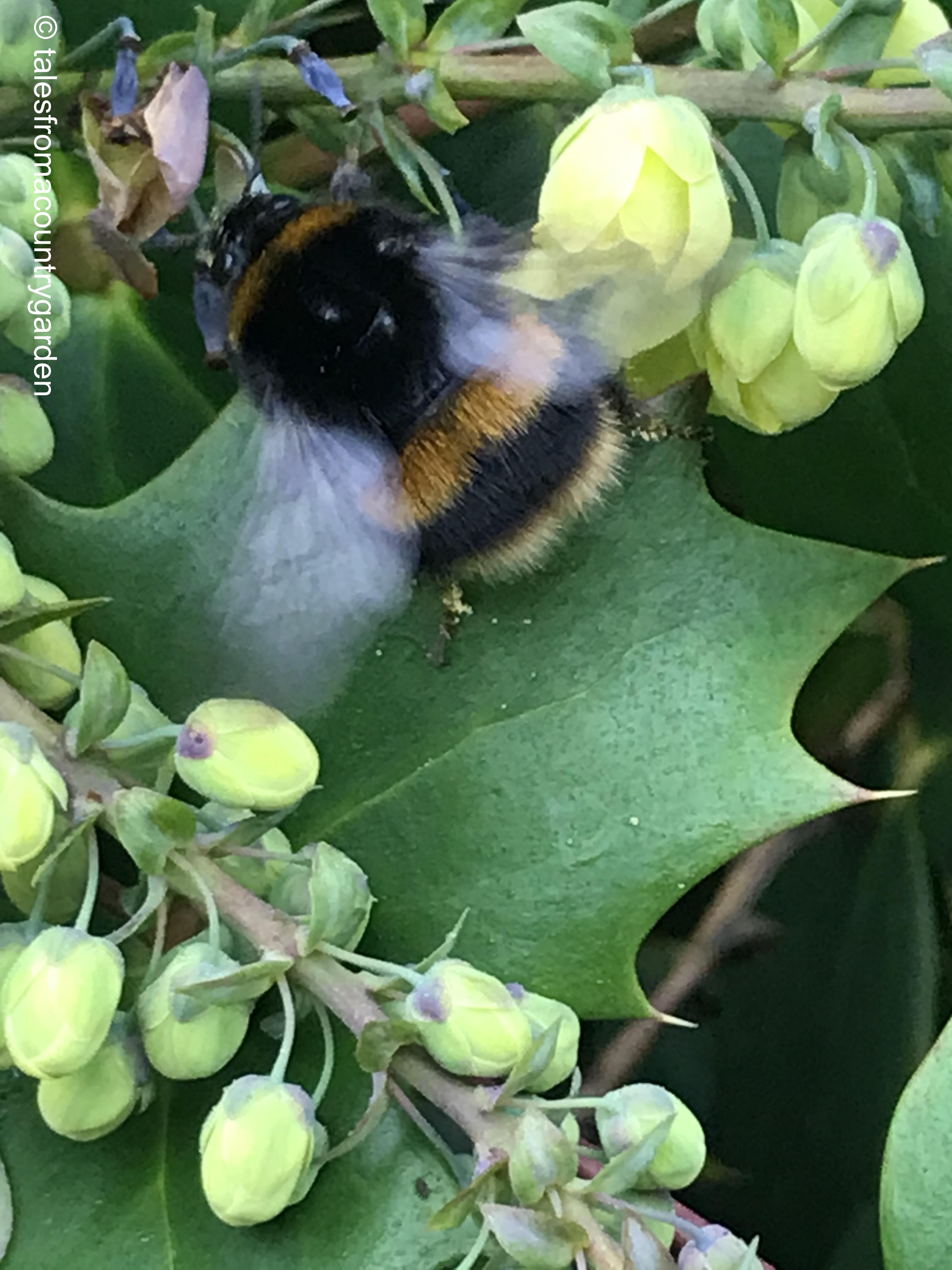
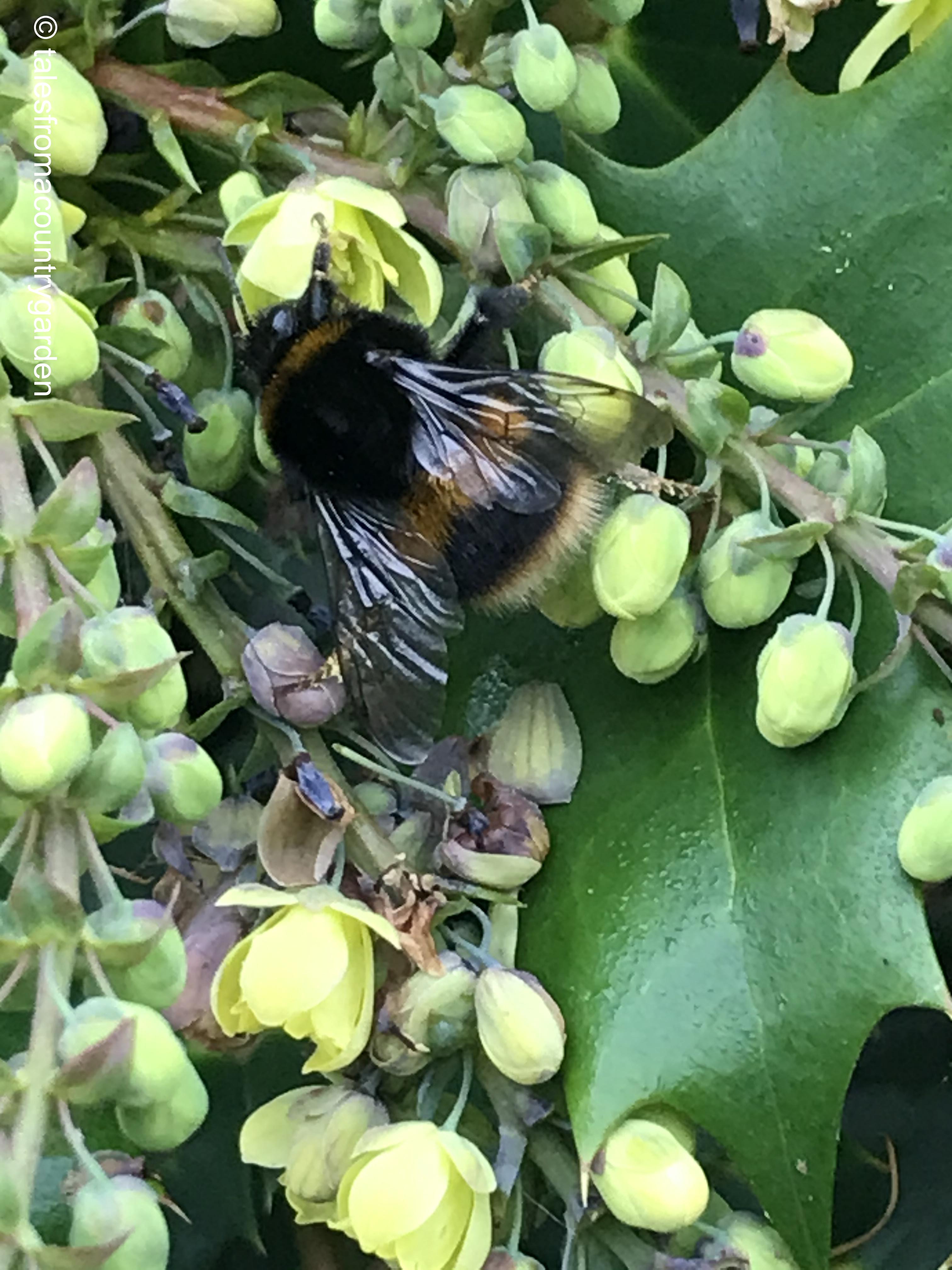
On a grey, chilly winter’s day there is plenty in the garden to smile about. There are numerous birds visiting on a daily basis – Long Tailed Tits, Blue and Great Tits, Robin, Bullfinch, Thrushes and Blackbirds to name but a few and the very first bumble bee of the year. I heard him/her buzzing in the vicinity of a mahonia for a couple of days this week and then finally I managed to take a photograph. What a busy bee!
Snowdrops are coming into flower thick and fast. Galanthus S.Arnott is always the first to flower and lasts for weeks. We are trying to naturalise Galanthus nivalis in drifts in the Spring area of the garden and here we also have Galanthus woronowii which is starting to spread gently around. This snowdrop is distinguishable from others by its bright green, broad leaves and icy white flowers.
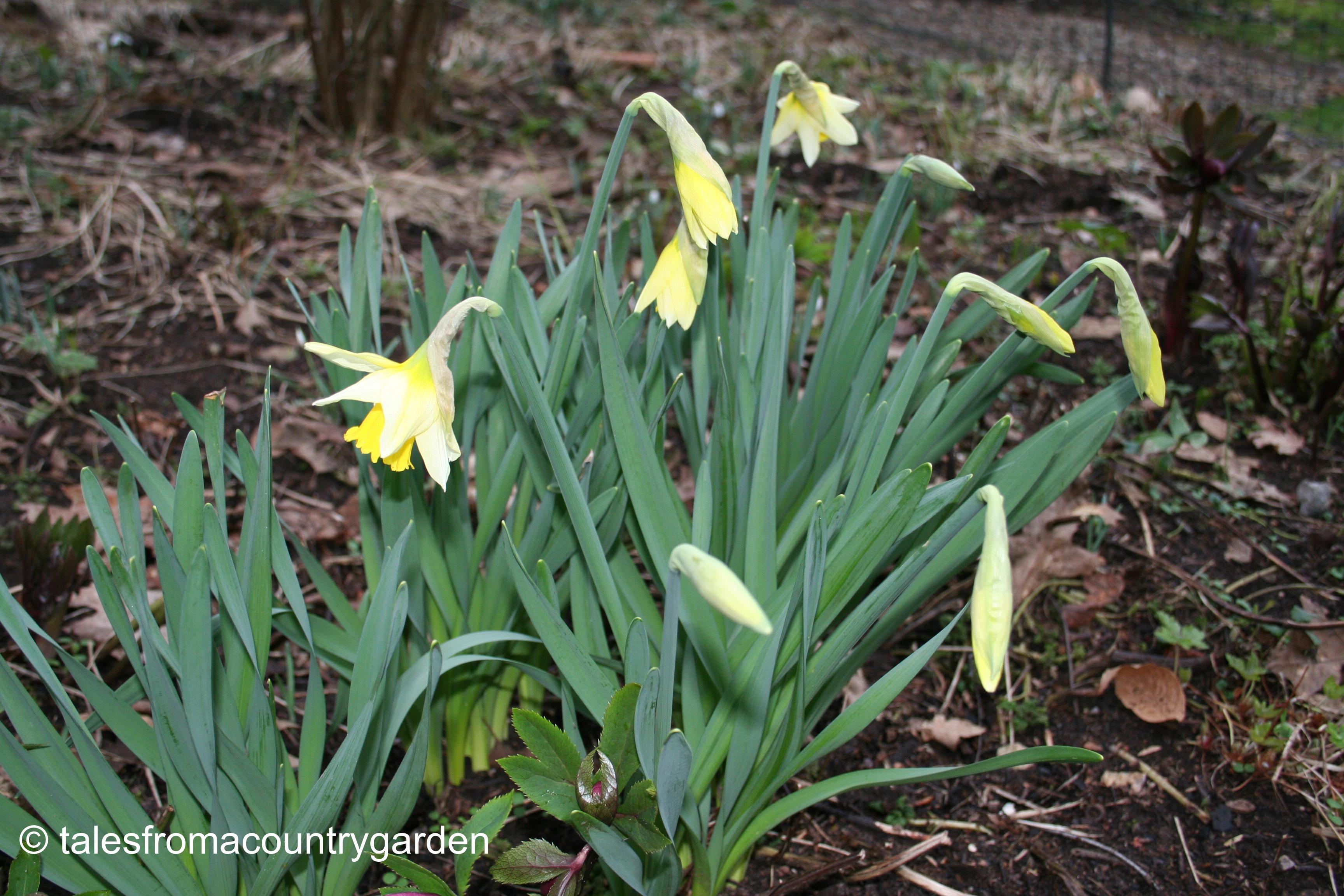
The first daffodils are flowering, sadly I can’t remember the variety. All I can remember is that they are from a Cornish grower.
We’ve planted hundreds of Crocus tommasinianus again in the Spring area hoping that they will spread and form a purple drift. One year they came up very thickly and although I can now see their slim flower heads just coming through I think that maybe squirrels have eaten many of them.
Iris reticulata Alida, a new one for me this year and looking good in a pot
Iris reticulata Harmony – always reliable
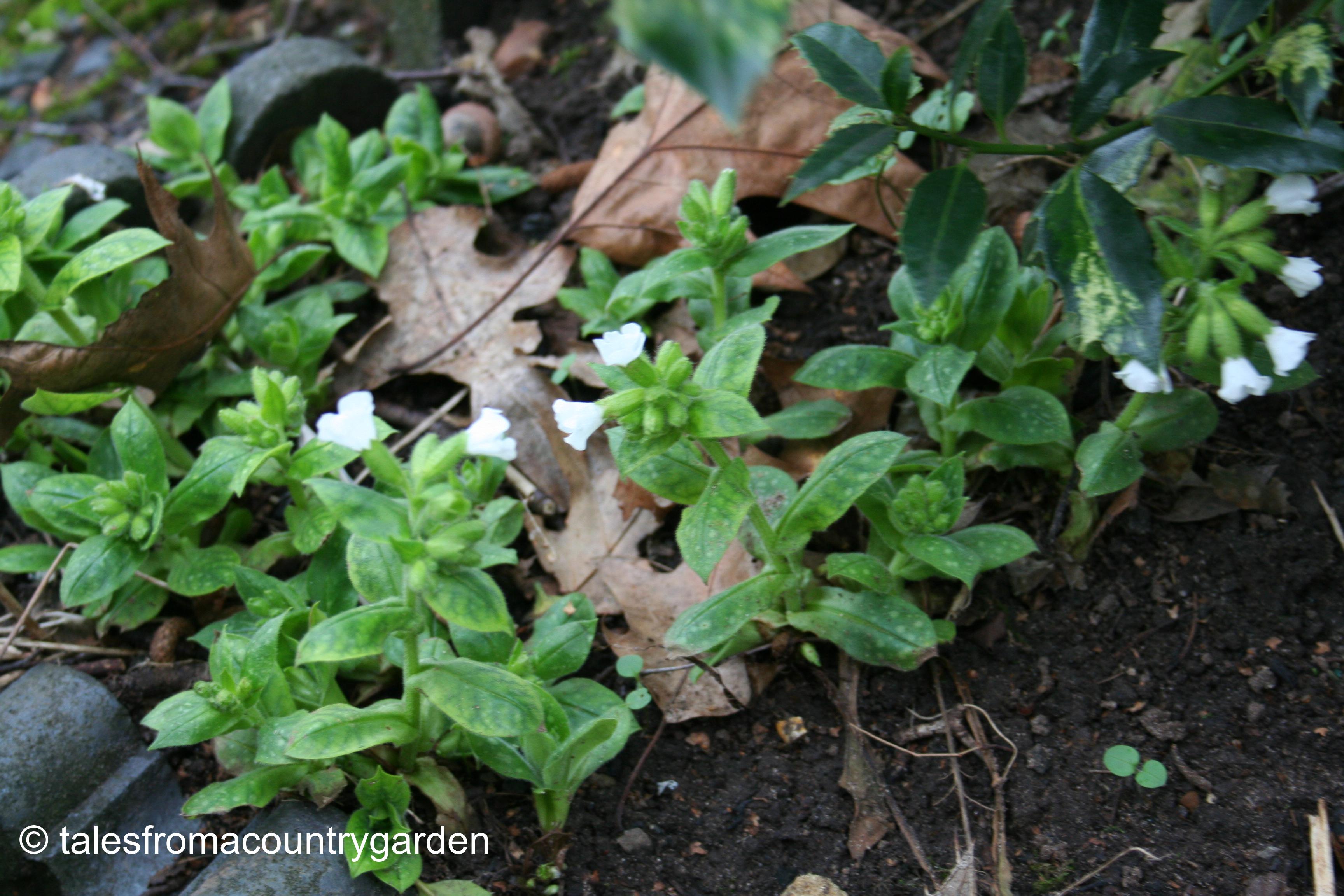
Pulmonaria Sissinghurst White
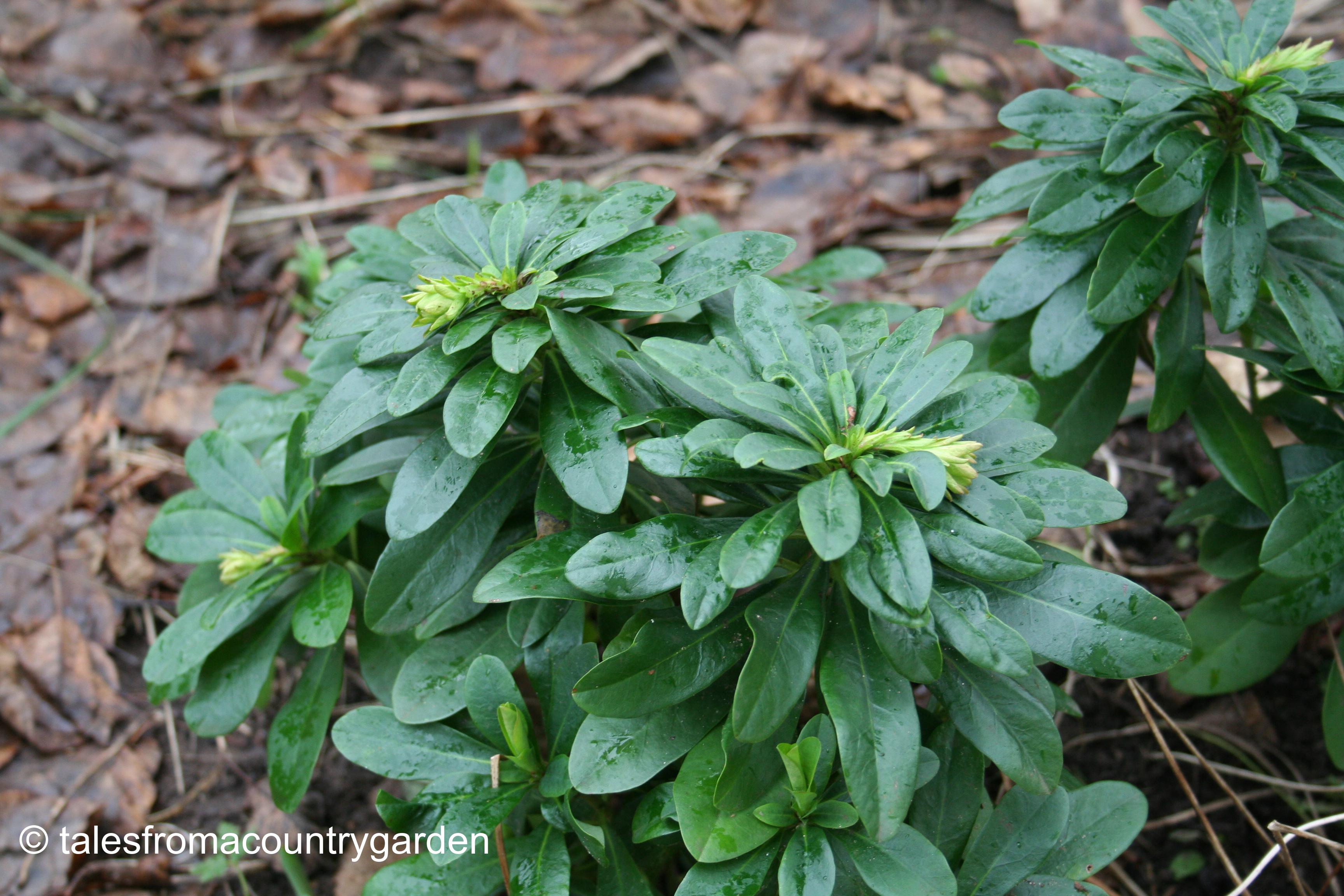
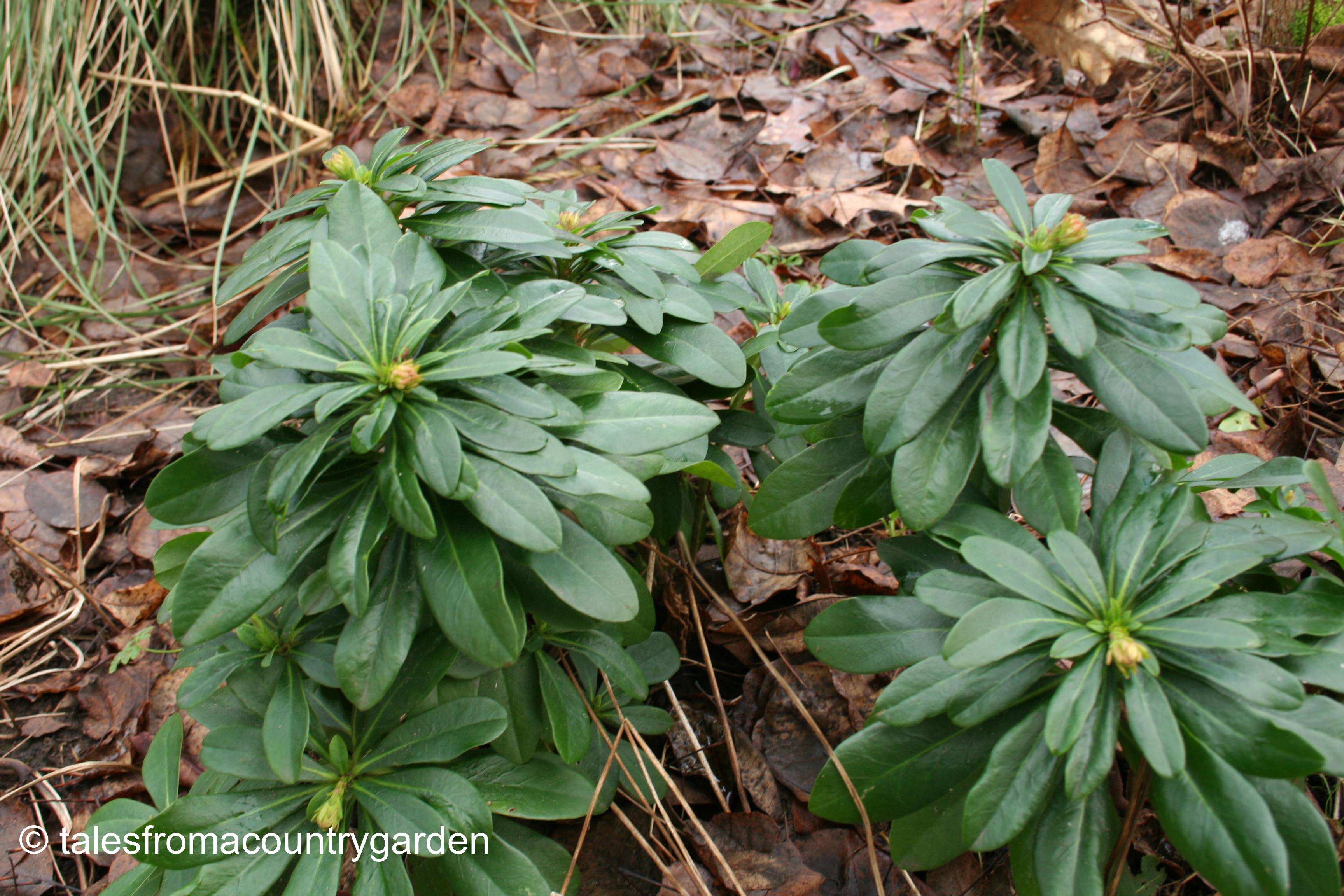
Euphorbia amygdaloides
I also seem to have plenty of leaves to gather up from the borders as can be seen from the photographs, a job for the weekend maybe!
A New Year and already the days are getting longer, no longer dark and gloomy at 3pm but actual daylight until around 4.30pm. There is hope that before long the garden will start to look green and vibrant again, no longer a muddy mess. What a treat to hear the birds singing again and to see them at the bird feeders and flitting along the hedgerow.
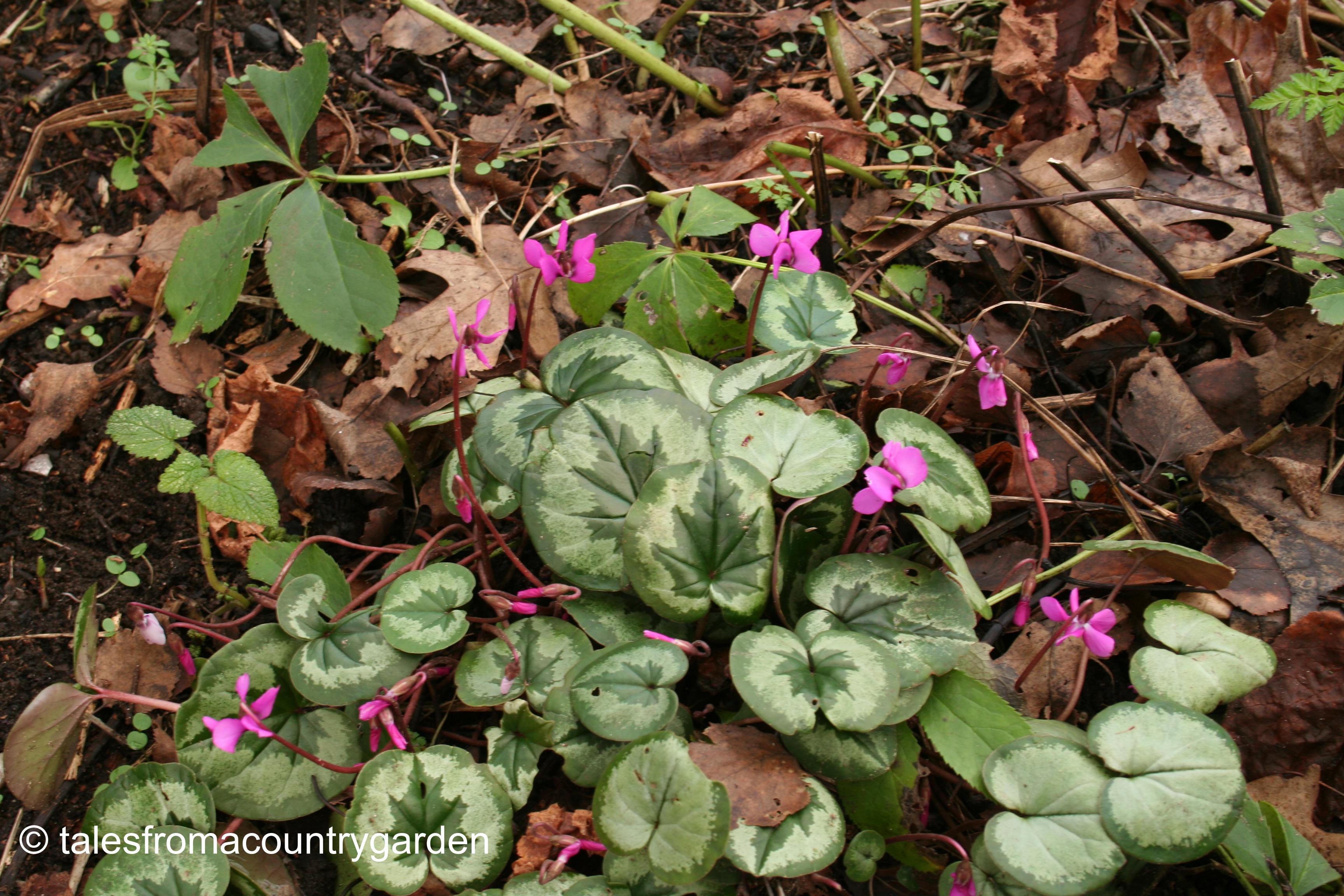
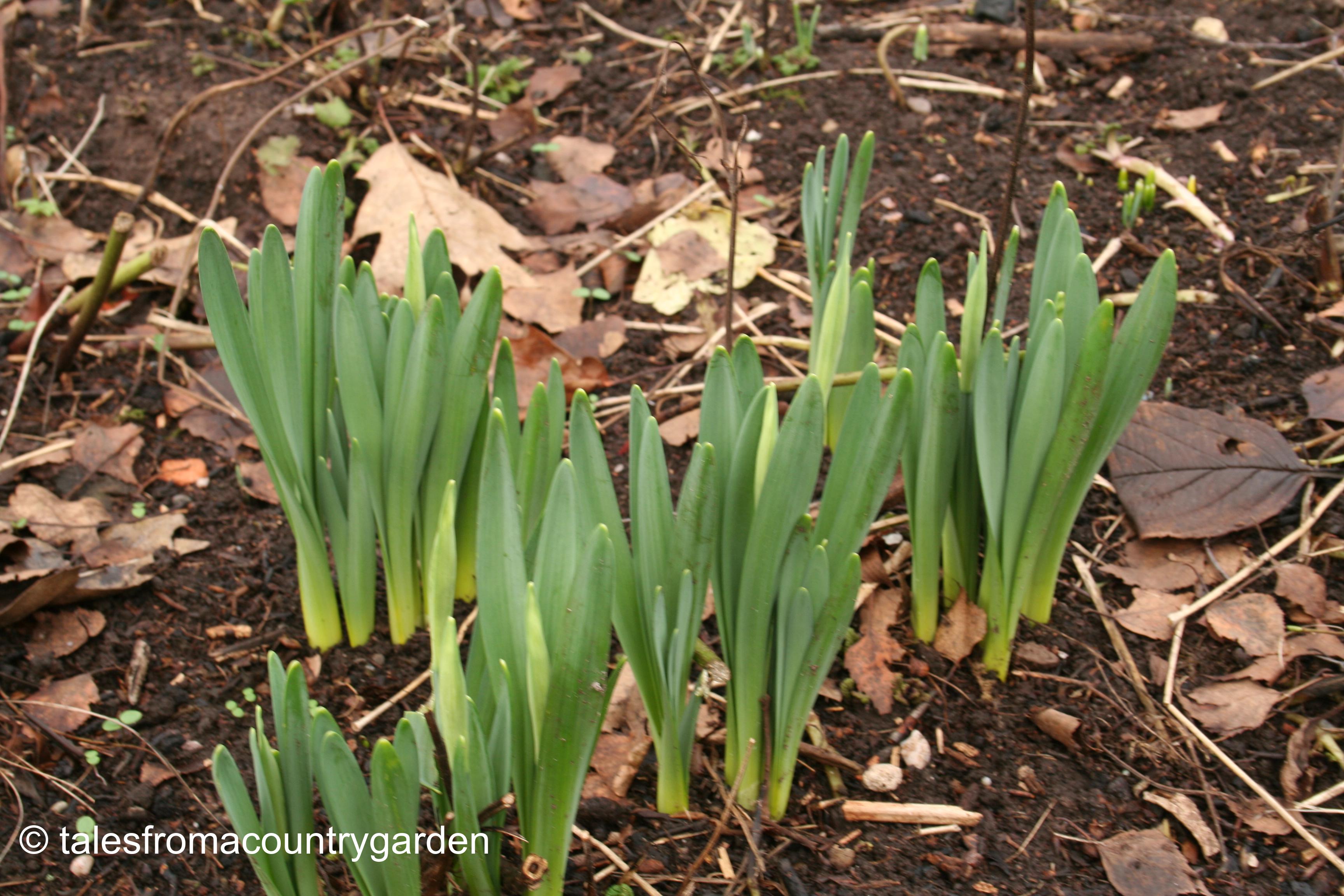
It’s good to take a walk around the garden each day to see what is happening. Plenty of buds swelling on trees and shrubs and already the first snowdrops in flower. I can keep pace with the daily changes at the moment but before too long everything will speed up and I will have to make sure I don’t miss anything growing. Most years the first daffodils to flower are a clump in the orchard under a willow tree, these are growing well with lovely plump buds. Other daffodils in the spring borders are also growing well with buds showing together with cyclamen coum and the first hellebores. A temporary protective netting fence has been put up around the spring area of the garden to stop our over enthusiastic dogs scattering flower heads as they carry out their own inspection of the garden. This normally works well, and although they have a tendency to push underneath it at least they are slowed down a little.
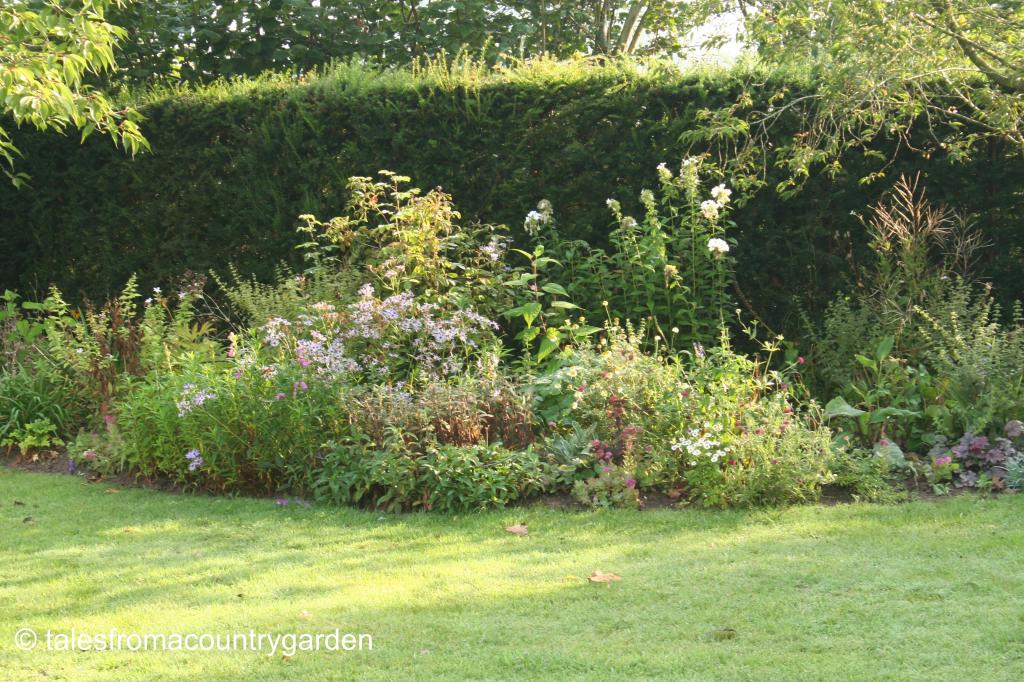
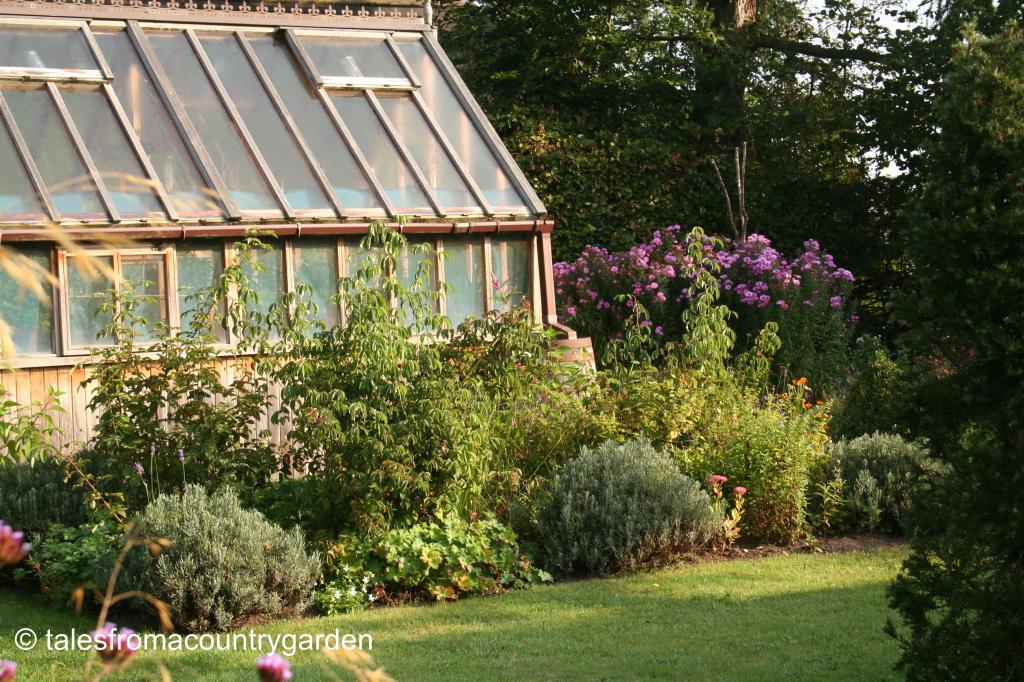
I enjoy working in the garden at this time of year almost more than in the heat of summer. I can set myself a task and complete it without feeling that I have to weed and tidy the whole garden in one day. I like to go outside with a particular area in mind to weed, maybe only a small area, but actually finish it and feel that something has been accomplished. I have so far cut down all the dead growth on perennials in the Autumn border, the long border in the back garden and three beds behind the greenhouse. Next task is to weed each one and then spread a mulch of garden compost. I’ve spread shredded plant stems over the Autumn border to try and keep weeds at bay and so far one bed by the greenhouse has had its mulch of compost.
The vegetable garden has its raised beds covered with weed suppressing fabric over winter which not only helps to keep weeds down but also warms the soil. The first crop has been planted this week – several rows of garlic, planted on an unseasonably warm, sunny day.
First snowdrops – Galanthus S.Arnott I am reliably informed
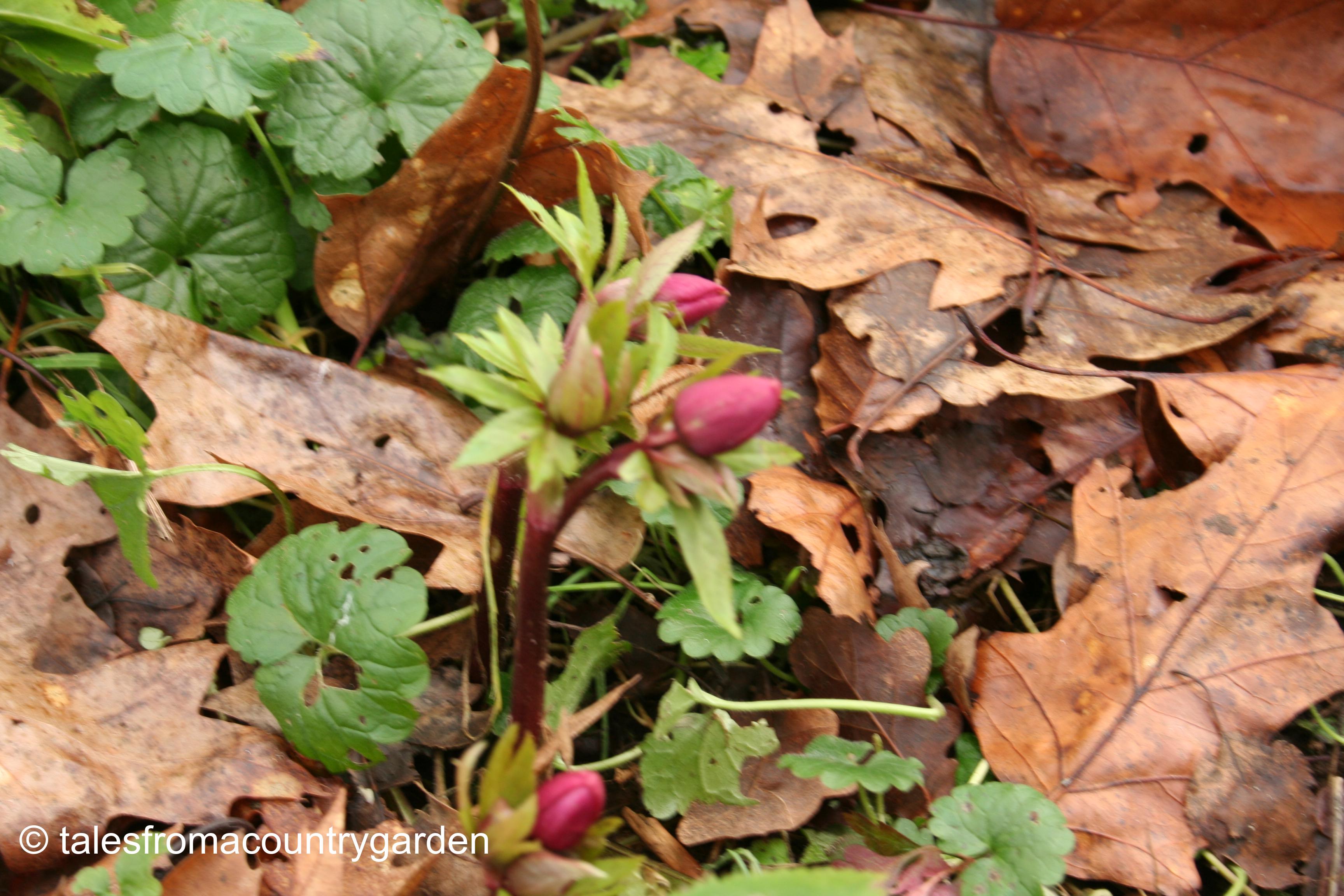
Hellebore
Cyclamen coum
Narcissus
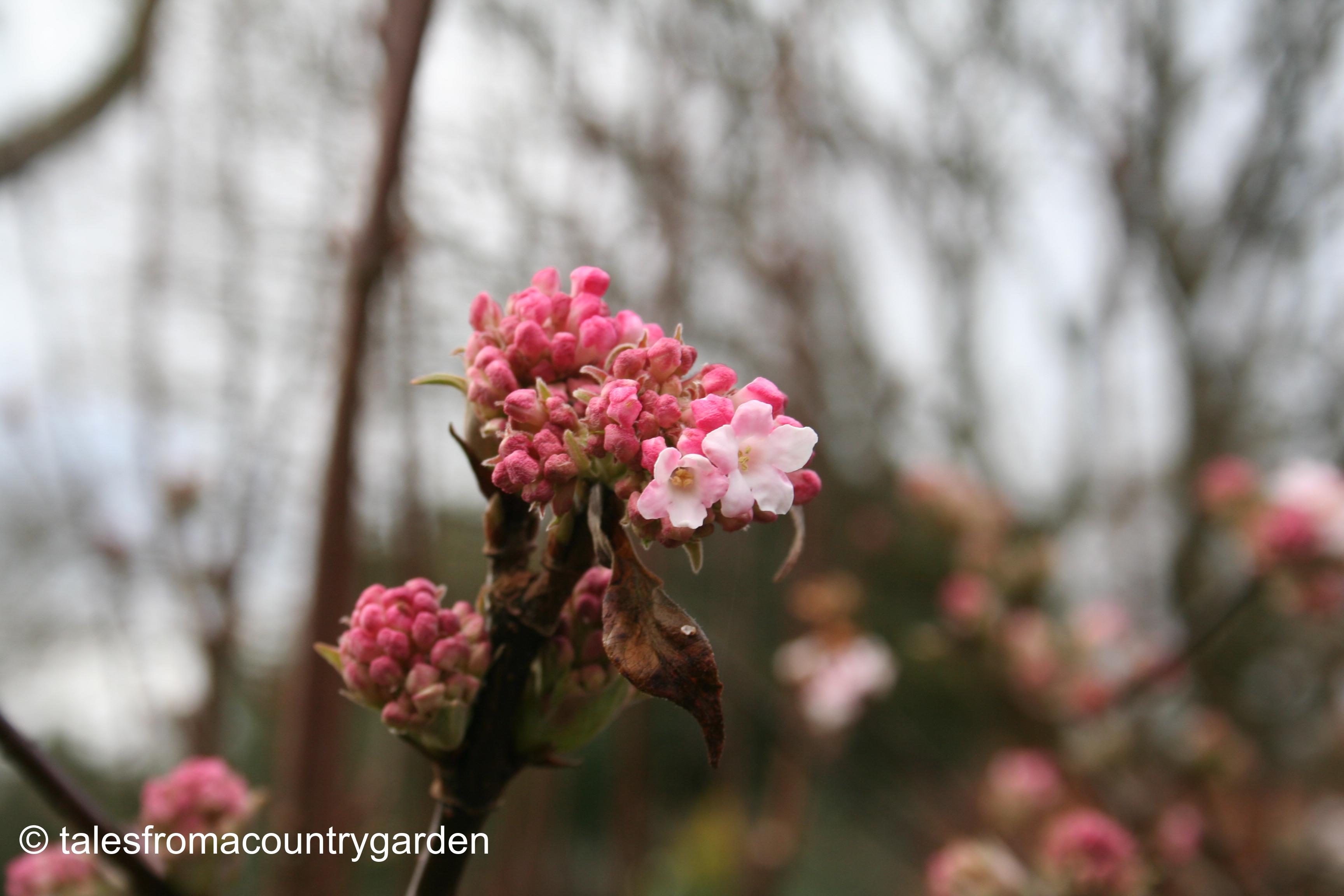
Viburnum bodnantense Dawn
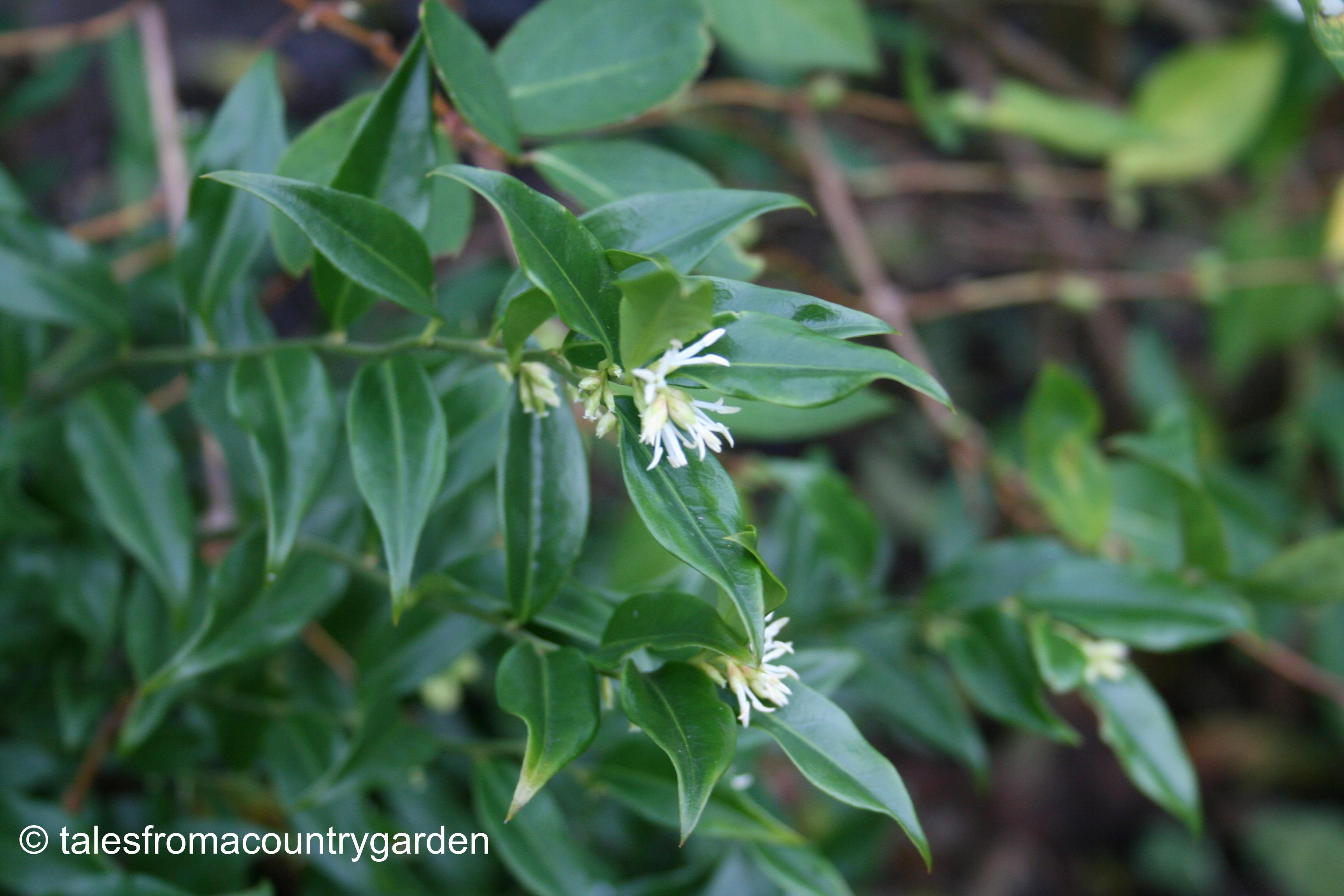
Sarcococca
Euphorbia
Mahonia
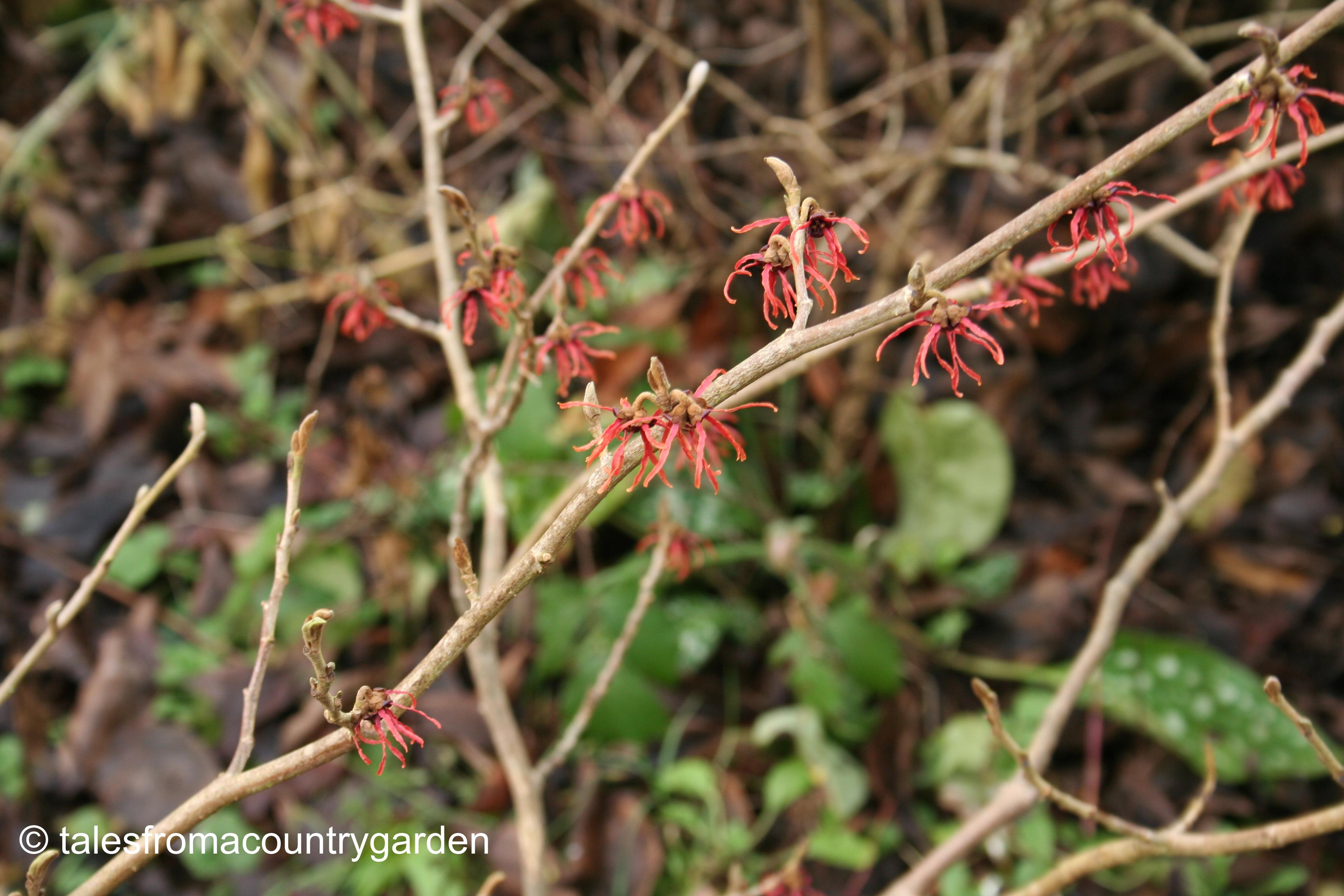
Hamamelis x intermedia Feuerzauber
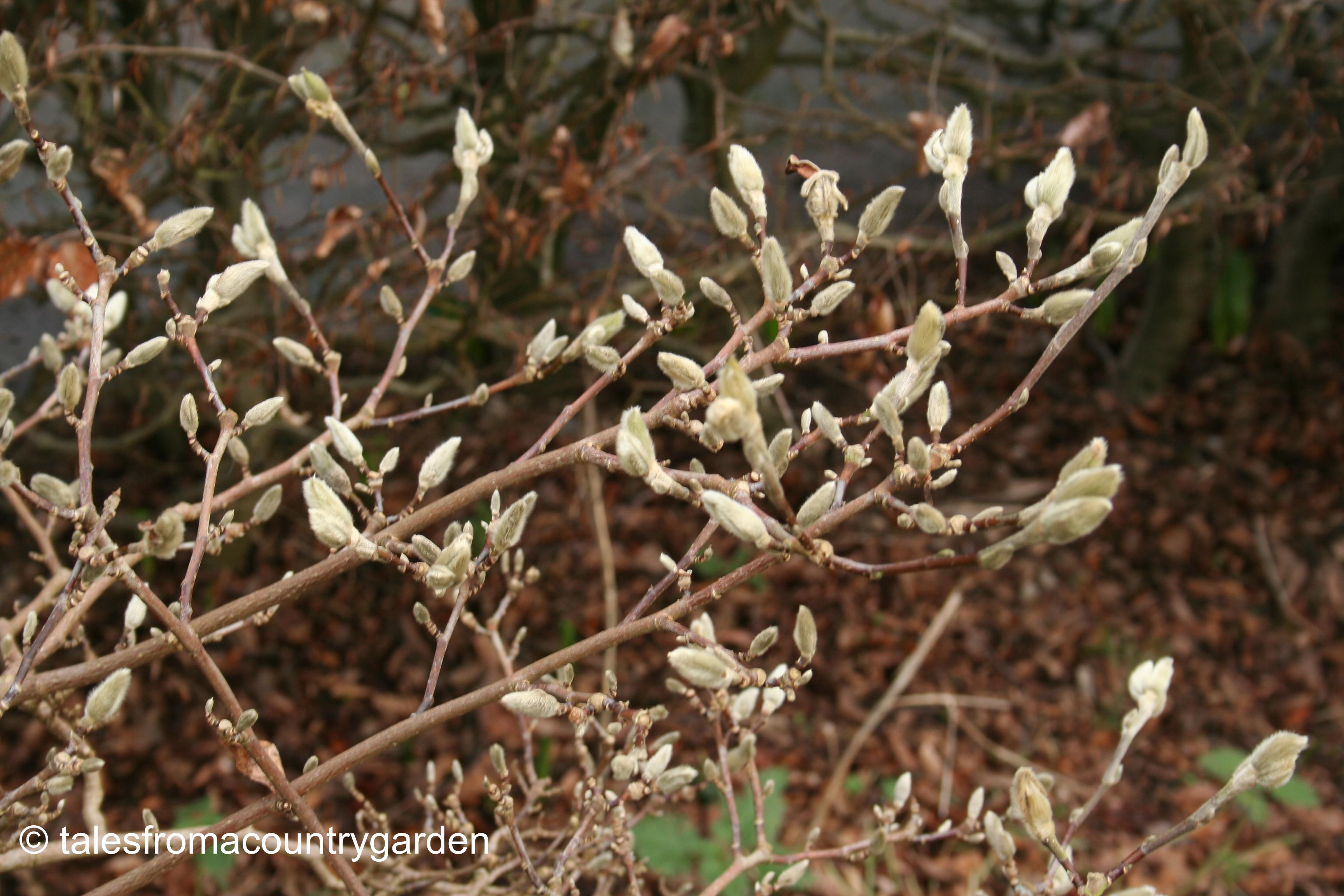
Buds on Magnolia stellata
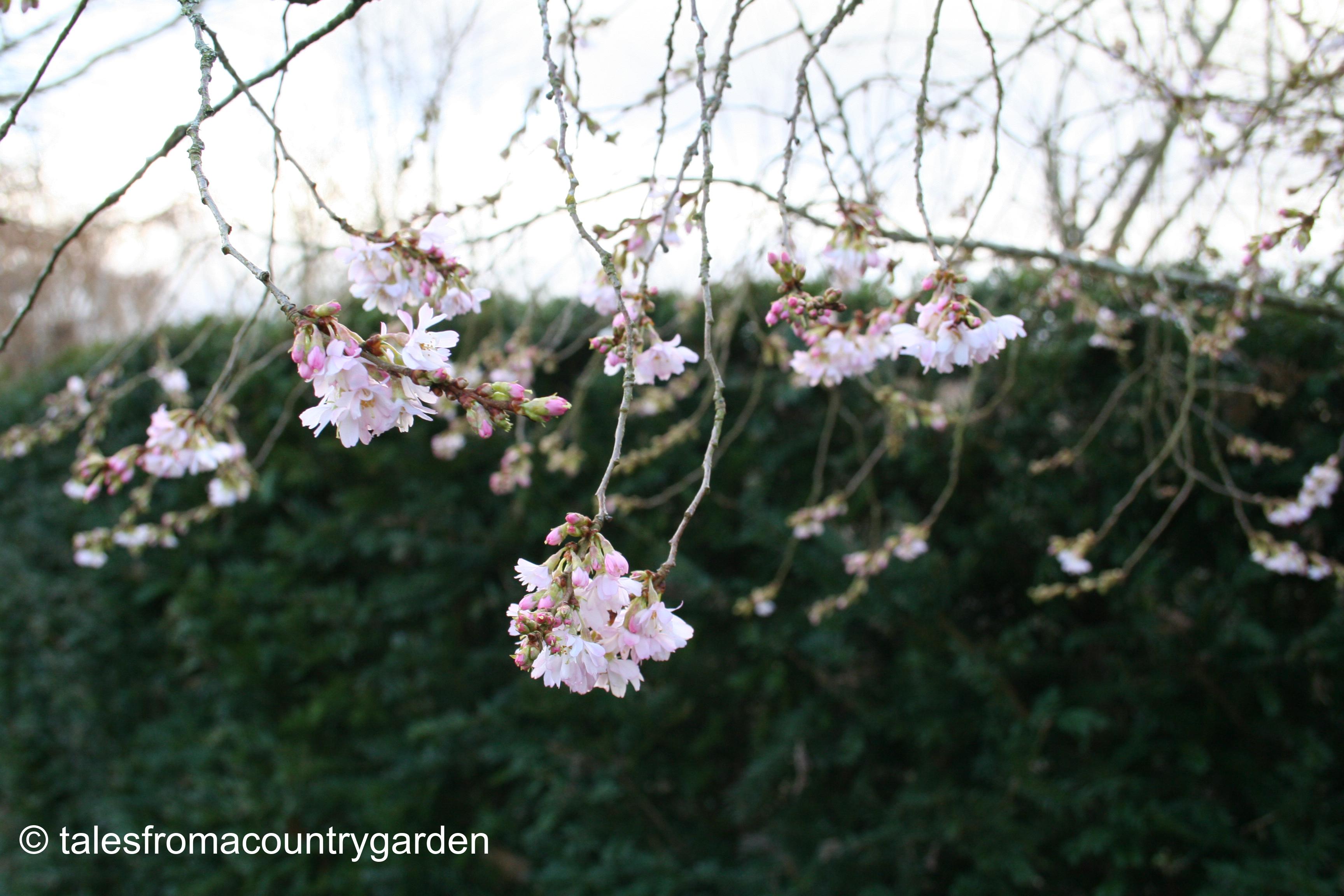
Prunus autumnalis rosea just coming into flower
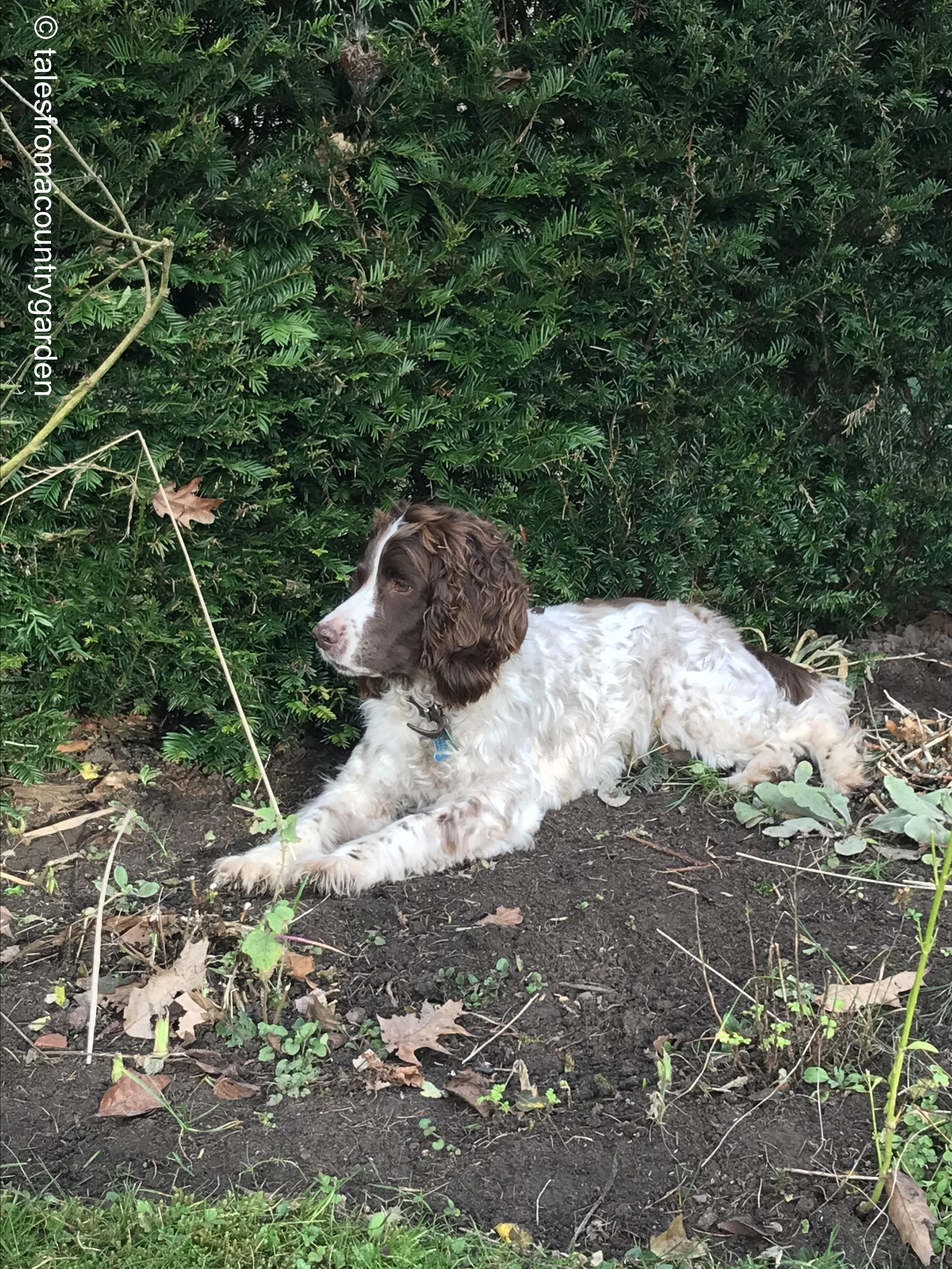
With a little help from one of my friends – for a change not digging or sitting on anything precious!












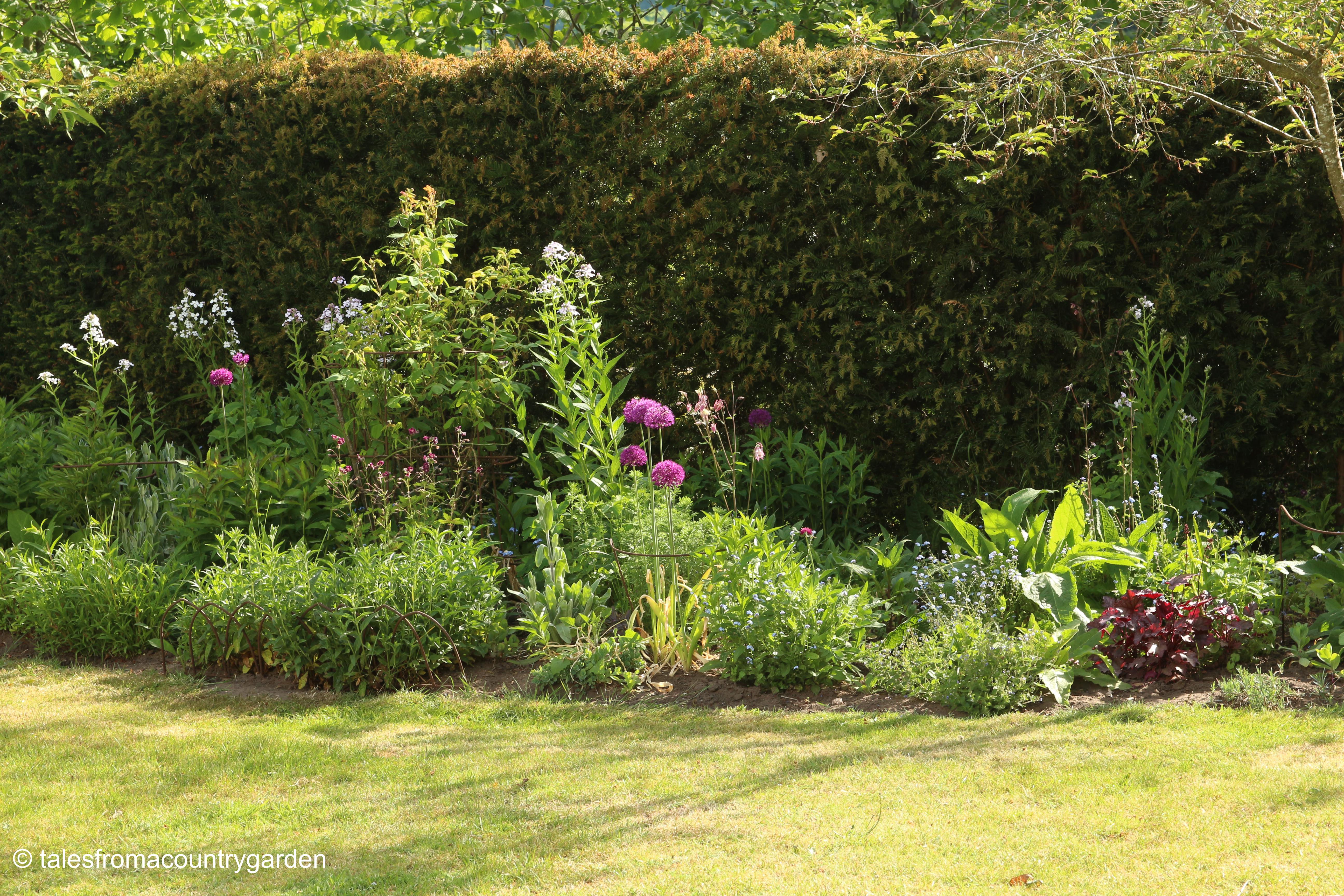
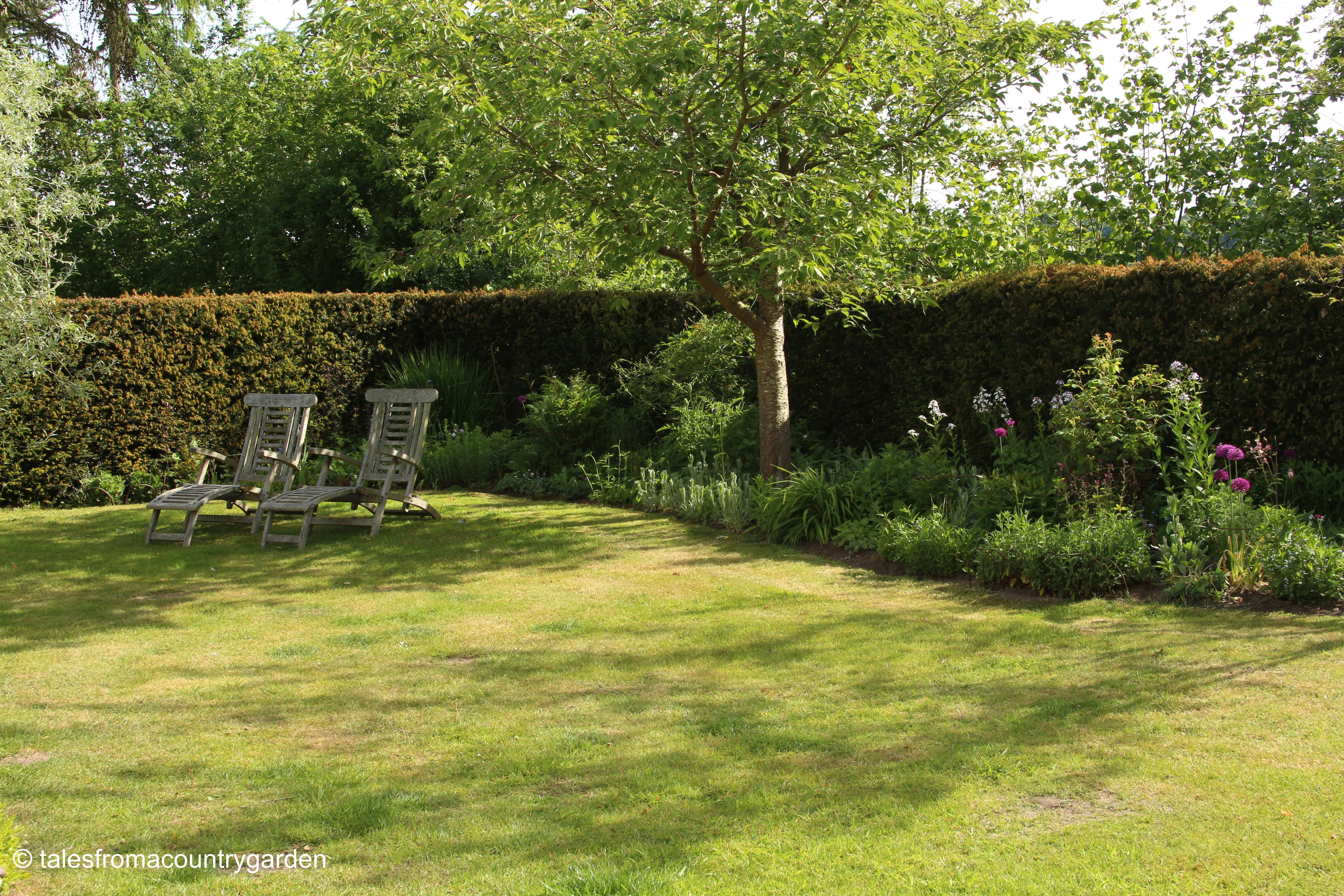
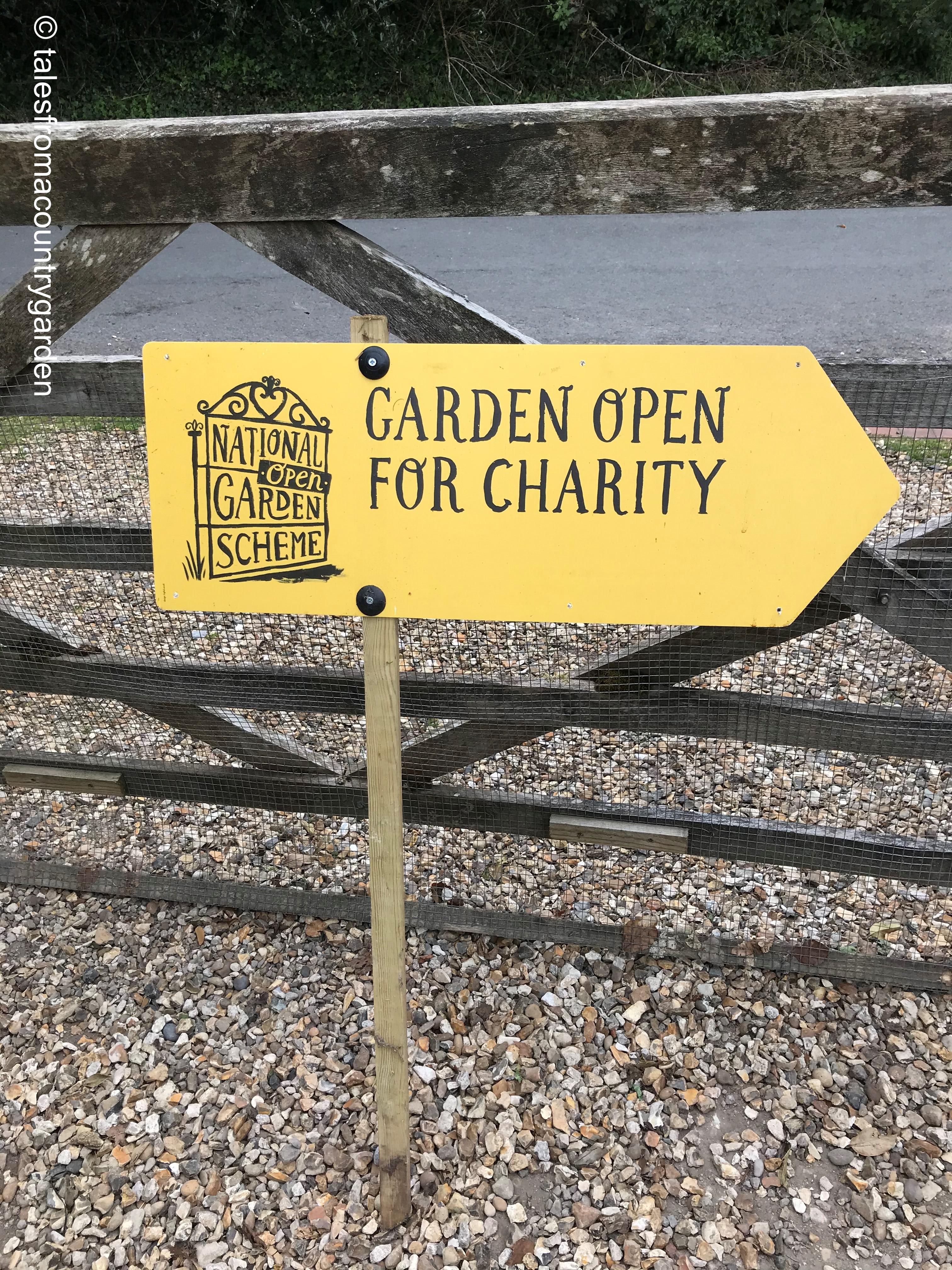 Today we should have been flinging the garden gate wide open, boiling the kettle, slicing cake and putting plants out for sale – all to raise money for the National Garden Scheme. Sadly due to coronavirus the garden gate is firmly shut and locked and the only tea and cake served here will be for us and three of our adult ‘children’ who are in lockdown with us. There are worse places to be and the last few weeks have seen me gardening more than ever. There are still weeds that have evaded me, I see more each day waving to me from the borders but many have pretty flowers anyway, so some will be allowed to stay for a short while.
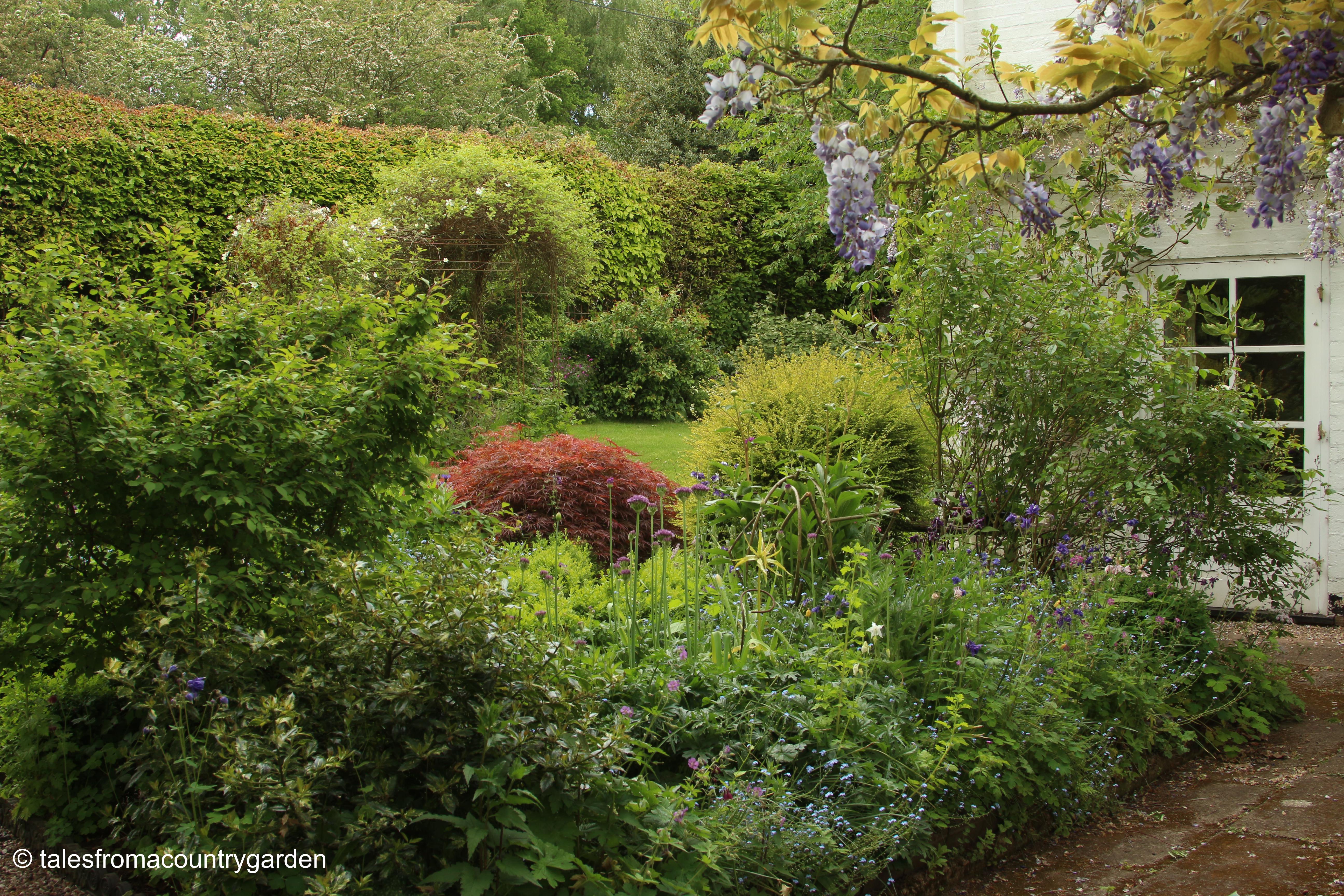
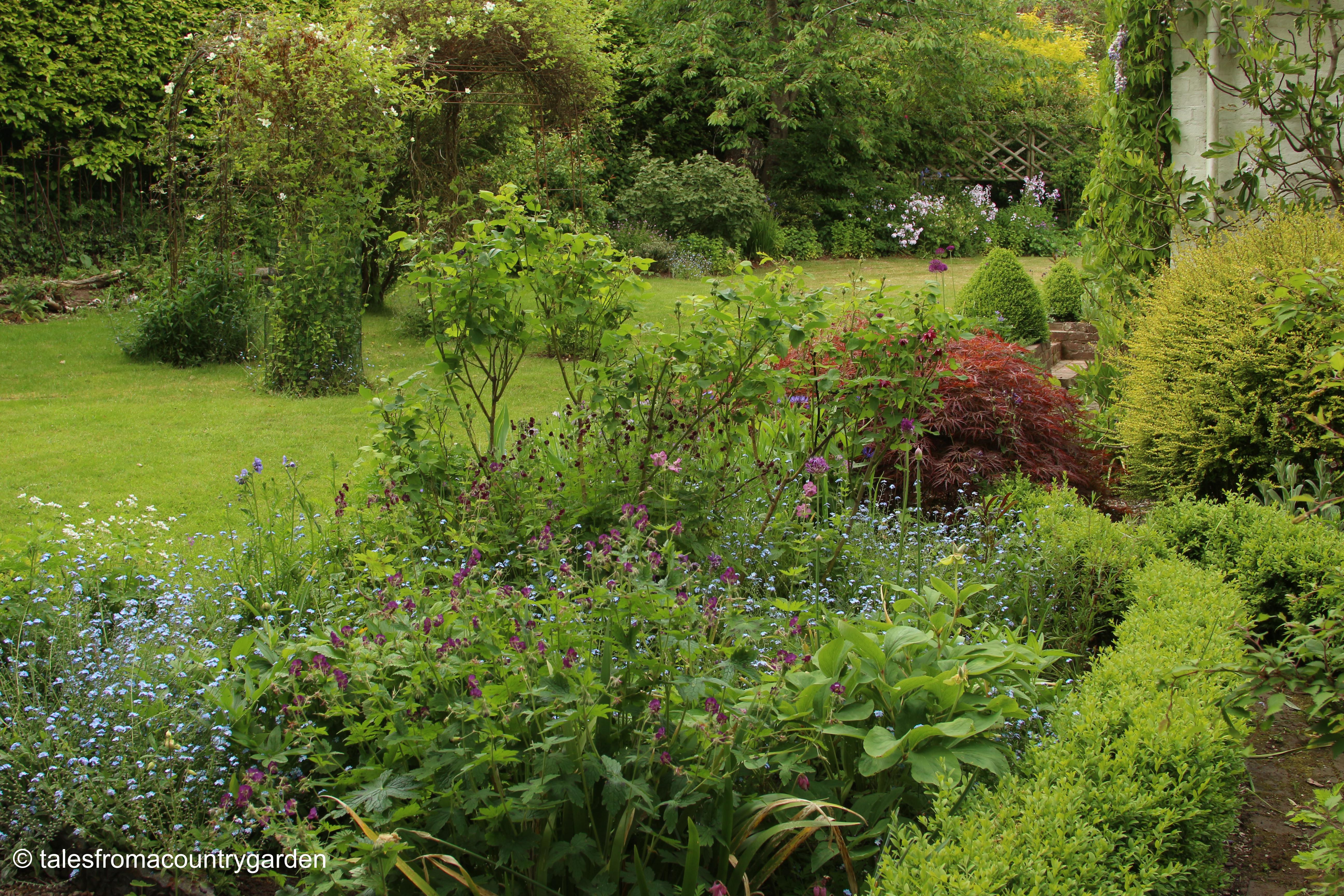
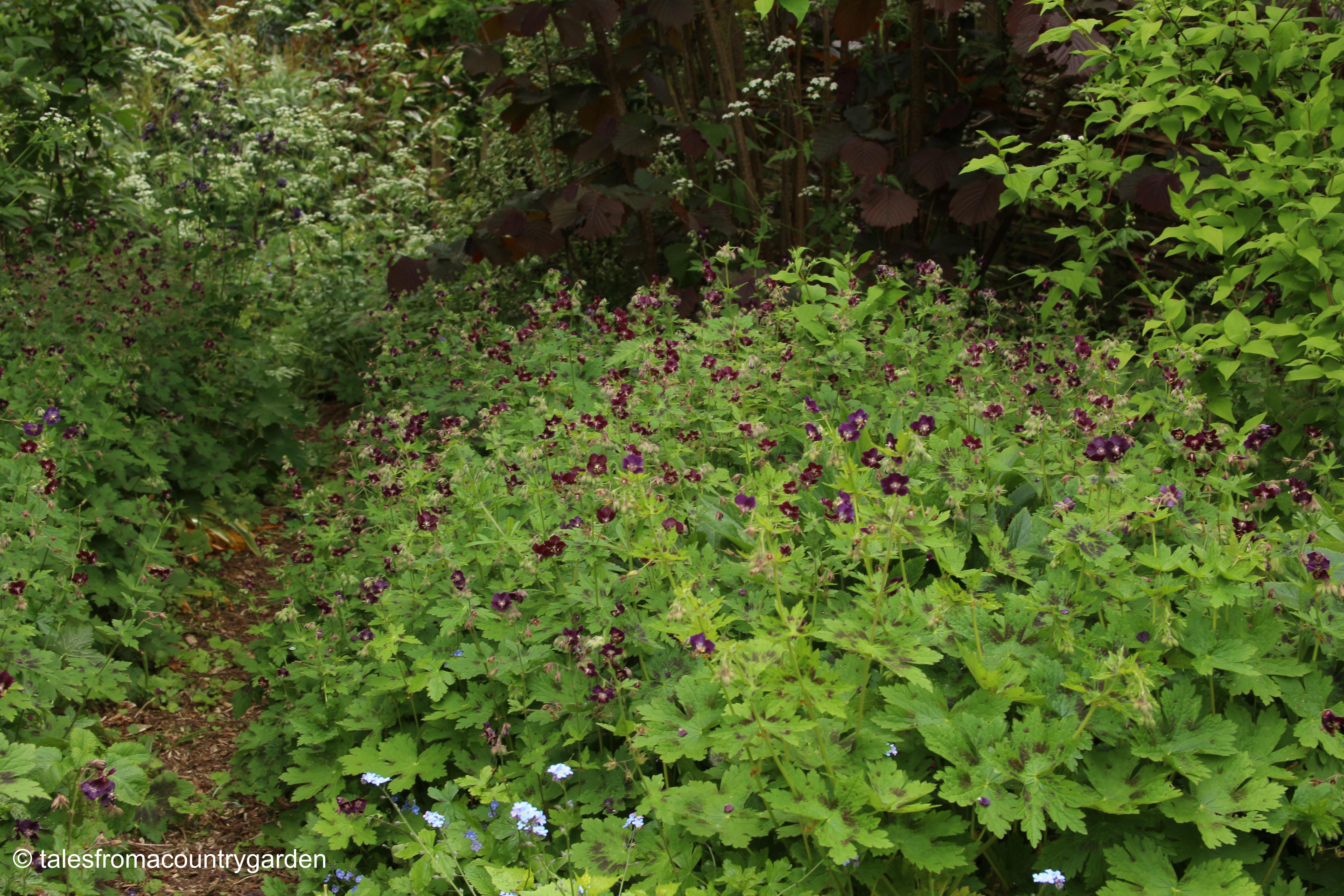

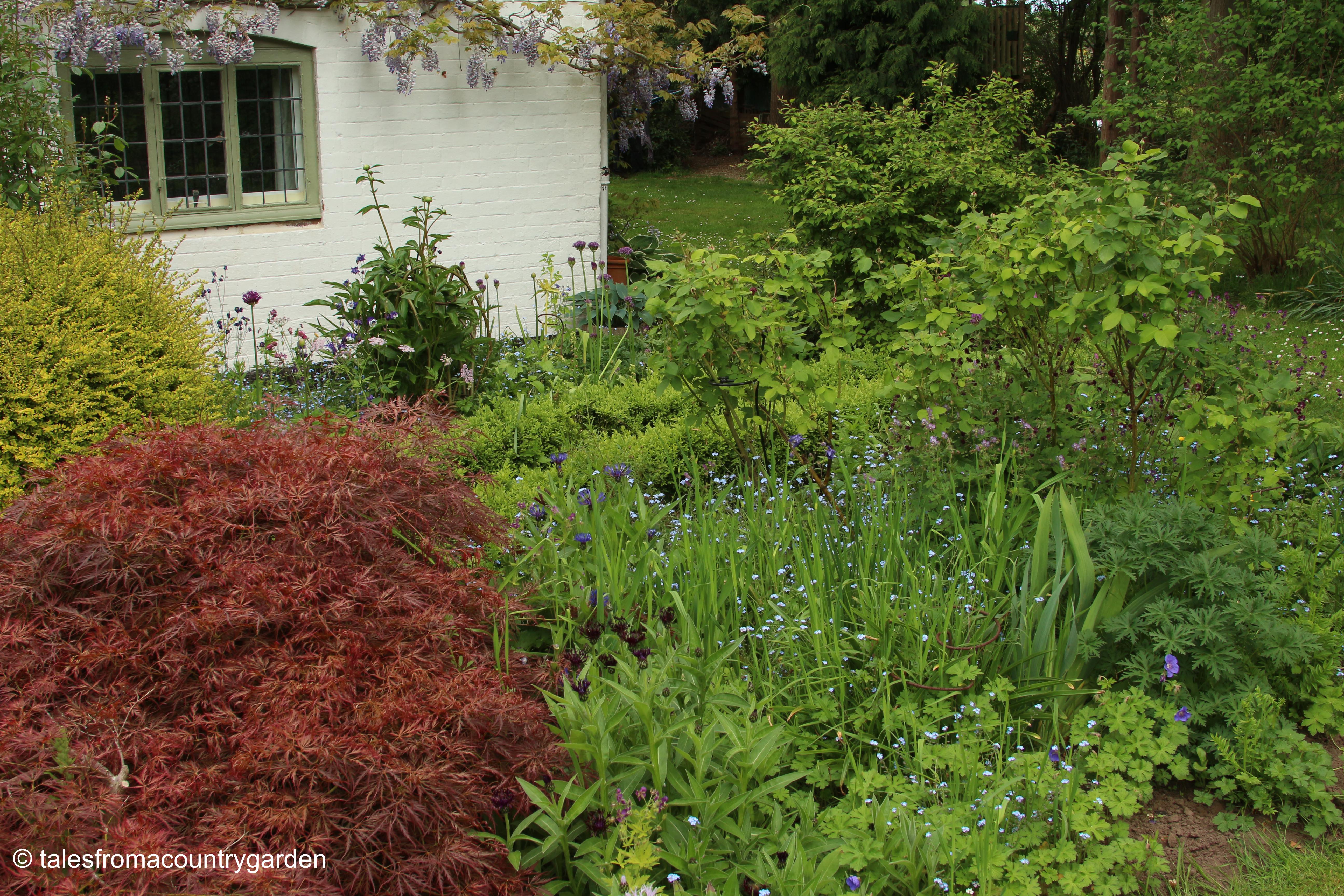



 The Wisteria is in full flower and it has survived my attempt at pruning it in January while the expert wisteria pruner in the family was attending to hedge laying. The flowers smell wonderful and with windows open fill the house with their scent, and the odd bee that takes a wrong turning!








 Snowdrops are coming into flower thick and fast. Galanthus S.Arnott is always the first to flower and lasts for weeks. We are trying to naturalise Galanthus nivalis in drifts in the Spring area of the garden and here we also have Galanthus woronowii which is starting to spread gently around. This snowdrop is distinguishable from others by its bright green, broad leaves and icy white flowers.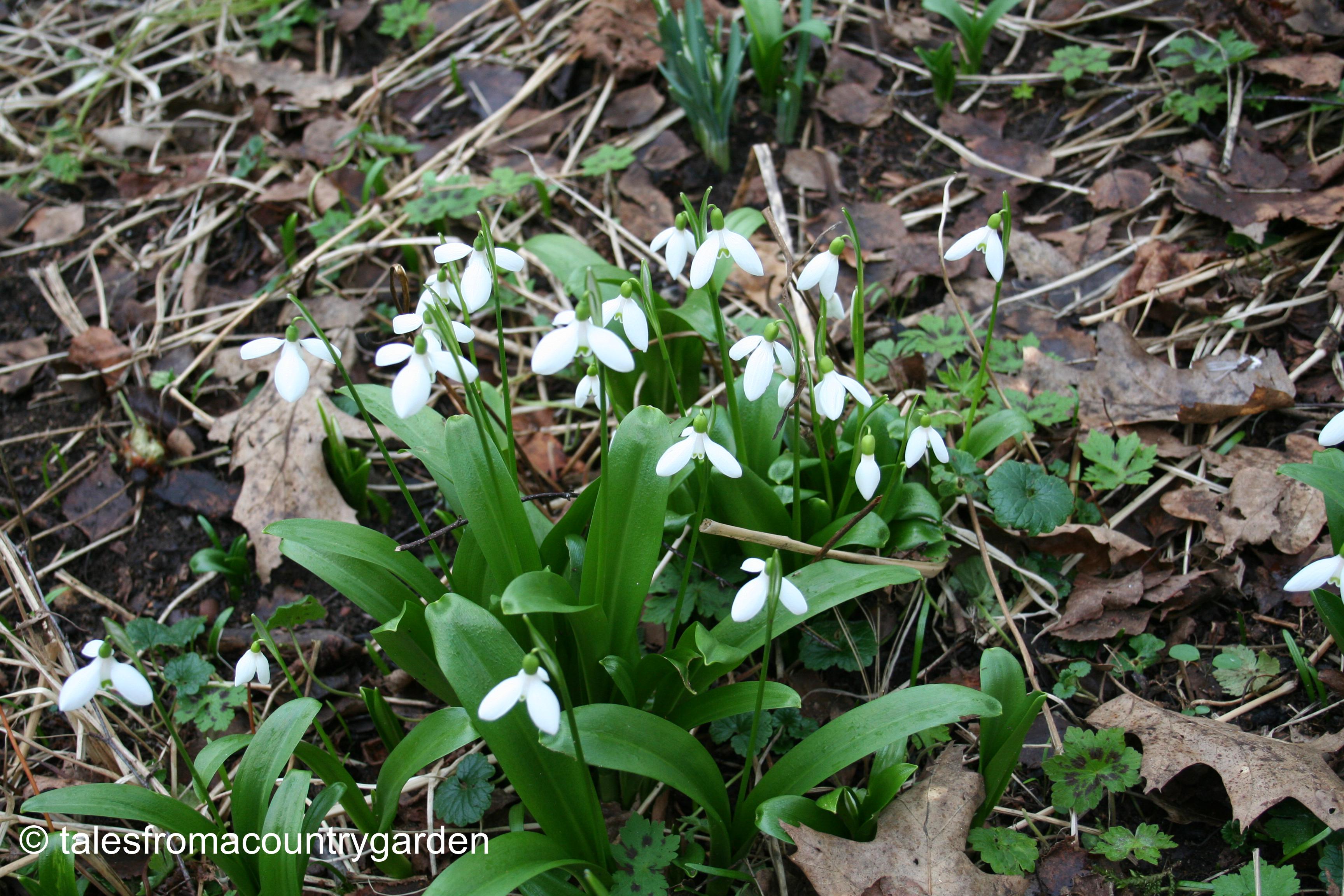
 We’ve planted hundreds of Crocus tommasinianus again in the Spring area hoping that they will spread and form a purple drift. One year they came up very thickly and although I can now see their slim flower heads just coming through I think that maybe squirrels have eaten many of them.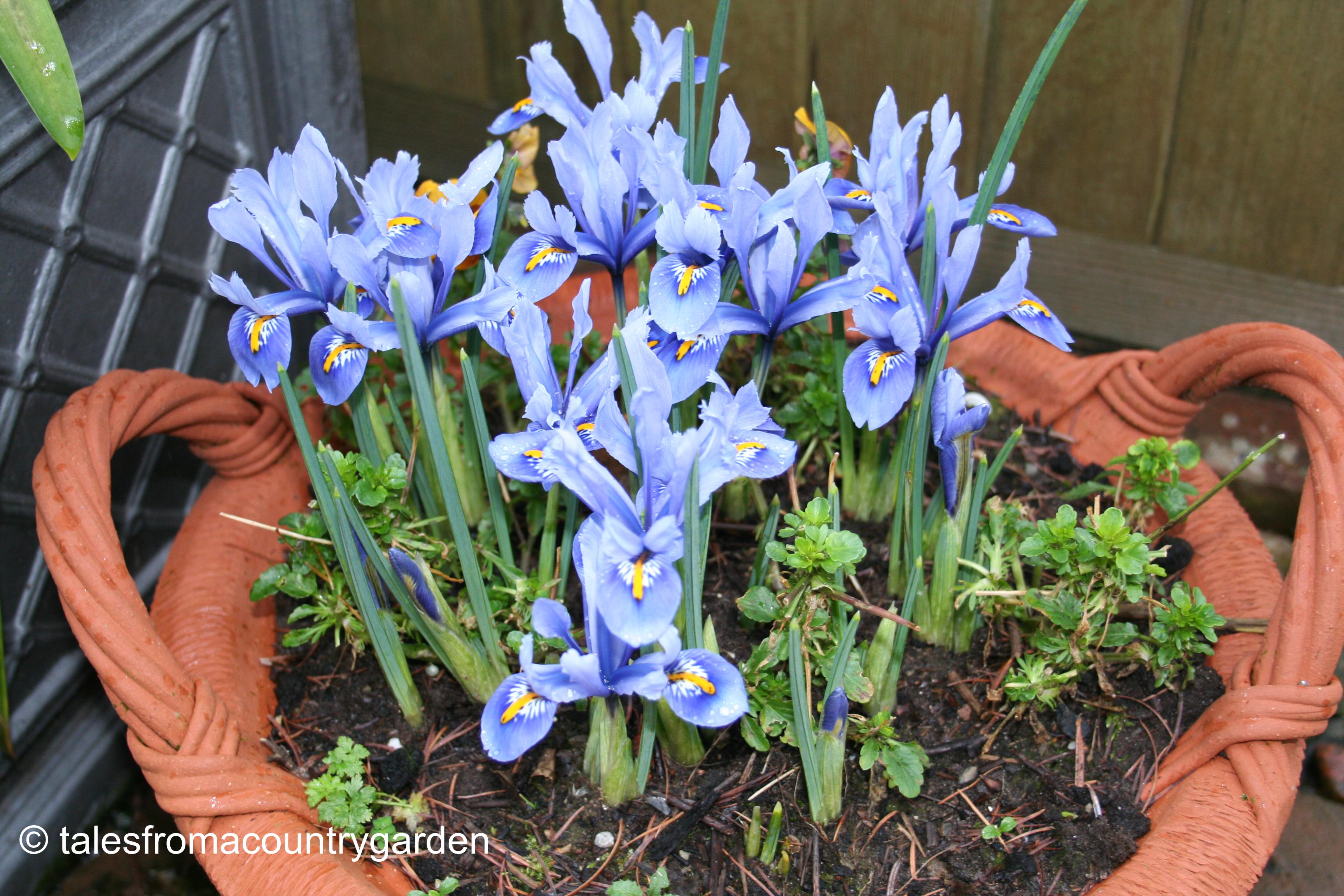




 Tales from a Country Garden